Nintendo Museum Kyoto Guide: What to Expect
“It’s dangerous to go alone! Take this.”
I've been playing Nintendo games for as long as I can remember. Growing up in Poland, my parents couldn't really afford a proper NES, so we had a Pegasus instead. It was something called a Famiclone, an unauthorized copy of the original console that was incredibly popular in post-communist Poland. Anyway, the controllers were constantly breaking, which meant unscrewing them and putting aluminum foil under the buttons to get them working again. Looking back, I think that's probably where my whole “it's not broken, I can fix it” mentality came from. And for the record, it always worked!
A few years later, we moved to Amsterdam, where my parents bought me my first Game Boy, and I spent hours playing Speedy Gonzales. My mom is a concert pianist, and the game featured Mozart's Rondo Alla Turca as part of its soundtrack. Except I had absolutely no idea who Mozart was. I thought it was simply the Speedy Gonzales song, and I kept asking my mom to play it on the piano. Eventually, after one too many requests, she informed me rather loudly that it was Mozart, not Speedy Gonzales. Well, my eight-year-old self learned something new that day.
Since then, I've owned more Nintendo consoles and games than I can count, along with plenty of T-shirts, merchandise, and soundtracks. The Legend of Zelda has always been my favorite, but Nintendo in general has been a pretty constant part of my life.
So when I started planning our trip to Japan, the Nintendo Museum in Kyoto was one of the first things on my list. I set my alarm so I wouldn't miss the ticket booking window, and luckily I got the tickets.
But was the museum everything I'd hoped it would be? And is it worth visiting even if you're not quite as obsessed with Nintendo as I am?
Let's get into it!
In this Guide
How to Get Tickets & Getting to the Nintendo Museum
Inside the Nintendo Museum
The Shop and Café
Do I think the Nintendo Museum Is Worth Visiting?
Planning your trip to Japan? Check out my Kyoto travel guide for more tips on where to stay, what to see, and where to eat.
Ready to save a princess? Here's what I wish I'd known before visiting the Nintendo Museum in Kyoto, and what you should know before you go:
What Is the Nintendo Museum?
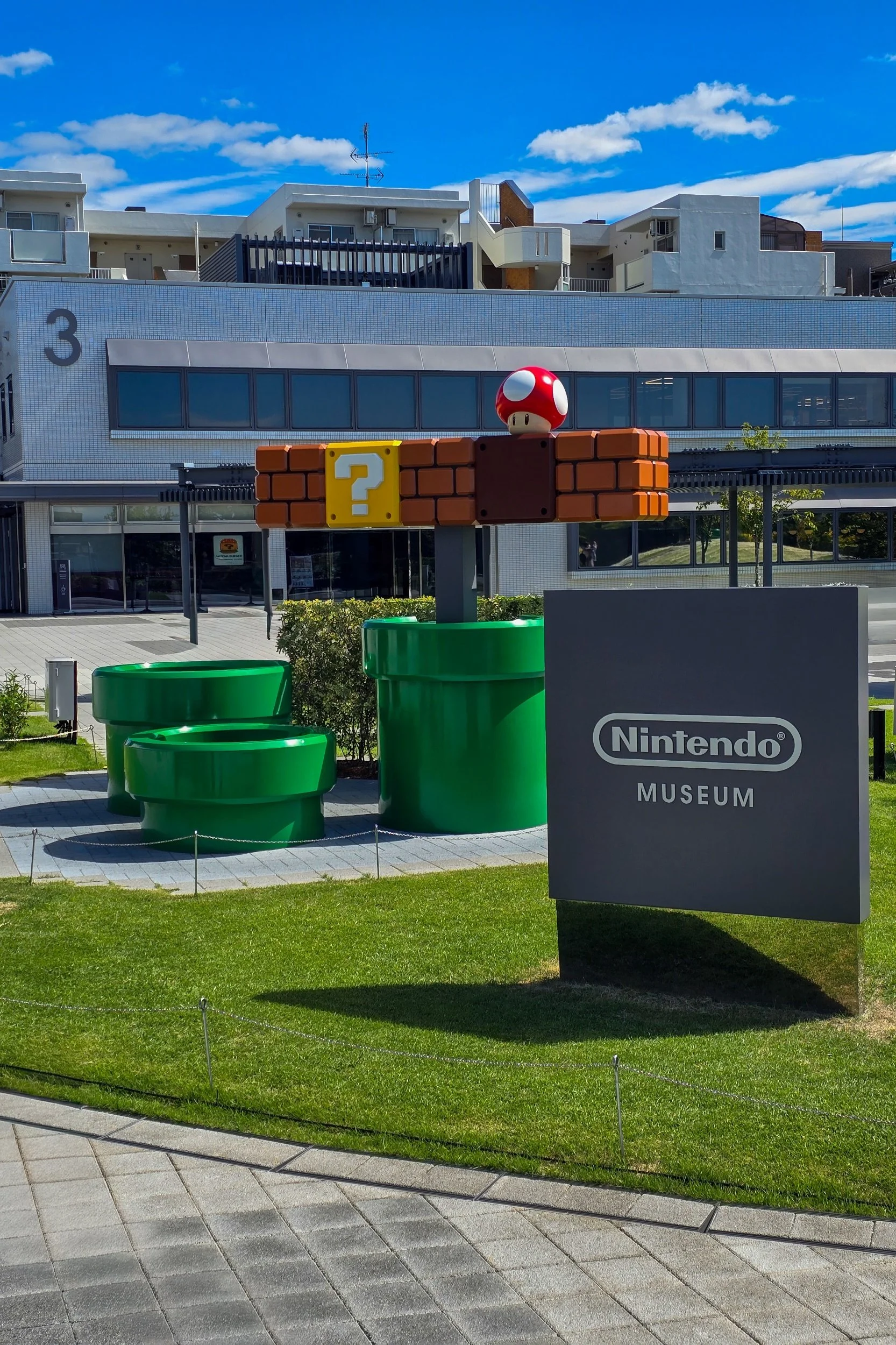
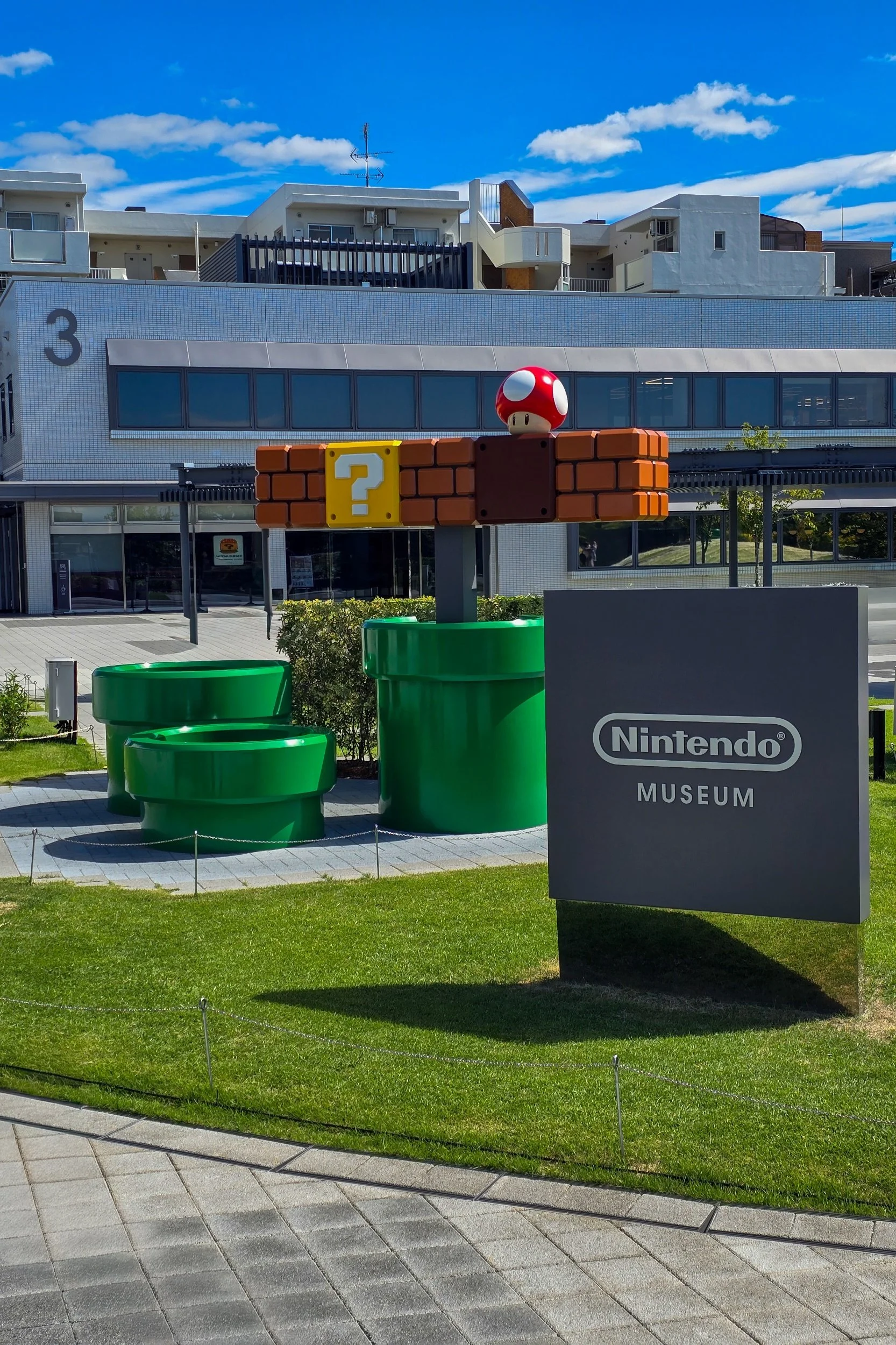
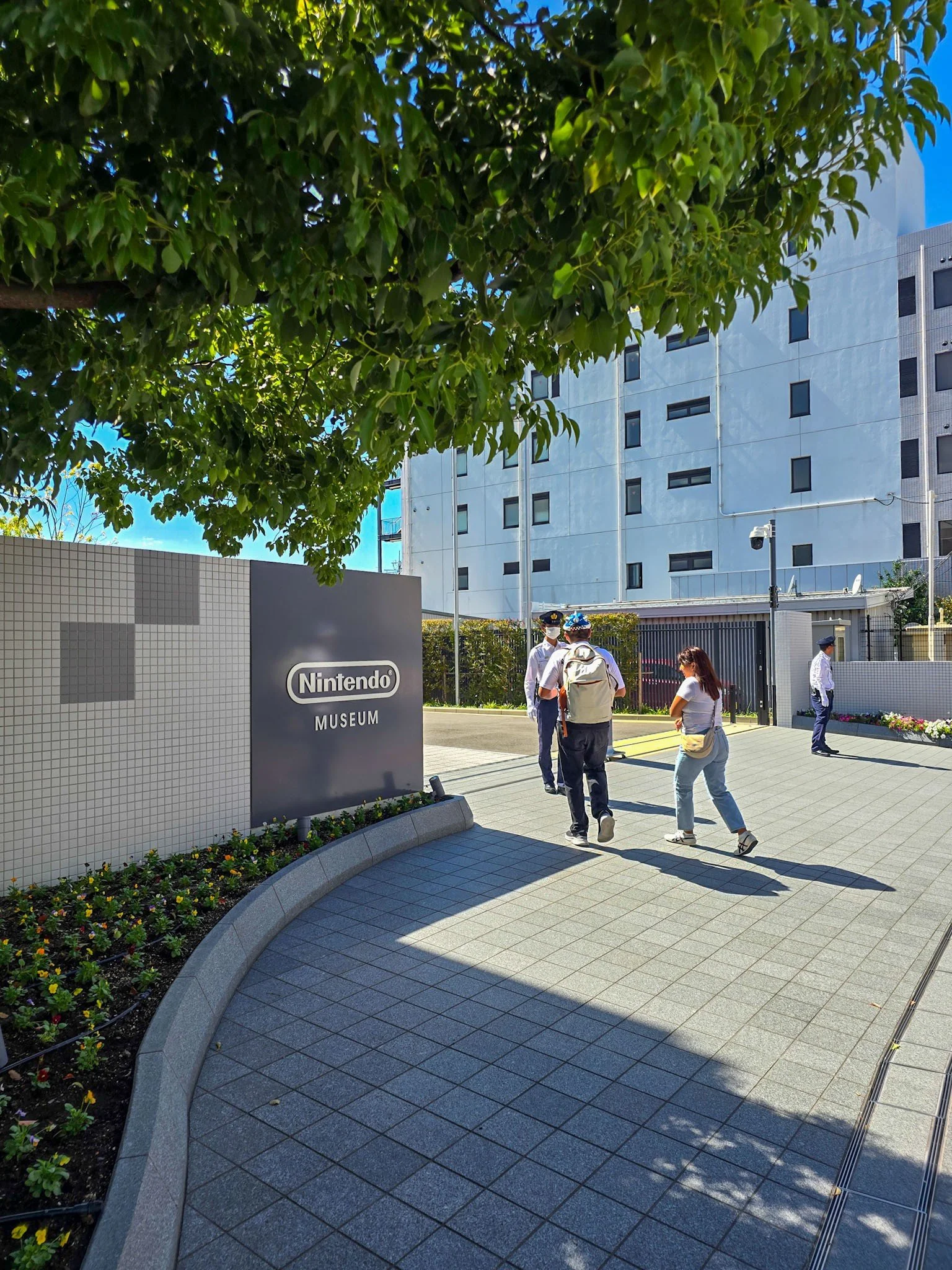
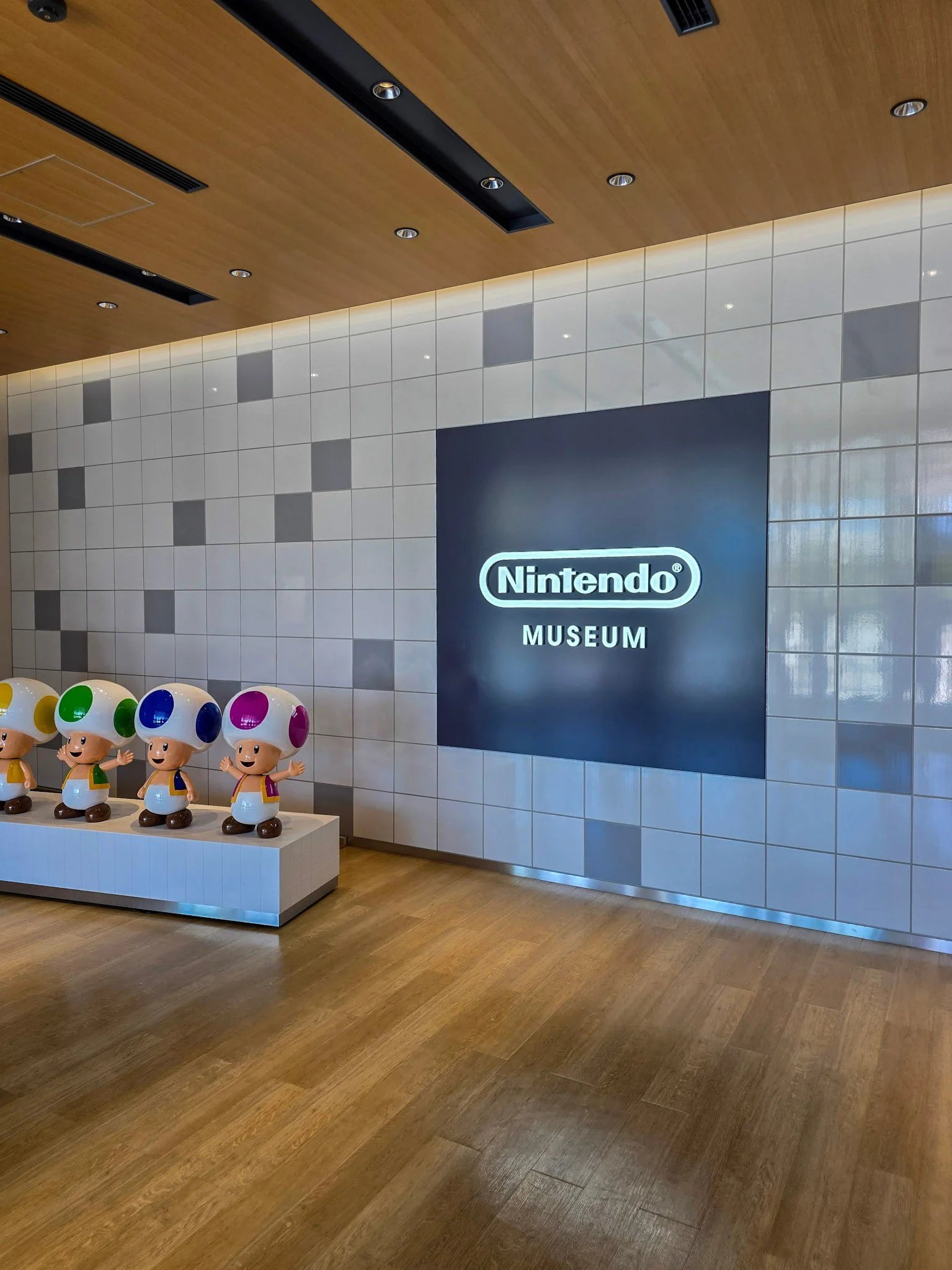
The Nintendo Museum is a museum in Uji, just outside Kyoto, dedicated to the history of Nintendo. It opened in October 2024 on the site of one of Nintendo's former factories, and it's basically a trip through the company's history, from its early days making playing cards to the video games and consoles we all know today.
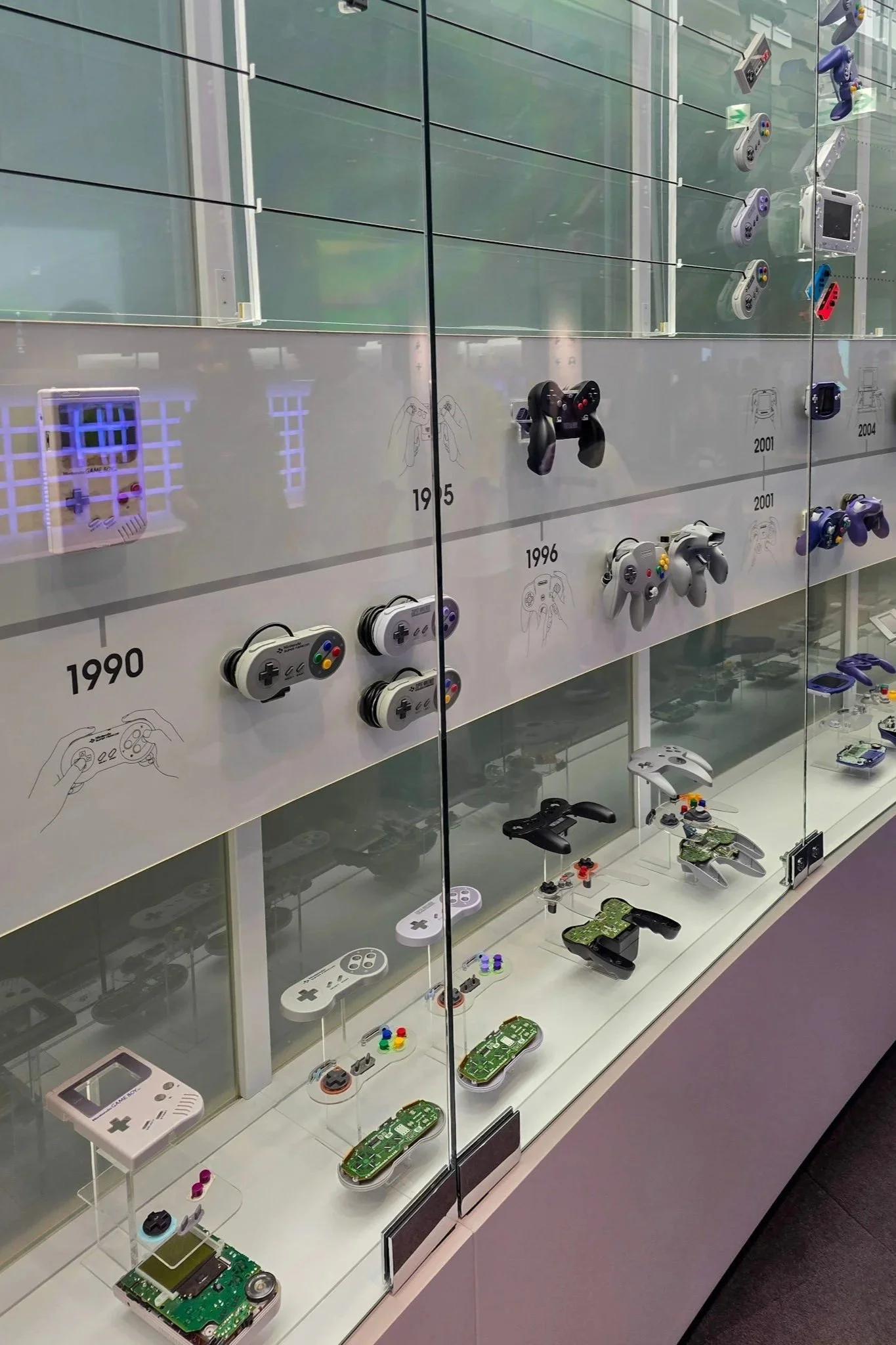
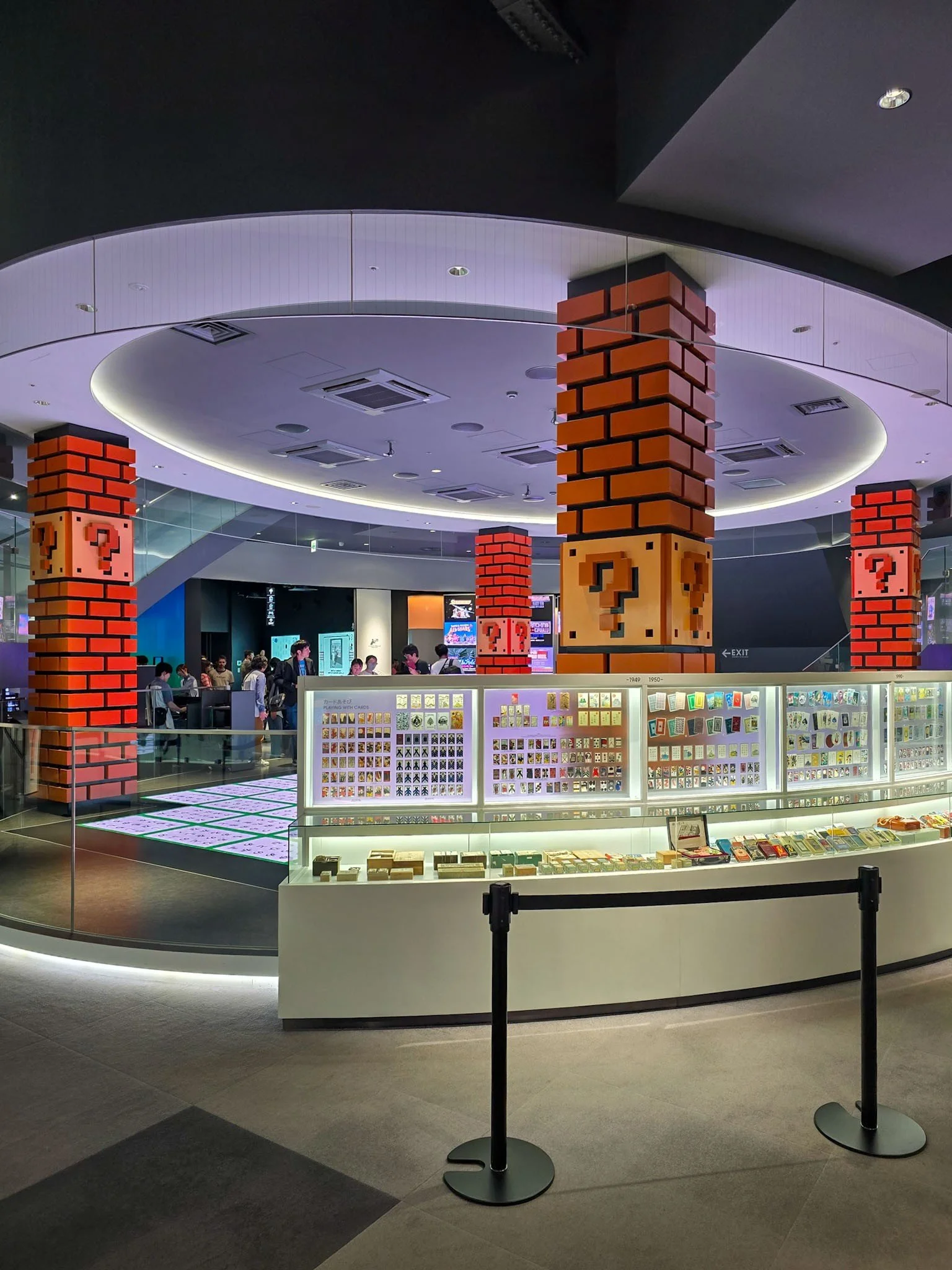
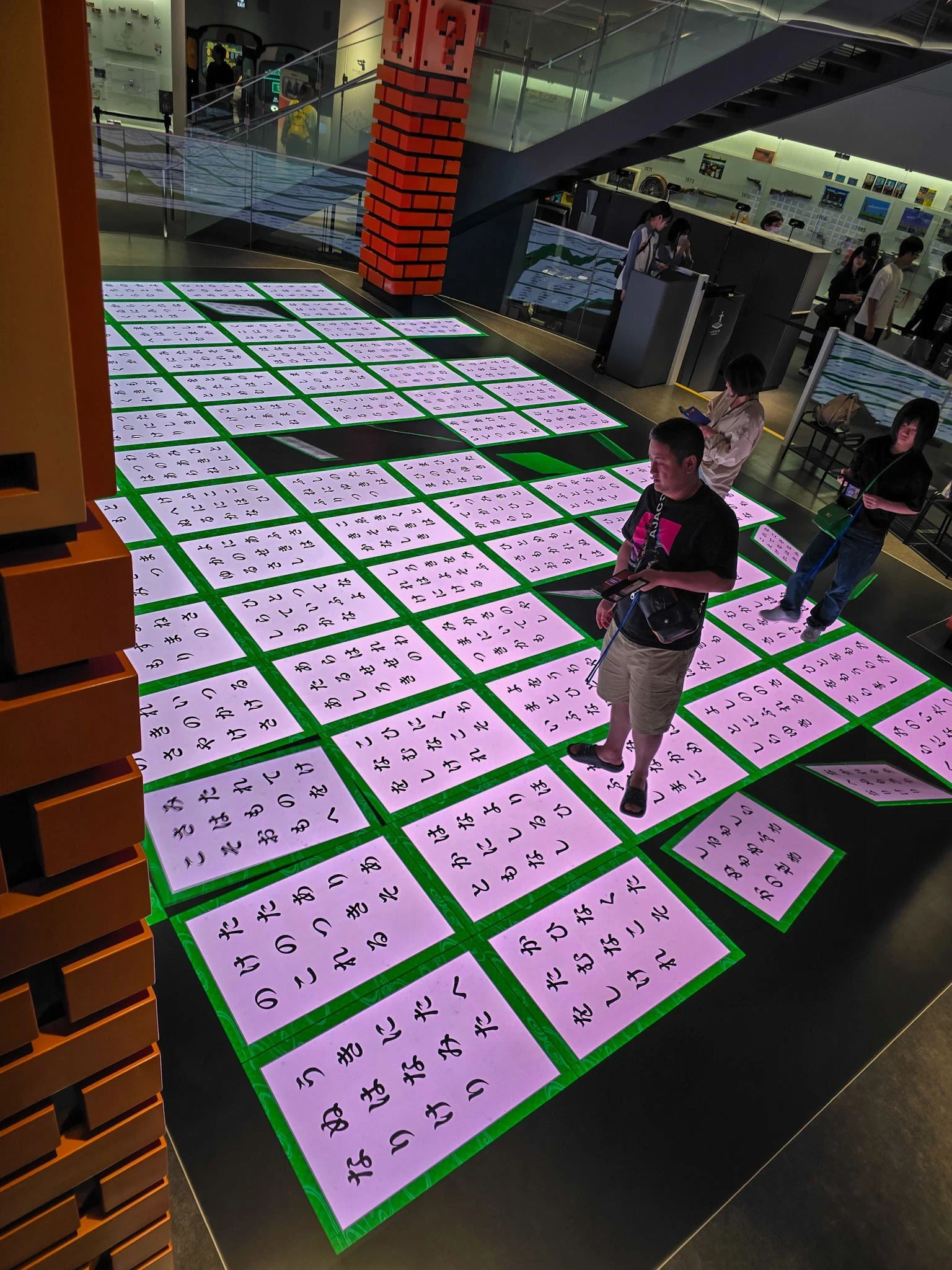
One thing that's worth knowing is that Nintendo didn't actually start out as a video game company. It was founded in 1889 and originally made Japanese playing cards called hanafuda. Over the years, the company experimented with all sorts of games and toys, some of which you can still see at the museum, including an old roulette machine.
The museum itself is divided into two main sections: the exhibition area and the interactive area. In the exhibition, you can see Nintendo's consoles, games, toys, and other products from throughout its history. The interactive section, on the other hand, is where you can actually play Nintendo games, both old and new. There's also a café and a museum shop selling Nintendo merchandise, including items exclusive to the museum.
And while you certainly don't need to be a lifelong Nintendo fan to visit, I think anyone who grew up playing its games will recognize quite a few things here.
How to Get Tickets & How to Get There
Getting tickets to the Nintendo Museum is probably the most complicated part of planning your visit. You can't just go online, choose a date, and buy a ticket. Well, technically you can if there are any left, but your best chance is entering the ticket lottery three months in advance.
You can register through the official Nintendo Museum website, and you'll need a Nintendo Account. If you already have one for your Switch, you can use that.
How Does the Nintendo Museum Ticket Lottery Work?
The lottery opens on the first day of each month for visits three months later. For example, we visited on October 2, so I could register anytime between July 1 and July 31.
Naturally, I set an alarm for June 30 at 5 PM Amsterdam time, which was midnight in Japan. Did I need to do that? Absolutely not. I had the entire month to register, and entering on the first day doesn't improve your chances. But I know myself, and I'd rather get these things done immediately.
When you register, you can choose your preferred date and time slot and see how many people have already entered for each one. If you're flexible with your dates, it might actually be worth waiting a little before entering so you can see which time slots are less popular.
From what I noticed, morning time slots tended to be more popular, while later ones had fewer lottery entries. That's probably because arriving early gives you more time to explore, sign up for workshops, and shop before certain merchandise sells out. The interactive games can also get increasingly busy throughout the day because there's no set time you have to leave.
My partner and I both entered the lottery, but only I was selected. On August 1, I received an email with a link to purchase our tickets, which I could then pay for by credit card. If you aren't selected, you may be placed on a waitlist for any tickets that become available afterward. In our case, that would have meant potentially receiving an offer toward the end of August.
How Much Do Nintendo Museum Tickets Cost?
Adults (18+): ¥3,300 (approx. €19 / $22)
Ages 12–17: ¥2,200 (approx. €13 / $15)
Ages 6–11: ¥1,100 (approx. €6 / $7)
Children under 6: Free
When purchasing your tickets, make sure you enter everyone's names exactly as they appear on their passports. Nintendo checks your IDs when you arrive, and they're pretty thorough about it.
How to Get to the Nintendo Museum from Kyoto
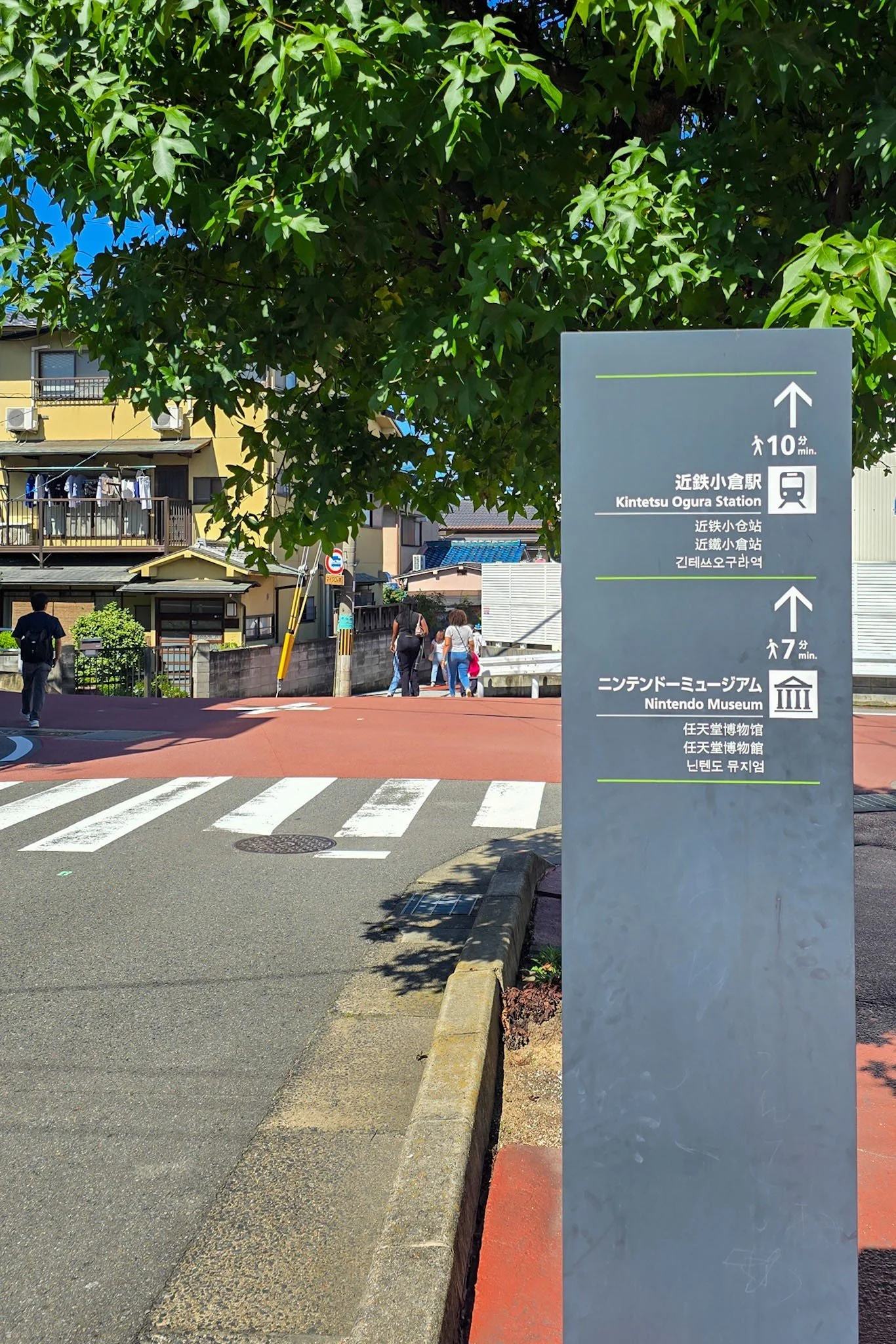
The Nintendo Museum is located in Uji, just outside Kyoto. From our hotel, it took around 40 minutes to get there: approximately 30 minutes by train, followed by a 10-minute walk. There's also a train station almost next to the museum, but the route we took was simply more convenient from where we were staying. I'd recommend checking Google Maps for the easiest connection from your hotel.
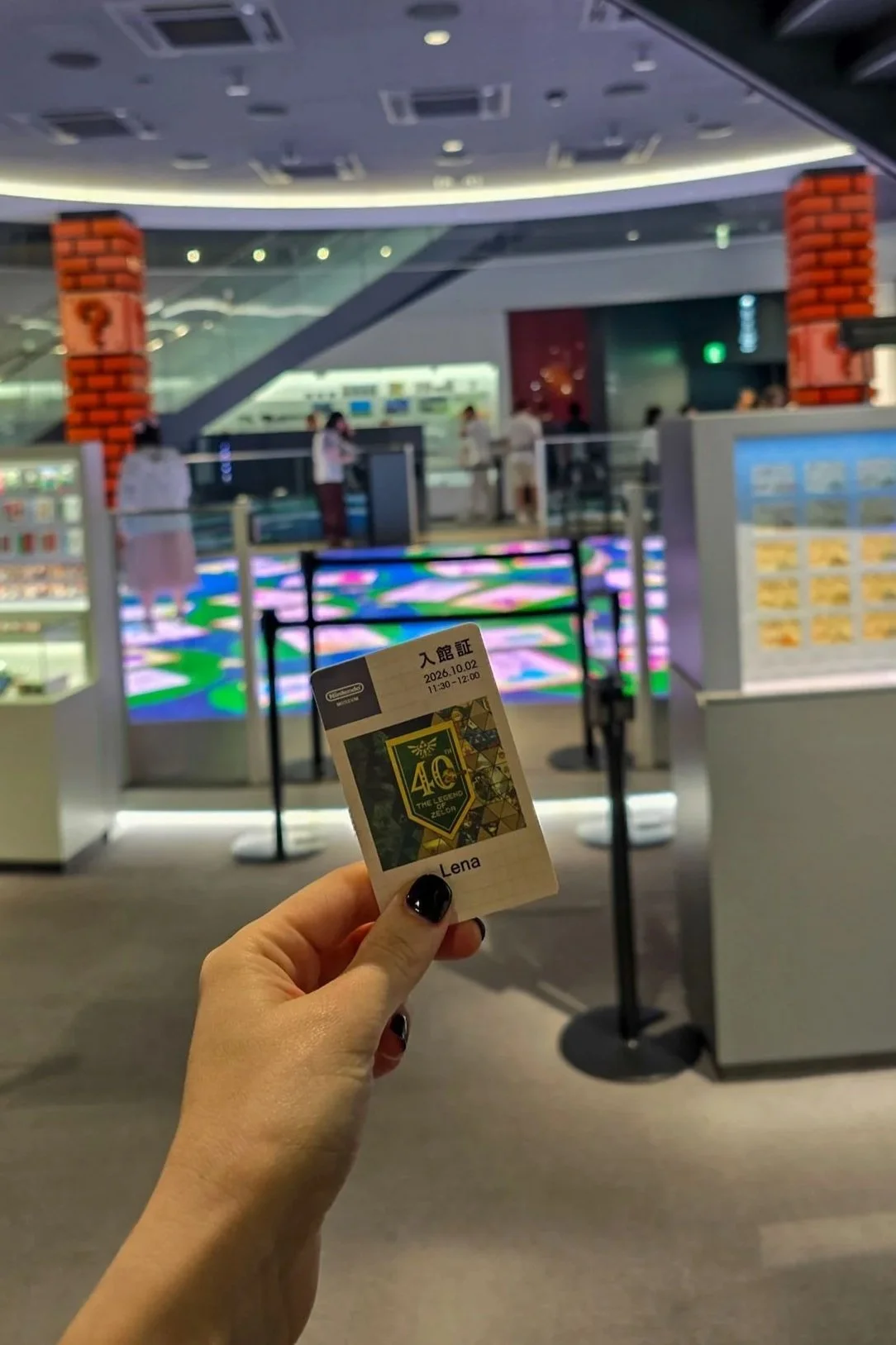
The day before your visit, you'll receive a QR code in your Nintendo Account, which you'll need to scan when you arrive. You'll also need your passport, so make sure you bring it. Before entering, you'll go through airport-style security checks, after which you'll receive a physical admission pass with your name on it. You can actually customize your pass beforehand by uploading your Mii through your Nintendo Account, so it'll appear on your card.
When we visited, though, Nintendo had a special Zelda anniversary design that you received by default. I was pretty happy with that one and decided to leave it as it was.

Inside the Nintendo Museum
When you receive your admission card, it comes loaded with 10 coins that you'll use for the interactive games. Each game costs a different number of coins, but we'll get to that in a moment.
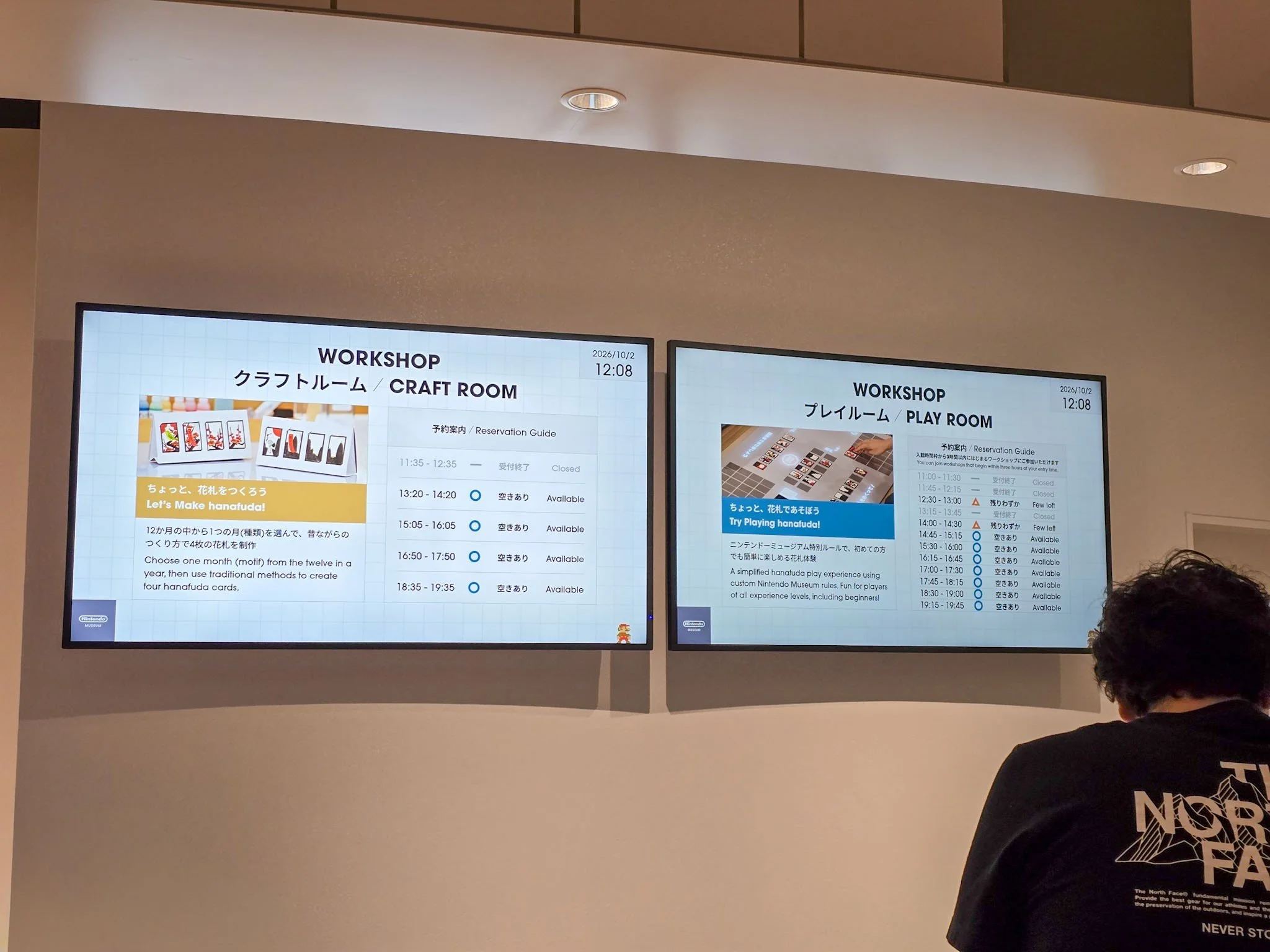
When you first enter the museum, you'll see the workshop counter and the shop. I decided to check out the shop first, just in case there was any limited-edition merchandise I didn't want to miss. There wasn't anything I needed to rush to buy, though, so we headed over to the workshop counter. We decided to skip the workshops and went upstairs instead.
You take the escalator up in groups, so you might have to wait around 5–10 minutes before you're allowed upstairs. I think they do this to manage the number of visitors entering at once rather than having everyone constantly walking in.
Nintendo recommends visiting the interactive section first because the games can get busy later in the day. We entered at 11:30 AM, so that's what we did.
After we'd finished playing, we headed to the exhibition area on the other floor. You're not allowed to take photos here, unfortunately, but it's essentially a walk through Nintendo's history, from its earliest products to the games and consoles we know today.
You'll see everything from old controllers and video games to board games and even a roulette machine from Nintendo's earlier years. It's quite interesting to see just how many different things the company made before becoming the Nintendo we know today.
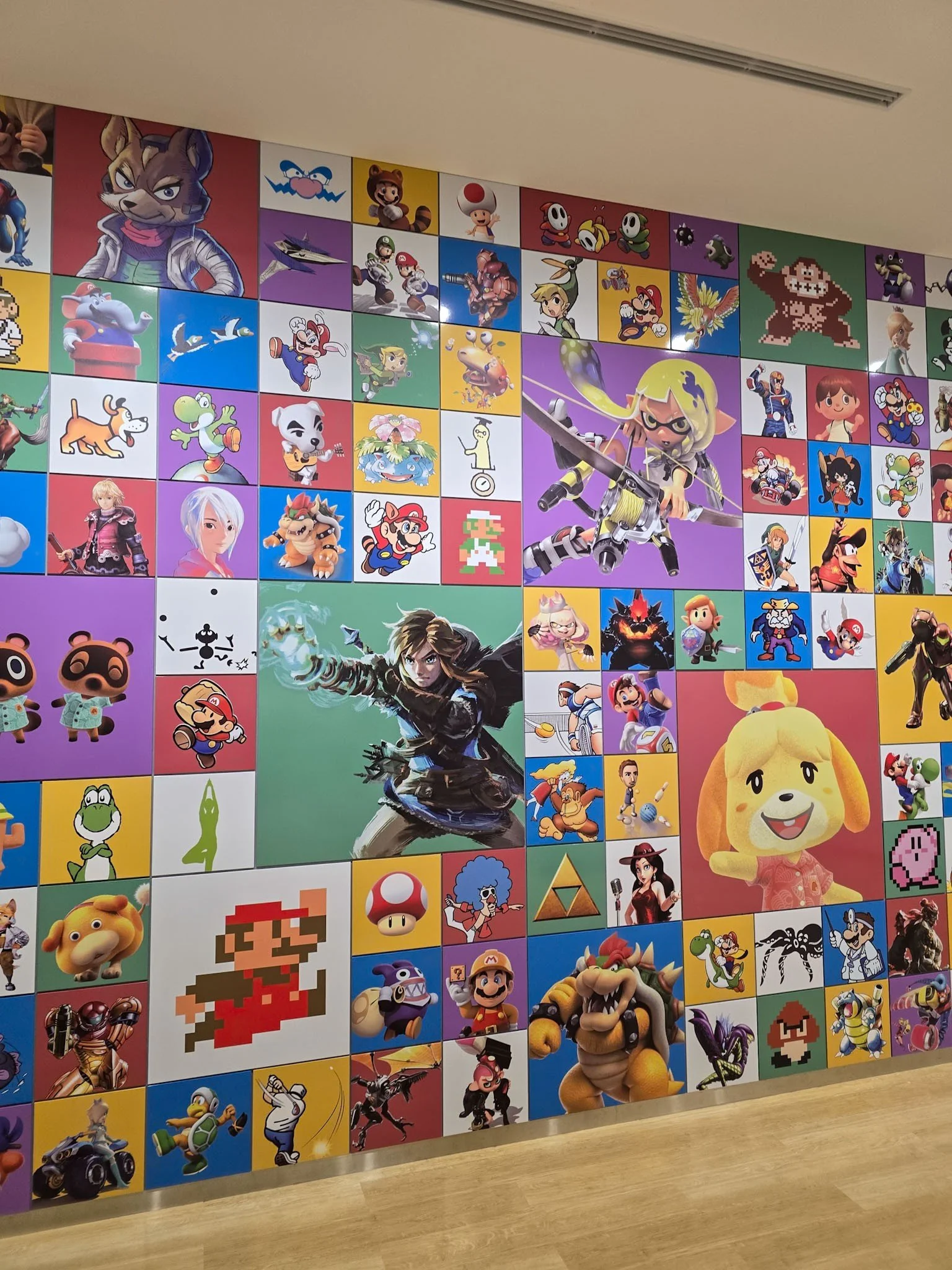
For me, though, the most impressive part was a small section displaying original drawings of some of Nintendo's characters. Seeing the actual artwork behind characters I've known for most of my life was amazing, and probably my favorite part of the exhibition.
Interactive Games
The Interactive Games
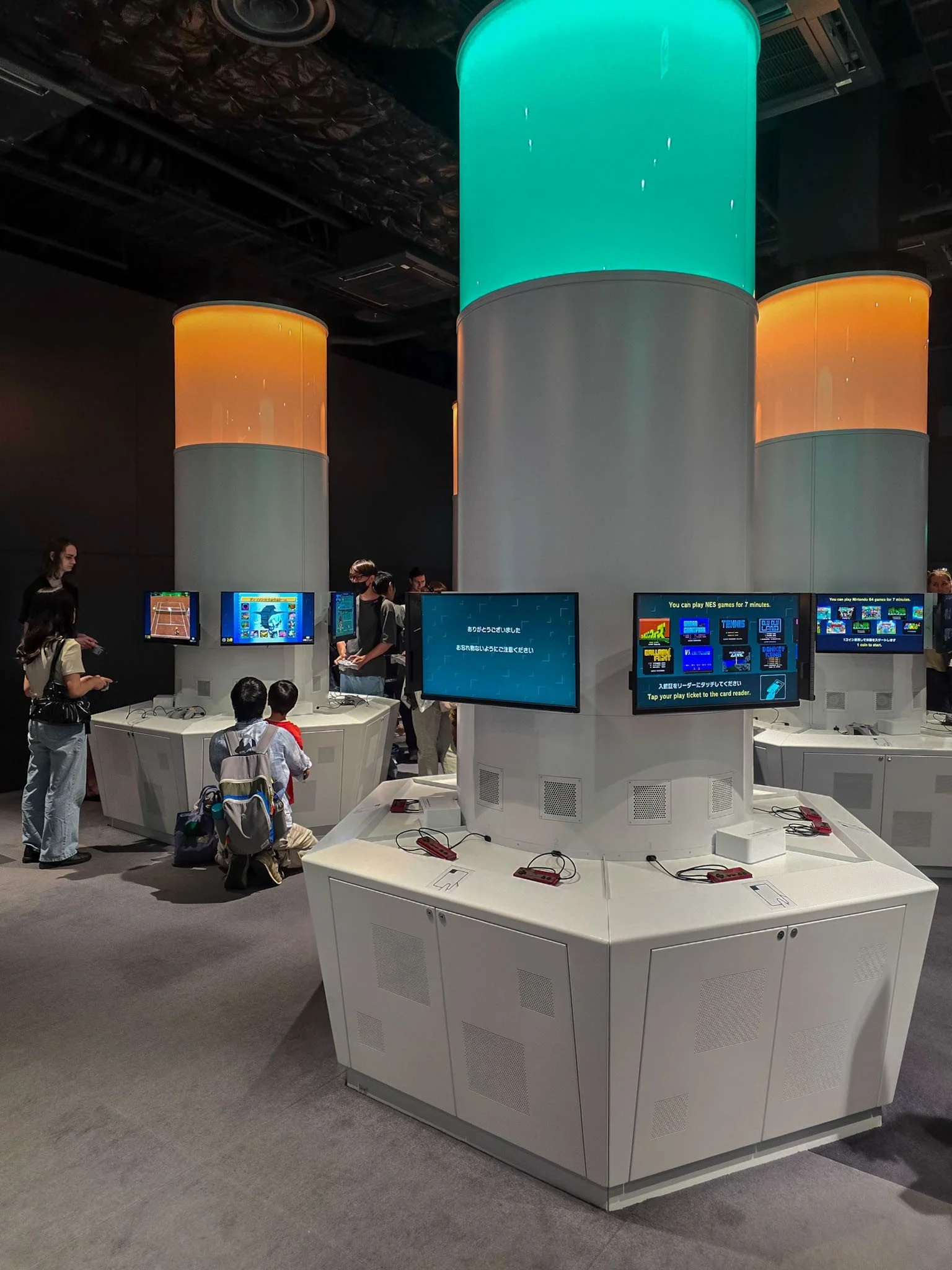
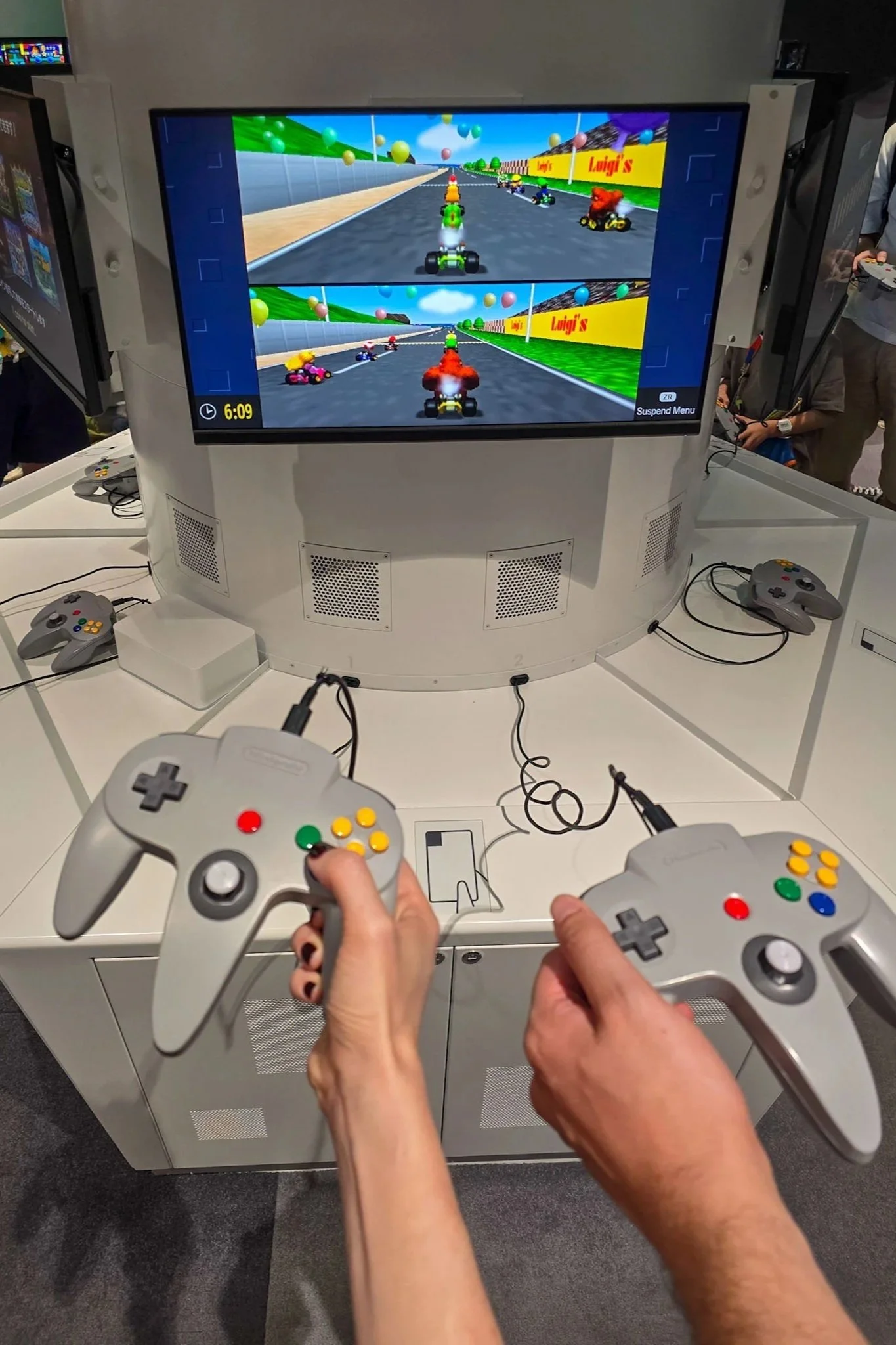
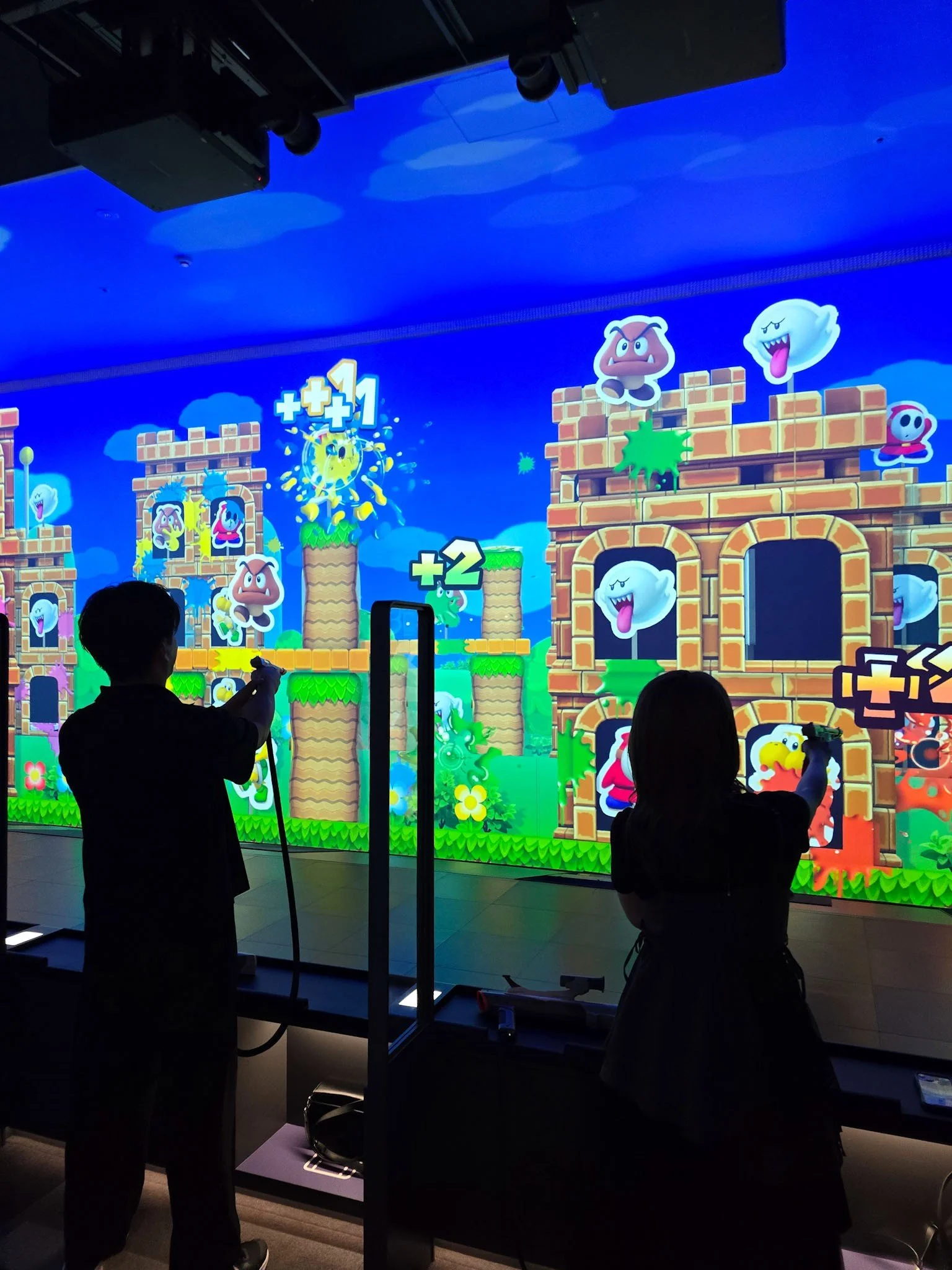
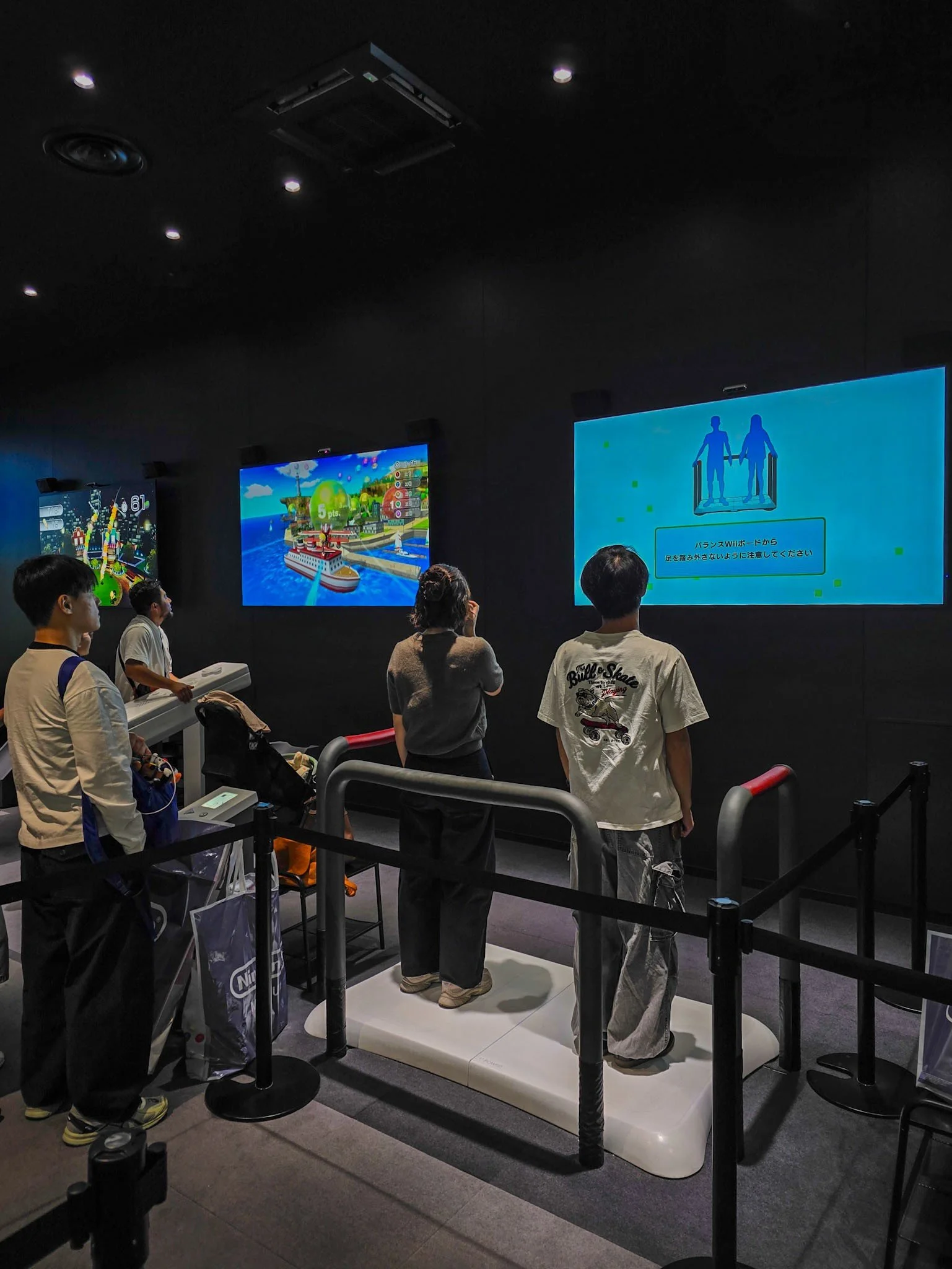
The interactive section is where you actually get to play Nintendo games, and there's quite a lot to choose from. You'll find everything from baseball-style batting games and shooting games to classic console games like Donkey Kong and multiplayer Mario Kart.
Remember those 10 coins on your admission card? This is where you'll use them. Each game costs a different number of coins, so I'd recommend walking around first to see what's available before deciding what you want to play. Once you've spent all 10 coins, you can't top them up, so choose wisely!
Some of the more popular games have longer waiting times, but I thought they were worth it. My favorite was probably the shooting game where you compete against 10 other players, shooting at moving Mario character targets. It's quite chaotic with everyone trying to hit the targets at the same time, but that's also what makes it so much fun.
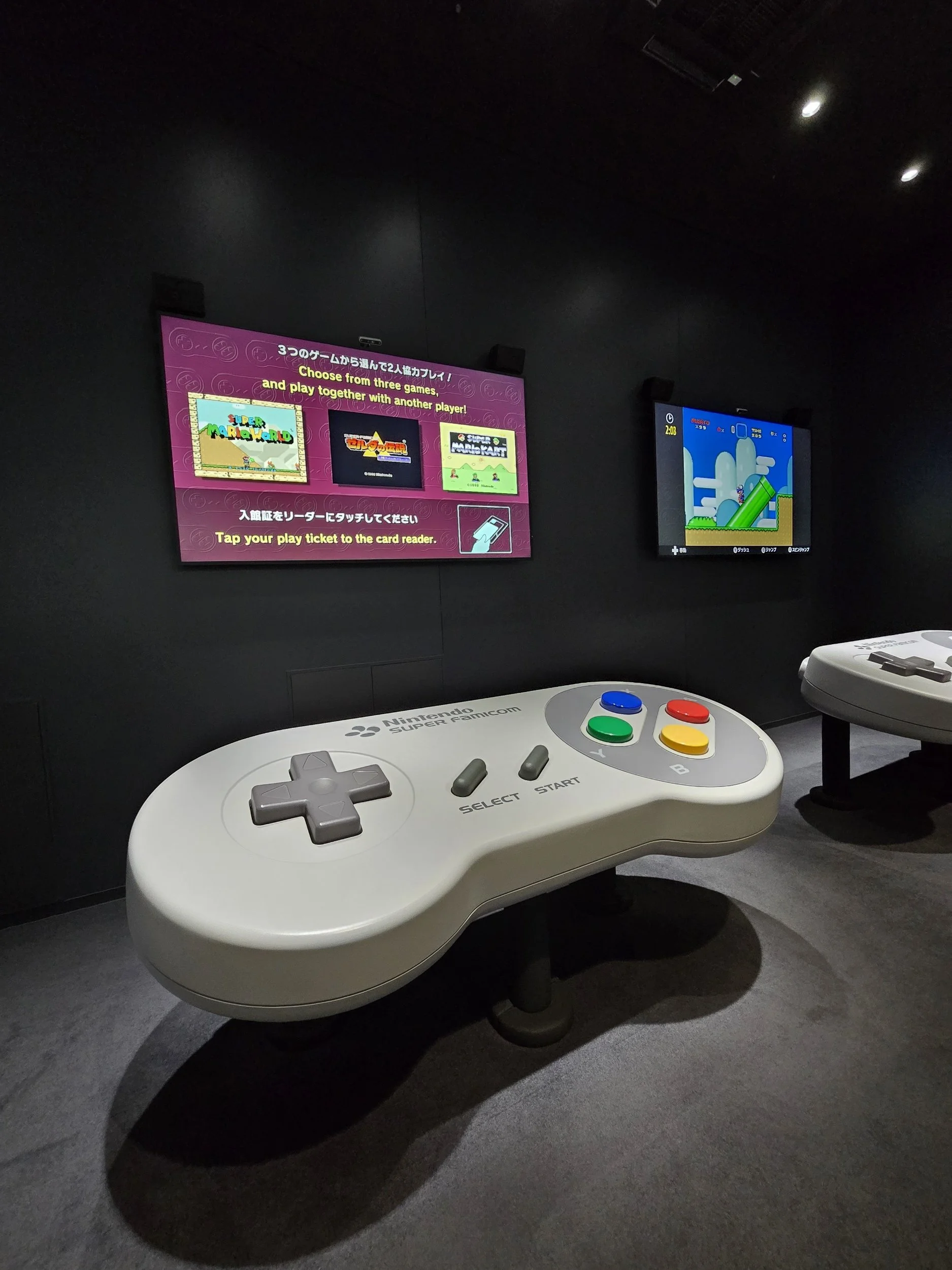
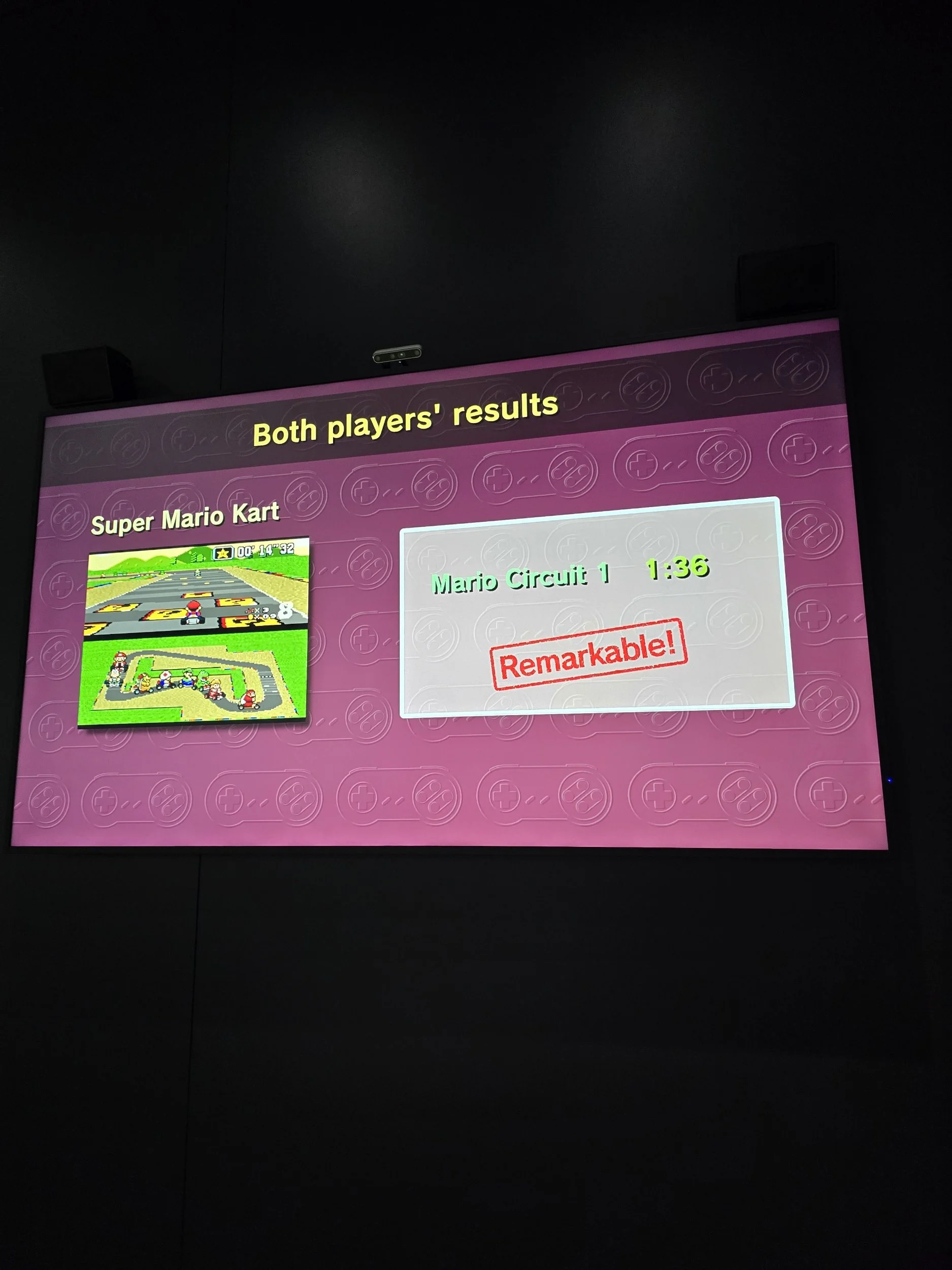
Another one I really liked was Mario Kart, which you play on an enormous NES controller with a partner. One person is responsible for steering, while the other controls the acceleration and uses items. So instead of playing against each other, you have to work together to make it around the track. And yes, coordinating all of that on a giant controller is a lot harder than it sounds!
The Shop and Café
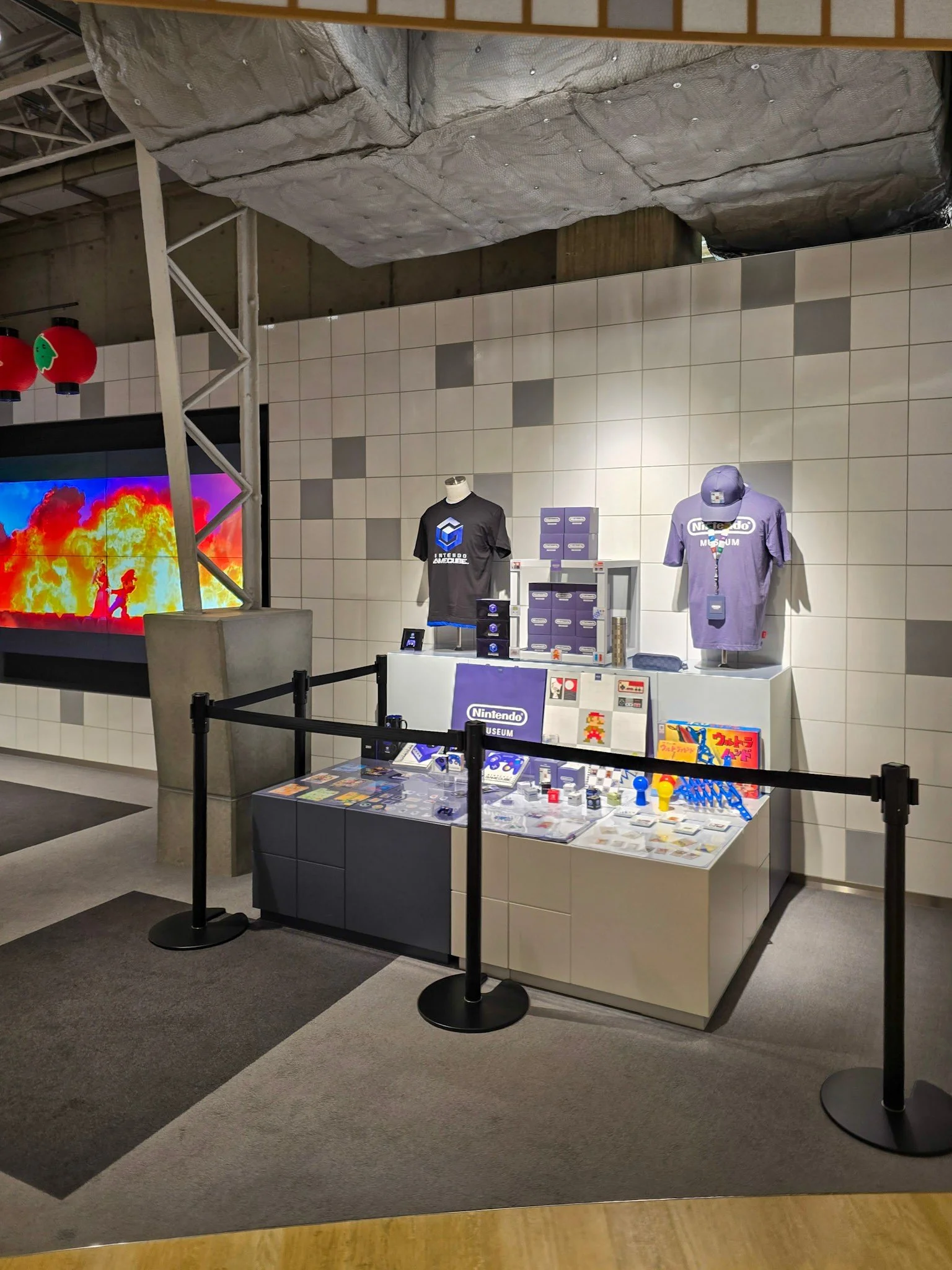
Of course, there's also a gift shop at the Nintendo Museum, with the usual Nintendo merchandise like mugs, keychains, T-shirts, and a few items exclusive to the museum.
One thing I absolutely loved was an enormous Nintendo controller plushie. And when I say enormous, I mean there was absolutely no way I was getting that thing into my suitcase. Unfortunately, I had to leave it behind.
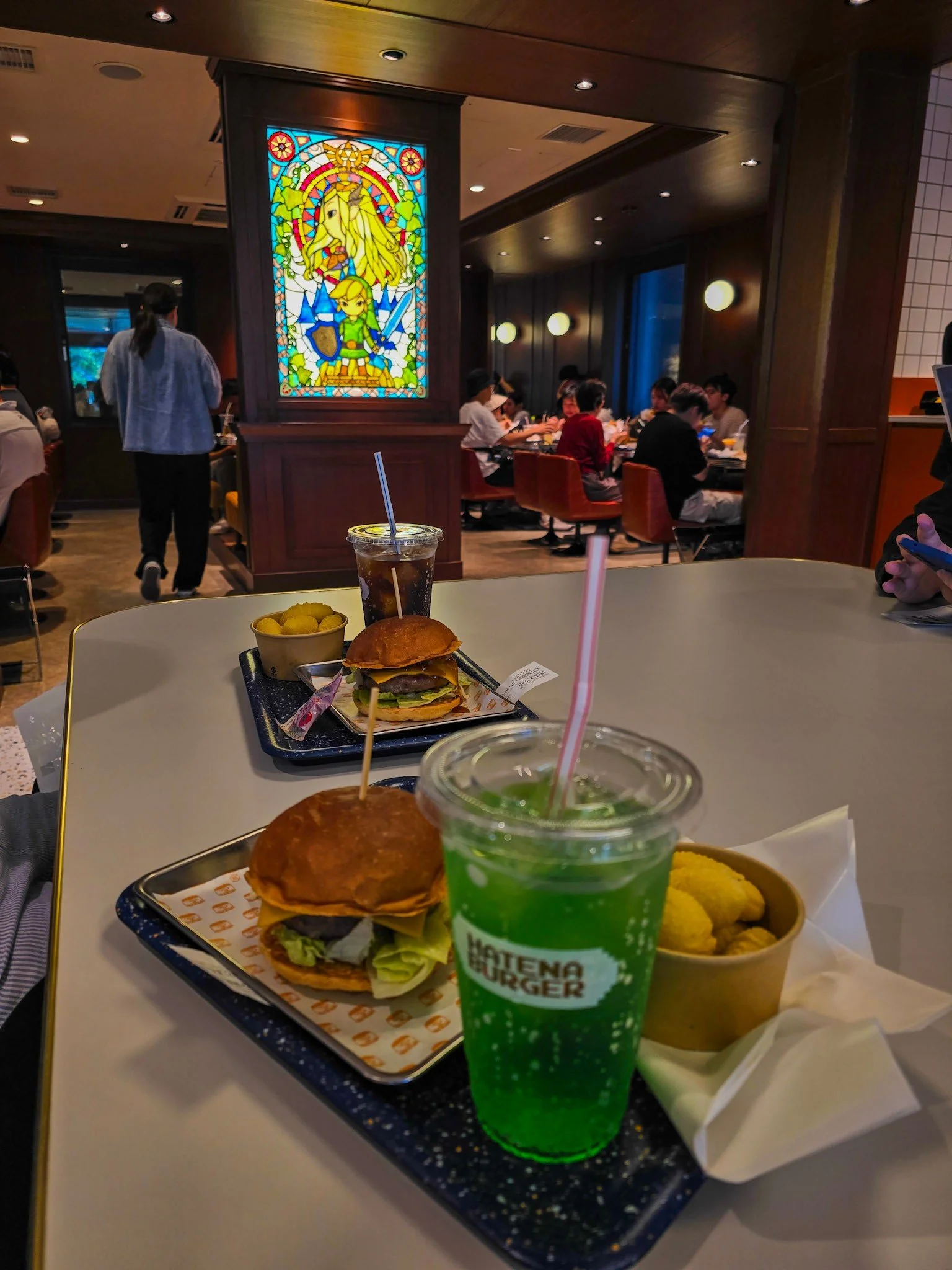
Other than that, I wasn't particularly excited about the merchandise. There were some nice things, but nothing else that really made me want to buy anything. The museum also has a café where you can grab a burger and something to drink. We were pretty hungry by the time we got there, so we decided to give it a try.
There was quite a wait, although, as with most things in Japan, everything was very organized, so it didn't feel quite as long as it actually was. You place your order on your phone and then head to the counter to pay.
Unfortunately, the food really wasn't good. It wasn't particularly cheap either, which made it even more disappointing. I think during our entire trip to Japan, I had exactly two bad meals: one here and the other at the Pokémon Café. Not exactly a great record for Nintendo-themed dining!
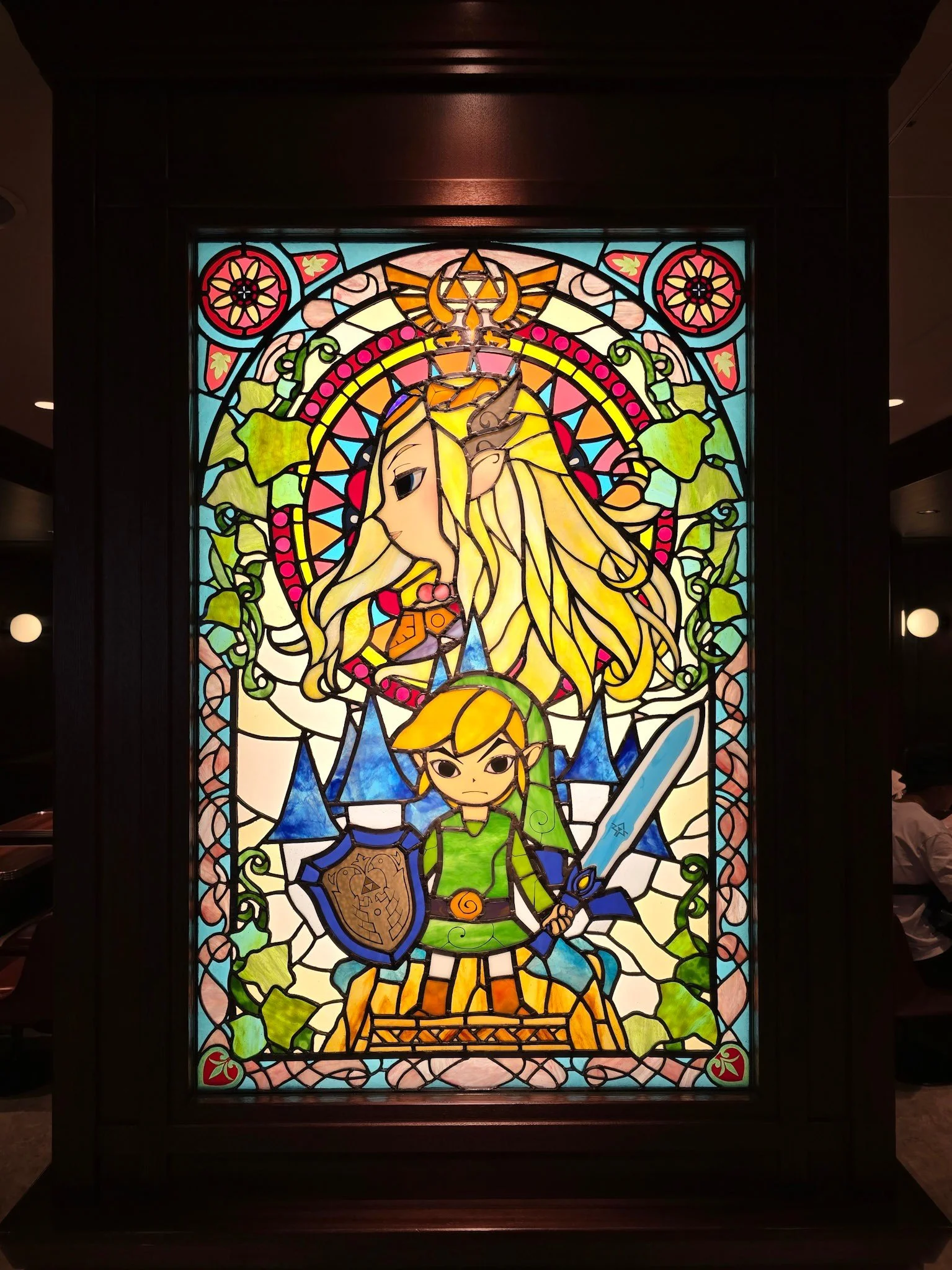
It's a shame because I think they could do something really nice with the café. The staff were incredibly friendly, though, and there's a beautiful Legend of Zelda stained-glass window that I loved seeing. But unless you're really hungry or just want to see the café for yourself, I'd recommend eating somewhere else. For me, the food definitely wasn't worth the wait.

Do I think the Nintendo Museum Is Worth Visiting?
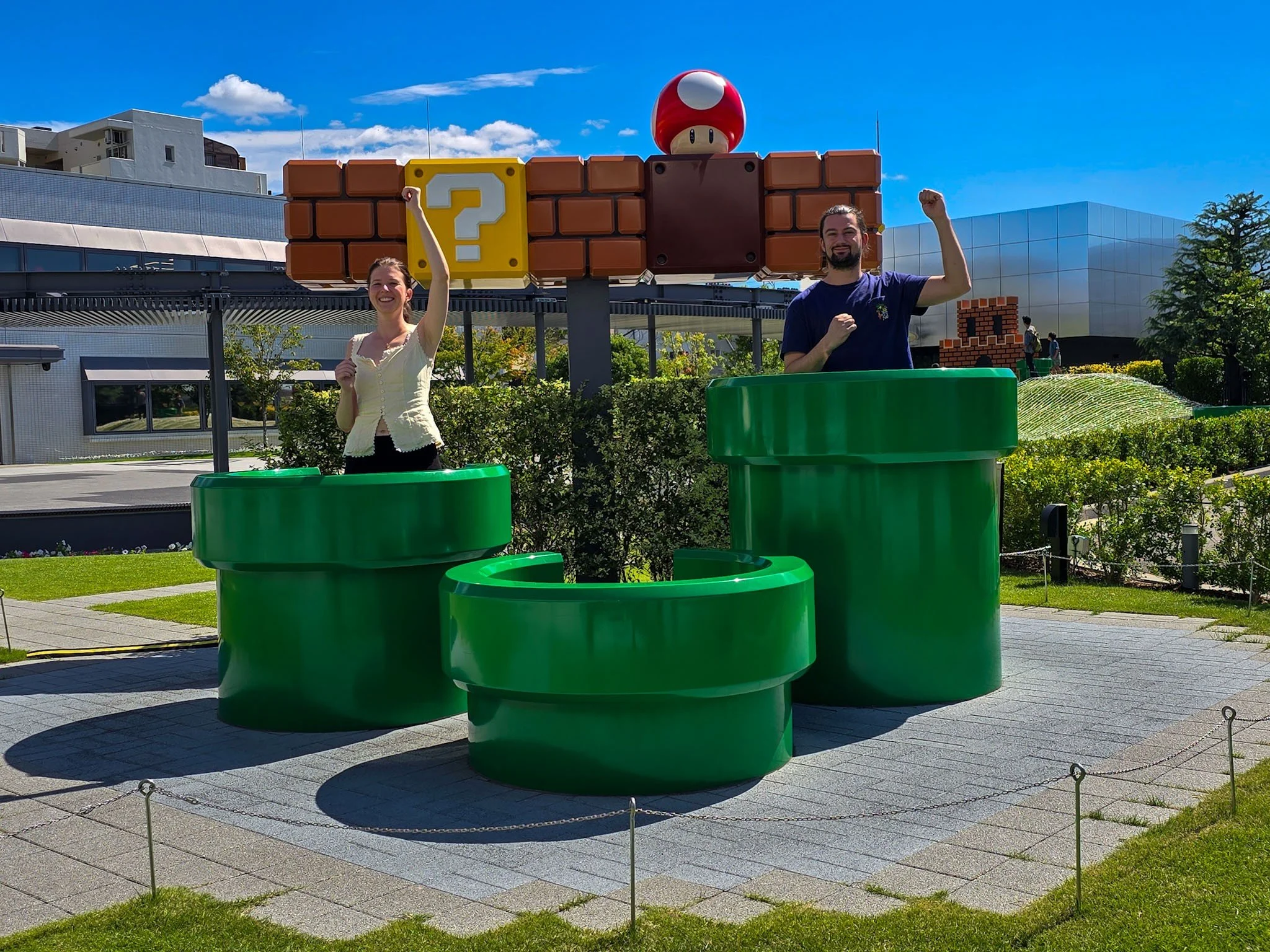
Yes, absolutely! I had a great time at the Nintendo Museum, and I'm really glad we managed to get tickets. That said, I did expect it to be a little bigger, especially the exhibition section.
I was hoping to learn more about how some of Nintendo's most famous games and characters were created, from the original ideas to how their stories developed over the years. I loved seeing the original drawings, but I wish there had been more of that. The exhibition does a great job of showing how Nintendo's products have changed over time, but I would have liked a little more of the story behind them.
Still, I really enjoyed the interactive games, and overall, it was a fun way to spend a few hours in Kyoto. Would I visit again? Probably not. I got to see and do everything I wanted, and there's so much else to explore around Kyoto that I'd rather spend my next visit doing something different.
I also wouldn't necessarily recommend the museum to everyone. If you don't have that Nintendo nostalgia or aren't particularly interested in playing games, I'm not sure you'd get that much out of it. But if you grew up with Nintendo and still enjoy its games today, I think it's definitely worth adding to your Kyoto itinerary.
I hope this was helpful. If you have any more questions, you can always reach out here or on Instagram, and I’m more than happy to answer any of your questions.
Have fun!
More Japan Travel Guides & Hotels