
Puglia Travel Guide: What to See, Do & Eat
“You may have the universe if I may have Italy.”
Have you already ticked off Tuscany, the Amalfi Coast, or maybe even Rome and Venice? Looking for something a little different on your next Italy trip? Head to Puglia in southern Italy, the heel of Italy’s boot, where life moves more slowly, the food tastes fresh, and the views are just as unforgettable.
This region has a fascinating history shaped by Greeks, Romans, Byzantines, and Normans — each leaving their mark in the towns, castles, and traditions you’ll see today. For years, Puglia was more of a local secret, known mainly to Italians. But in recent years, it’s stepped into the spotlight. Travelers now come for the fairy-tale trulli houses in Alberobello, the clifftop villages overlooking the Adriatic, and beaches that can rival those of Greece or Spain. Add in rustic pasta dishes, fresh seafood, and endless olive groves, and you’ve got a part of Italy that feels both authentic and unforgettable.
In this post, I’ll take you through my recent trip to Puglia, highlighting the little towns you can’t miss, how to get around, and a few useful tips to make the most of your time in southern Italy.
Ok, let’s get into it, your guide to Puglia, Italy starts here!
How Puglia Compares To Other Regions In Italy
Puglia has a very different atmosphere from many of Italy’s other well-known destinations, so whether it’s the right region for your trip really depends on what you’re looking for:
Compared to the Amalfi Coast, Puglia is more relaxed, spread out (though easier to navigate), and less crowded
Compared to Tuscany, Puglia is more coastal and beach-focused, while Tuscany has a slightly more elevated countryside atmosphere
Compared to Lake Como, Puglia has a more rugged and coastal atmosphere, while Lake Como is greener, more luxurious overall, and centered around lakeside hotels and mountain views
Compared to Sicily, Puglia feels a little easier to navigate for a shorter trip, while still offering a similar mix of beautiful coastlines and historic towns
Even though Puglia has become much more popular in recent years, it still feels surprisingly authentic and not overly catered to tourists. If I had to compare it, the atmosphere actually reminded me the most of Taormina in Sicily — lively, but still deeply connected to local life and culture.
If you’re still deciding between different regions in Italy, you can also read my comparison of Lake Como vs the Amalfi Coast here.
The Best Time To Visit Puglia
I visited Puglia in the first week of September, and honestly, it was the perfect time. The summer crowds had already thinned out, but the weather was still amazing, around 30°C (86°F) most days. You get all the sunshine and warm sea without the packed beaches and long restaurant waits.
Timing is especially important in Puglia because the towns are small. Visit during peak summer (July and August), and you’ll find yourself walking the same narrow streets as everyone else—bumping elbows in the Italian heat, basically recreating that one Lion King stampede scene. Late spring (May–June) and early autumn (September–October) are much better options: fewer crowds, still warm enough to swim, and way more enjoyable.
There’s another bonus to traveling in the shoulder season: prices for Airbnbs, hotels, and car rentals are much lower, so it’s also a better option if you want to stretch your budget.
Winter (November–March) is much quieter, but I wouldn’t recommend going then. Most resorts, restaurants, and attractions close for the season, so while you can still visit towns, you won’t be able to enjoy the highlights that make this region so special. Temperatures drop to around 10–15°C (50–59°F), and the beaches are off-limits, making winter trips much less practical.
How To Get To And Around Puglia
Getting to Puglia is pretty straightforward. Bari is the biggest airport, so most international flights land there, but you can also reach the region by train if you’re traveling from other parts of Italy. Once you’re in Puglia, things get a little trickier—many of the towns and beaches you’ll want to visit are spread out.
For that reason, renting a car is by far the easiest way to get around. It gives you the freedom to explore at your own pace, hop between towns, and reach hidden beaches without relying on schedules. While Ubers and taxis exist, they can be expensive and the waiting time is often long since everything is so spread out.
A quick tip for renting a car: lines at the airport can be long, especially during busier periods. When we rented a car from Avis, we signed up for Avis Preferred (it’s free) and were able to go straight to the car park—everything was set up online beforehand, so we didn’t have to wait in line.
Parking in Puglia is generally easy. There’s lots of street parking, and I didn’t have any issues during my trip—though it might be a bit trickier in peak summer. Parking costs are usually low, around €1 per hour, and for convenience, you can download the EasyPark app. It lets you pay exactly for the time you park instead of a preset amount at the meter, and you don’t have to rely on cash.
Best Places to Stay in Puglia
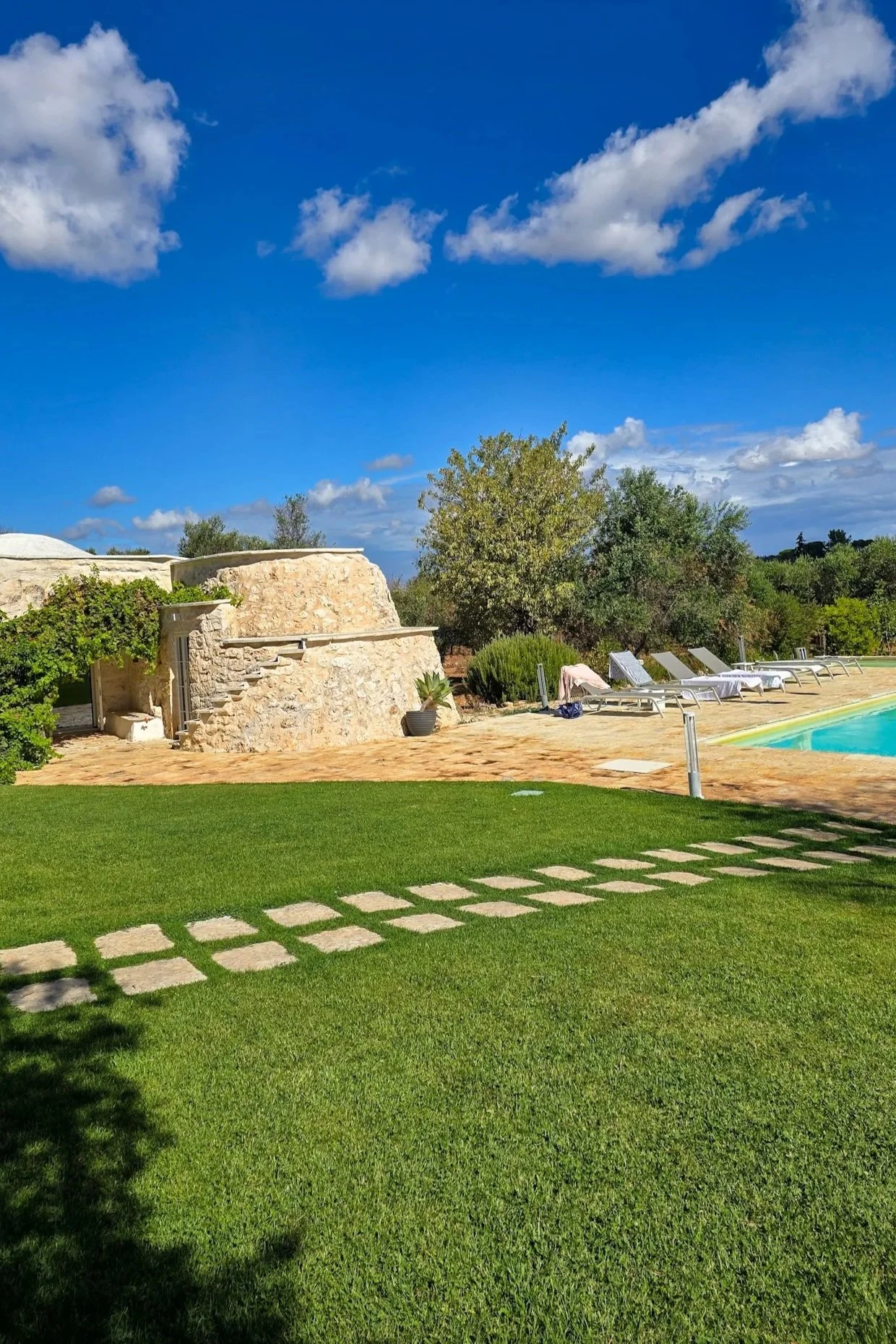
For your trip to Puglia, I’d recommend staying in the Ostuni area, especially if you’re planning to explore even more of the region, like Lecce and towns further south. It’s a great central base that combines convenience, comfort, and a bit of that classic Puglian countryside charm.
For our trip, we decided to stay just outside of Ostuni at a villa in the countryside with a pool. It was the perfect decision — right in the middle of all the towns we wanted to visit, so we could spend half the day sightseeing and the other half relaxing by the pool. The villa worked perfectly for the six of us, with multiple indoor and outdoor areas to eat, hang out, and unwind. Part of the villa is actually a Trullo, where two people can sleep separately from the rest of the house, which was a really fun touch.
The Best Places to Visit in Puglia
Puglia isn’t the kind of place where you stay in just one spot and call it a day. Part of what makes this region so special is how much it changes as you move around — each town has its own vibe, its own look, and its own reason to stop. You’ll find whitewashed hill towns, lively coastal spots, and elegant baroque cities filled with history and character.
That’s also what can make planning a trip here a bit tricky, but really exciting. There isn’t one “main” destination, and the towns are spread out enough that you’ll want to be intentional about where you go. Some are perfect for wandering for a few hours, others are worth staying overnight, and a few really stand out as must-visit.
To make it easier, I’ve rounded up the places I think are genuinely worth adding to your itinerary.
Whether you’re here for a long weekend or a full road trip through southern Italy, these are the towns and cities that will give you a good feel for what Puglia is all about:
Alberobello: Discover the Fairytale Trulli
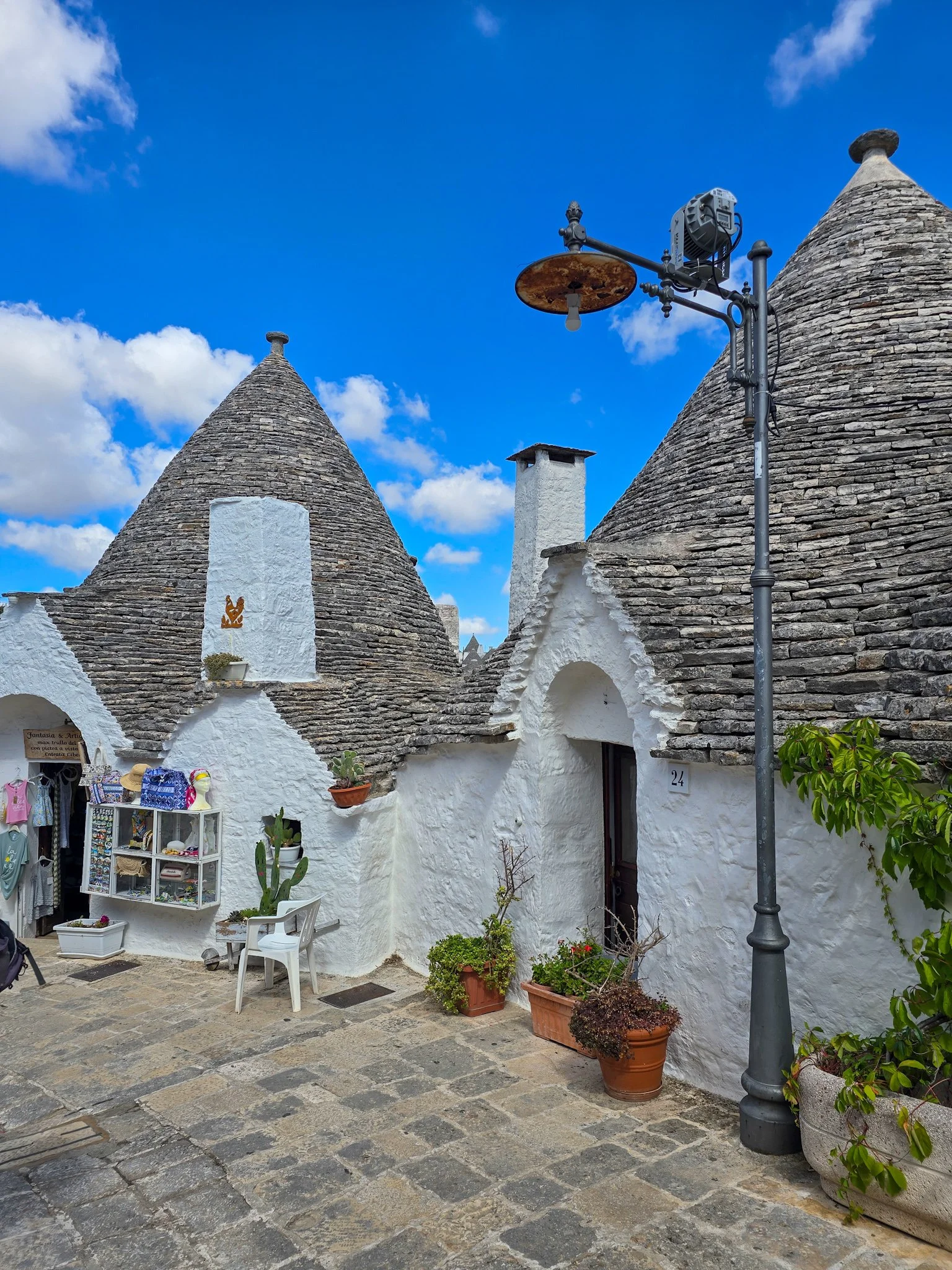
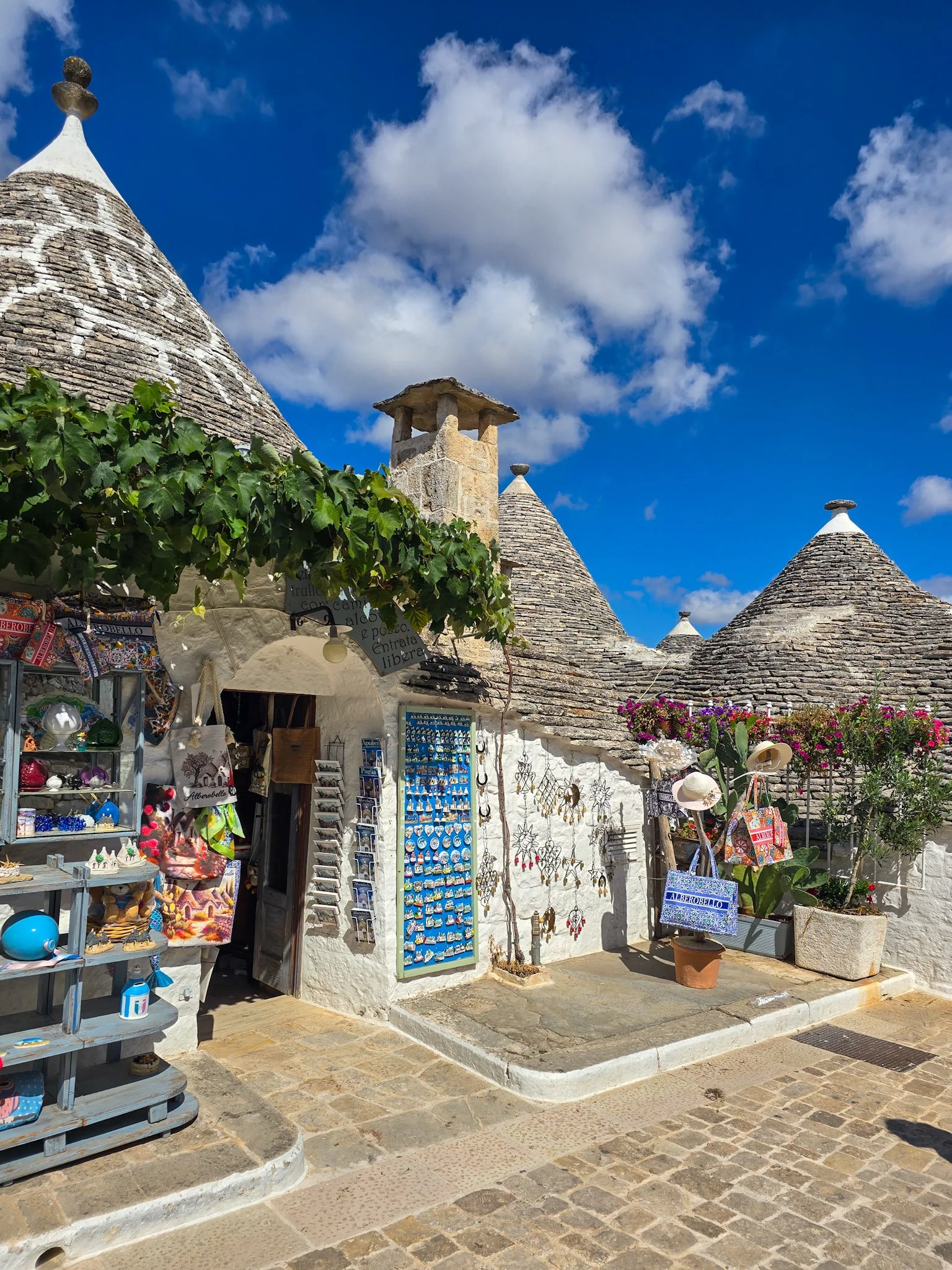
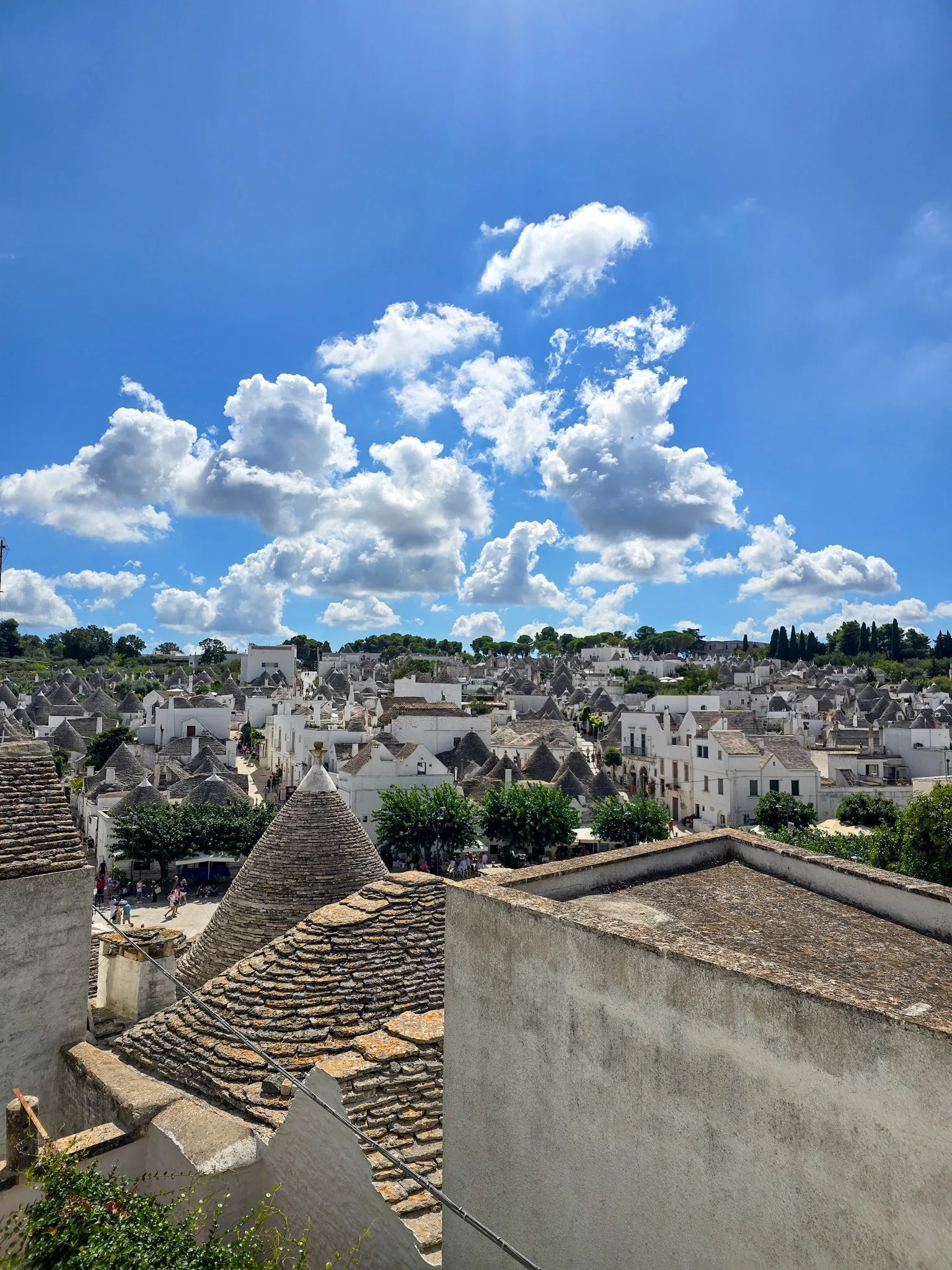
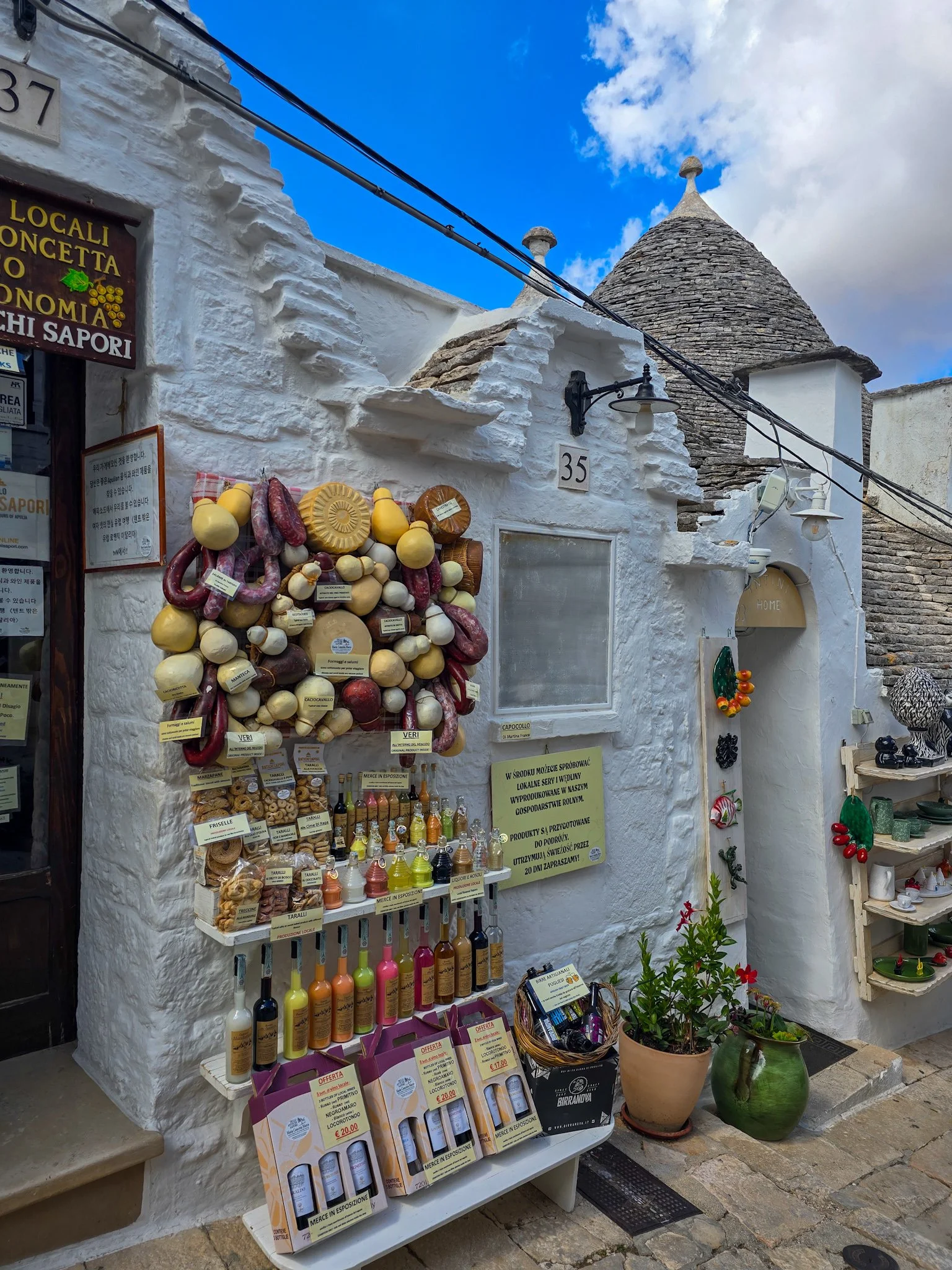
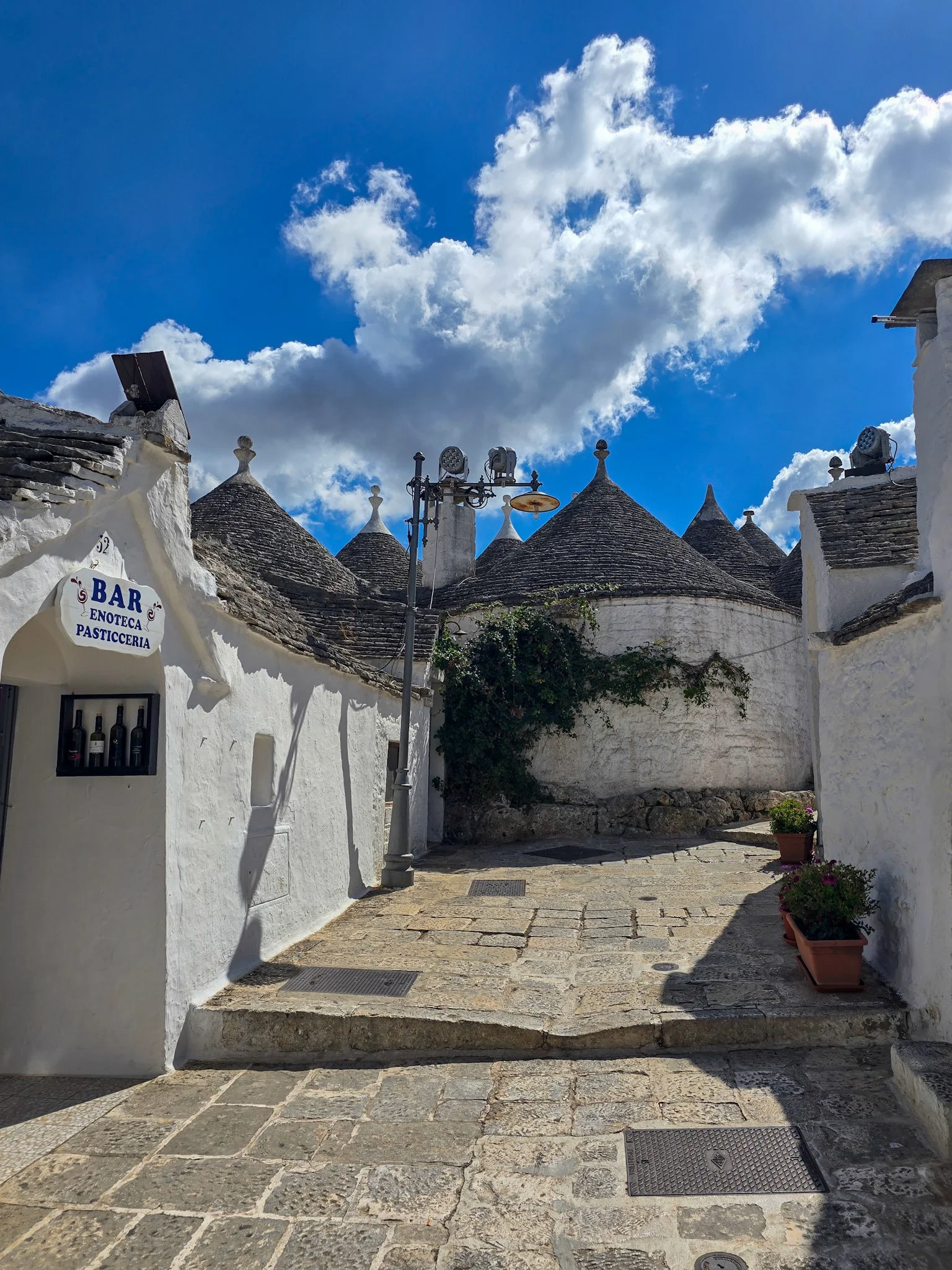
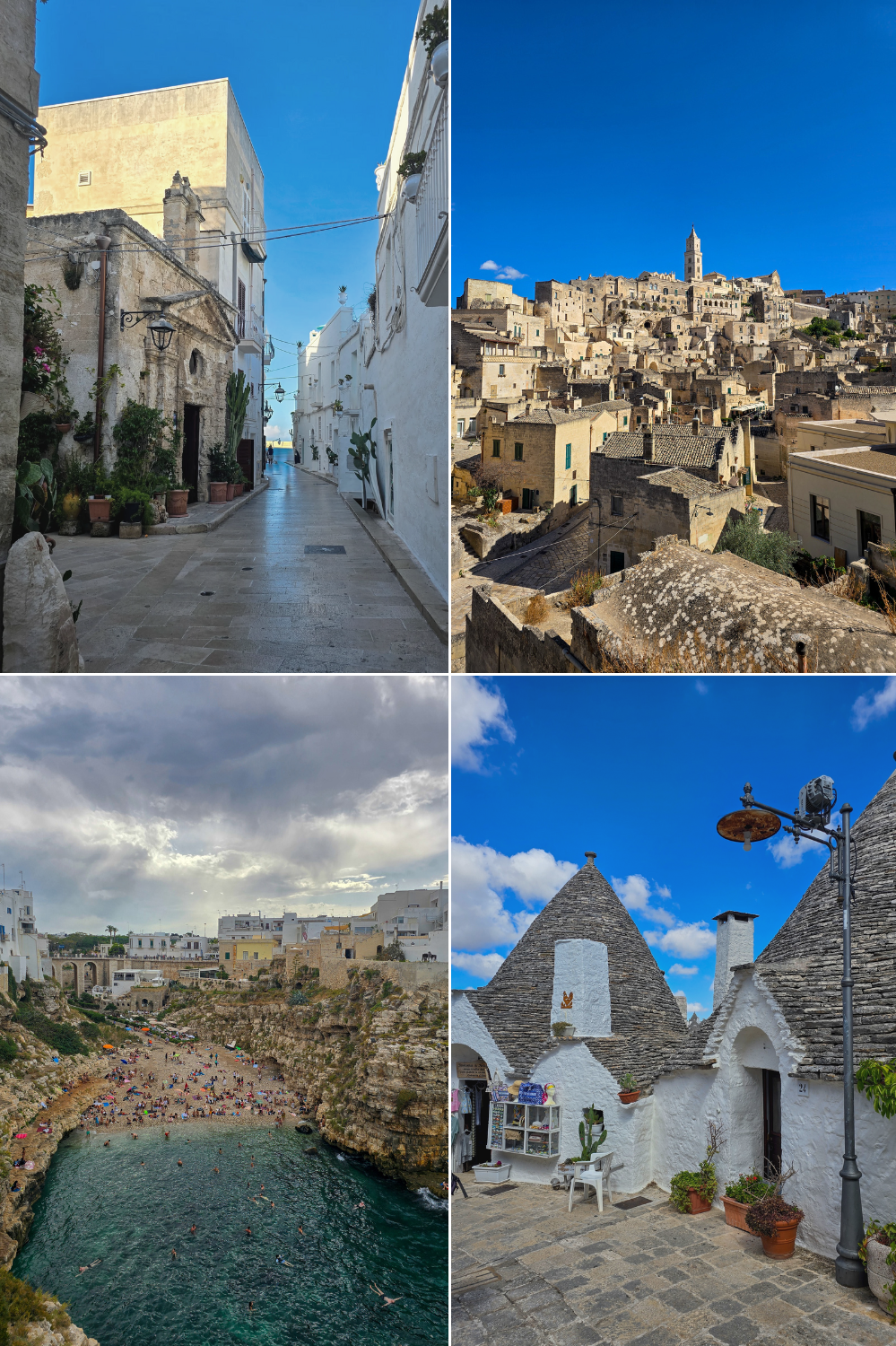
Alberobello is the spot everyone pictures when they think of Puglia. The town is packed with trulli, those little white stone houses with cone-shaped roofs that look like they belong in a fairytale. They’ve been around since the 14th century and were cleverly built without mortar so they could be taken down quickly to dodge taxes.
Today, more than a thousand are still standing, and walking among them feels almost unreal. Some are lived in, others are shops or cafés, but all of them make the town one of the most unique places you’ll see in Italy. Pop up to one of the viewpoints for the best photo of the rooftops stretching out across the hillside—you’ll see why Alberobello is a UNESCO World Heritage Site and one of Puglia’s must-visits.
The town isn’t large, so you don’t need a lot of time to explore and sightsee. Just keep in mind that in the historic center, where all the trulli are, there are a lot of small steps and uneven streets, so wear comfortable shoes.If you’re driving in, don’t stress about finding a spot. There’s a large parking lot (Google Maps link here) just a short walk from the historic center, so it’s easy to visit without worrying about squeezing into tiny streets.
Ostuni: Stroll the Famous White Streets
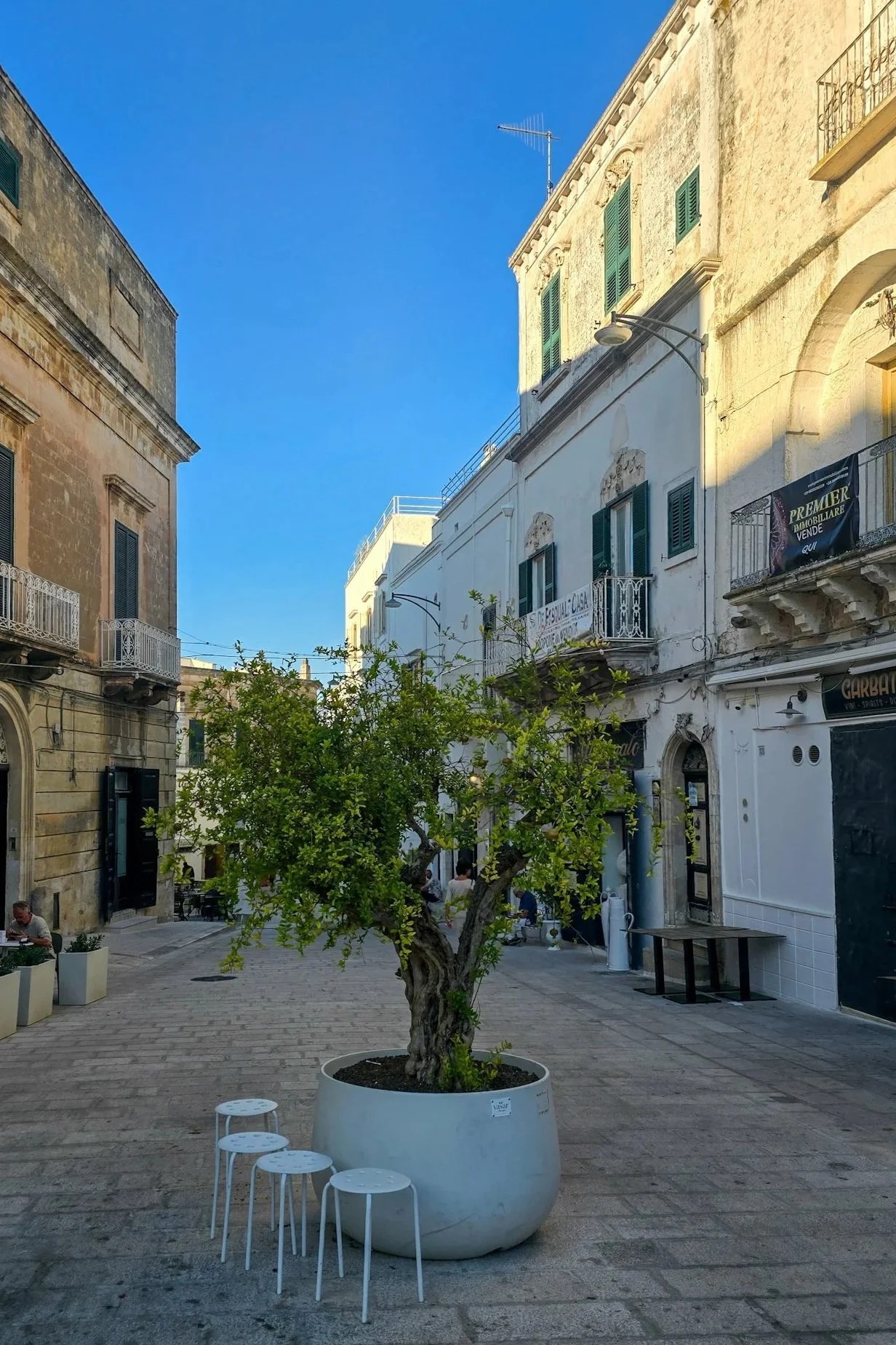
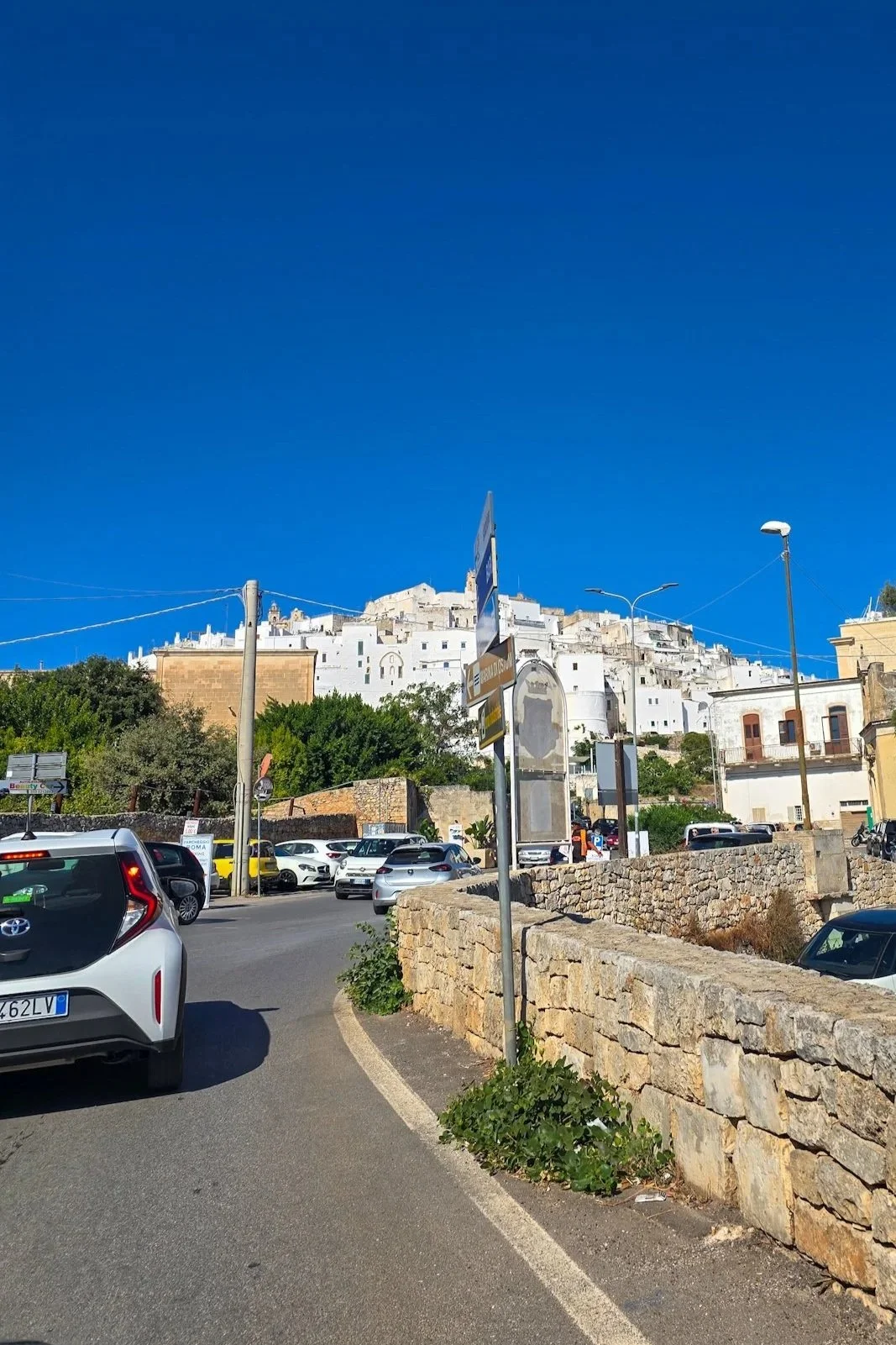
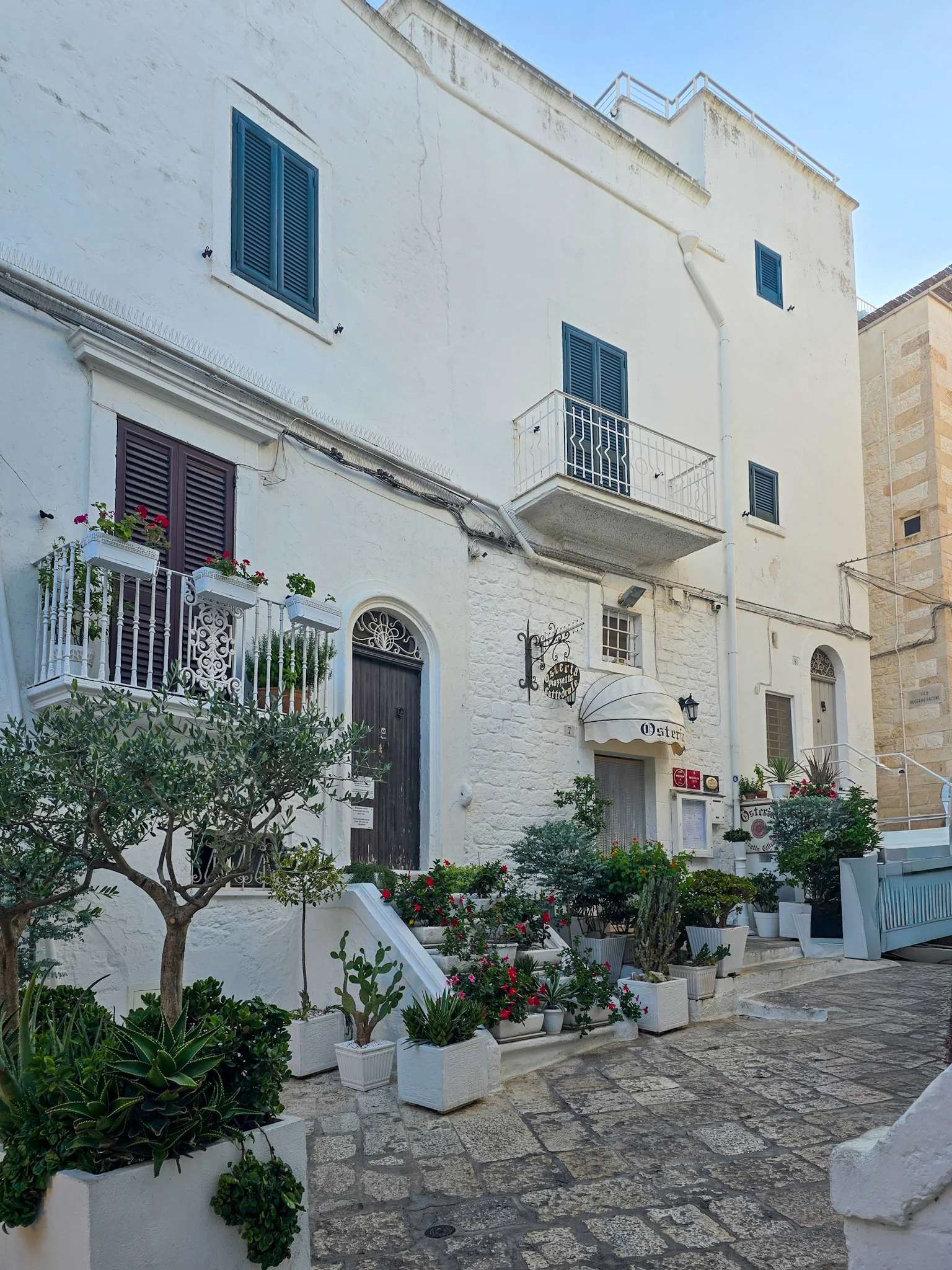
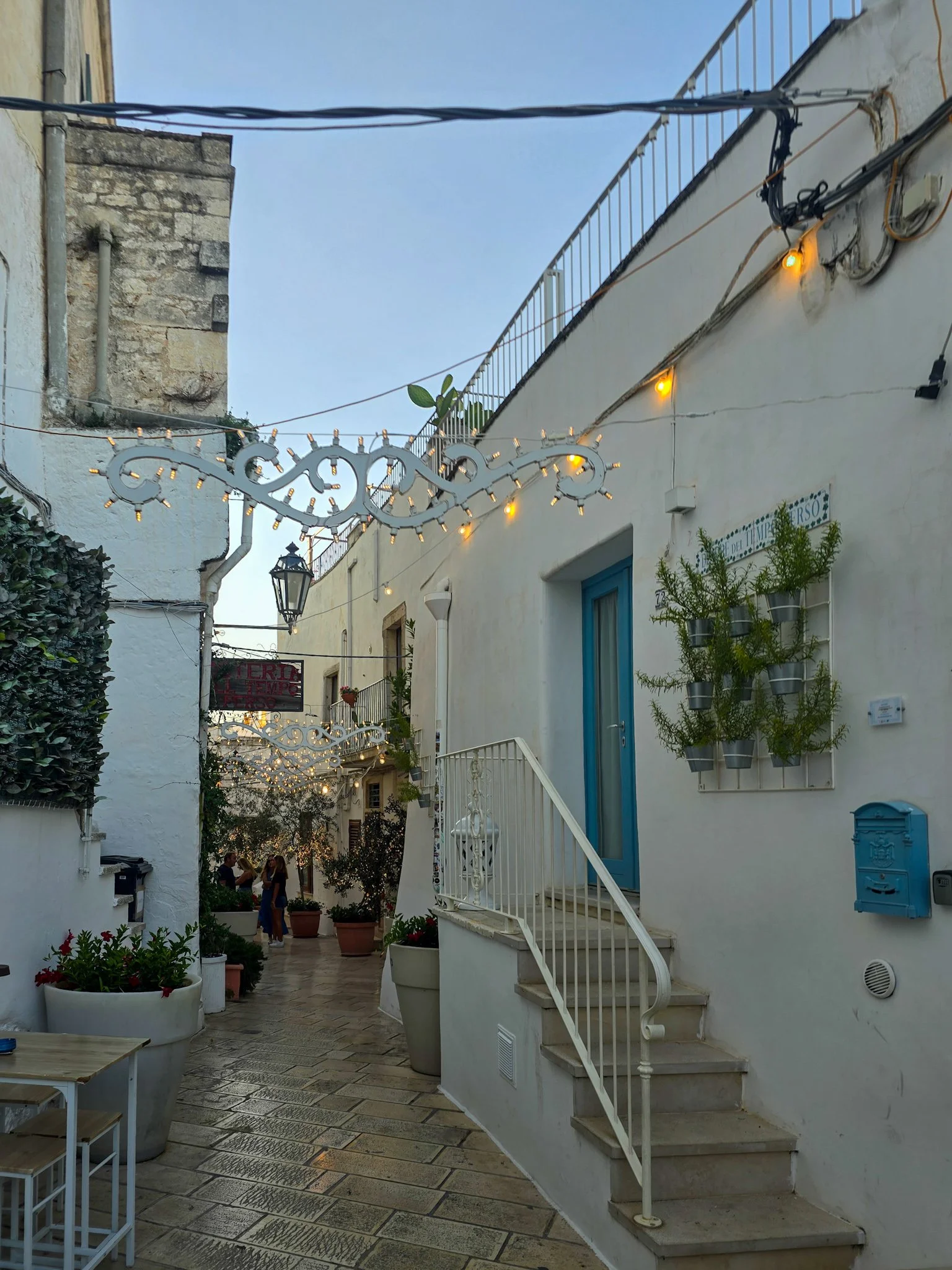
Ostuni gets its nickname, the “White City,” from the bright white buildings covering the hilltop. The town has been around since ancient times, but most of the historic center dates back to the Middle Ages. It was built on the hill for defense—back then, being up high made it easier to spot approaching invaders. Farmers, traders, and craftsmen lived here, and over time, the town grew into the maze of streets you see today.
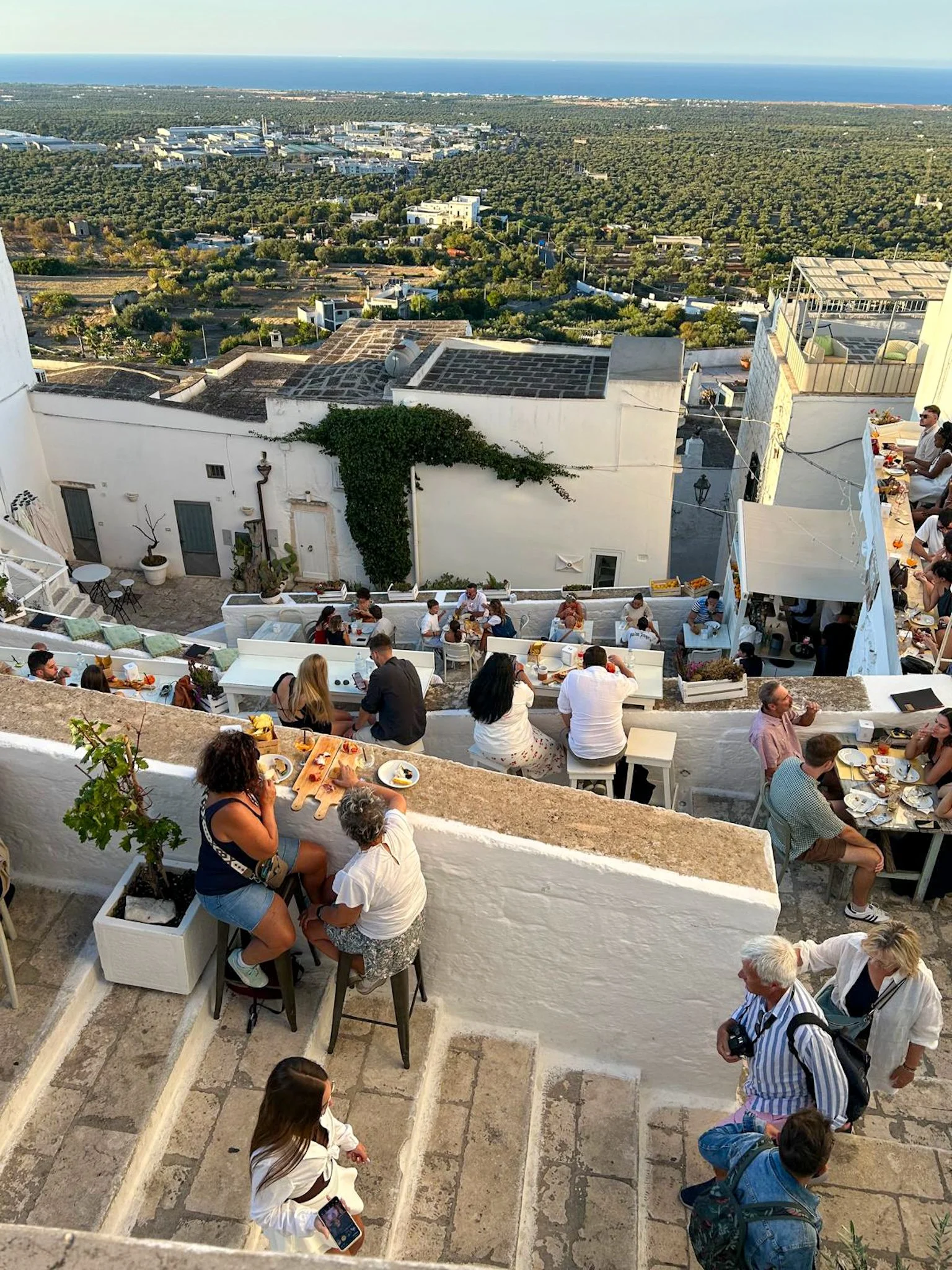
The historic center isn’t very large, and it loops around the hill, so you can start on one side and make your way around at your own pace. There’s some uphill walking, and lots of cobblestone alleys to explore, giving a sense of what life here used to be like. The cathedral at the top is worth a stop, and there are plenty of cafés or small squares where you can take a break and enjoy views of the hills and coast.
If walking is tricky, there are small golf-cart-style tours that drive through the historic center, making it easy to see the main streets without too much effort. For those coming by car, parking in Ostuni is straightforward—there’s a large lot just outside the old town (Google Maps link here), and from there it’s just a short walk into the center.
Tip: Ostuni is also home to that popular outdoor bar you’ve probably seen all over social media — Borgo Antico Bistrot. It’s a great spot to enjoy an Aperol Spritz while watching the sunset.
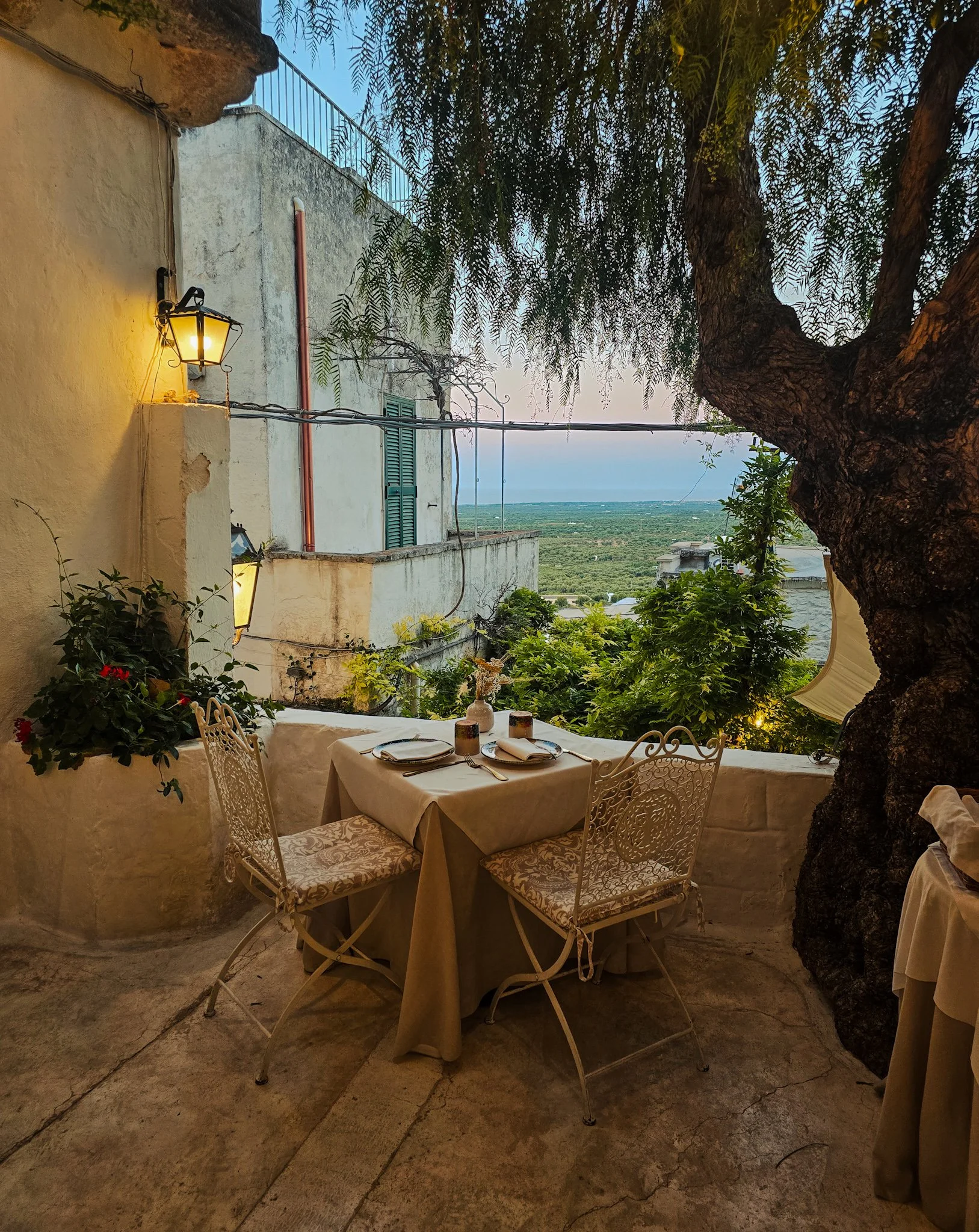
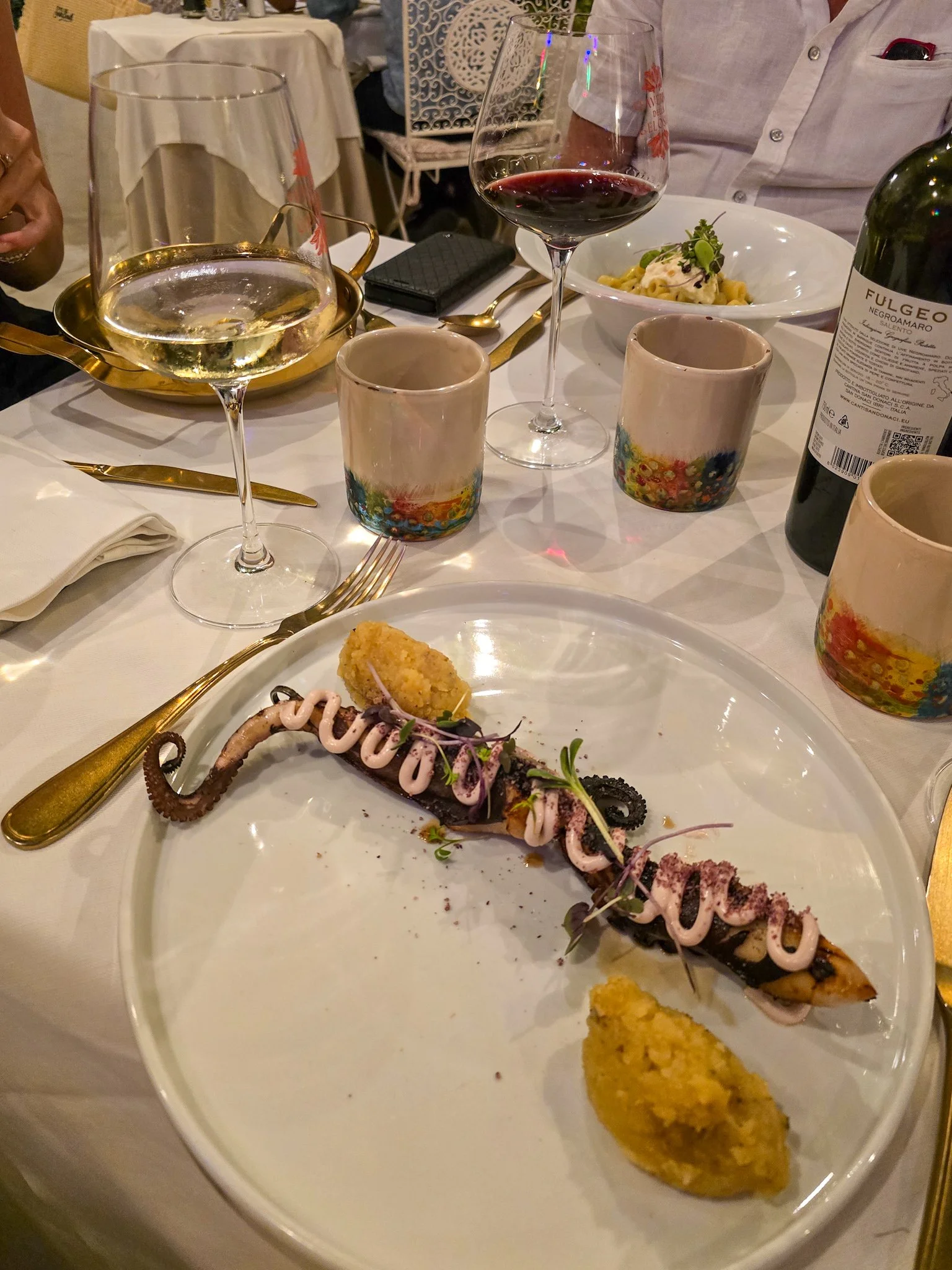
Looking for dinner? We went to Taverna Della Gelosia, a lovely place serving traditional Puglian dishes with a modern twist. The service can be a bit rushed, but the food and atmosphere make up for it. Make sure to call ahead for a reservation, they speak English, so don’t worry about the language. Definitely worth it if you want a memorable evening in Ostuni.
Polignano a Mare: Dive into Crystal Waters
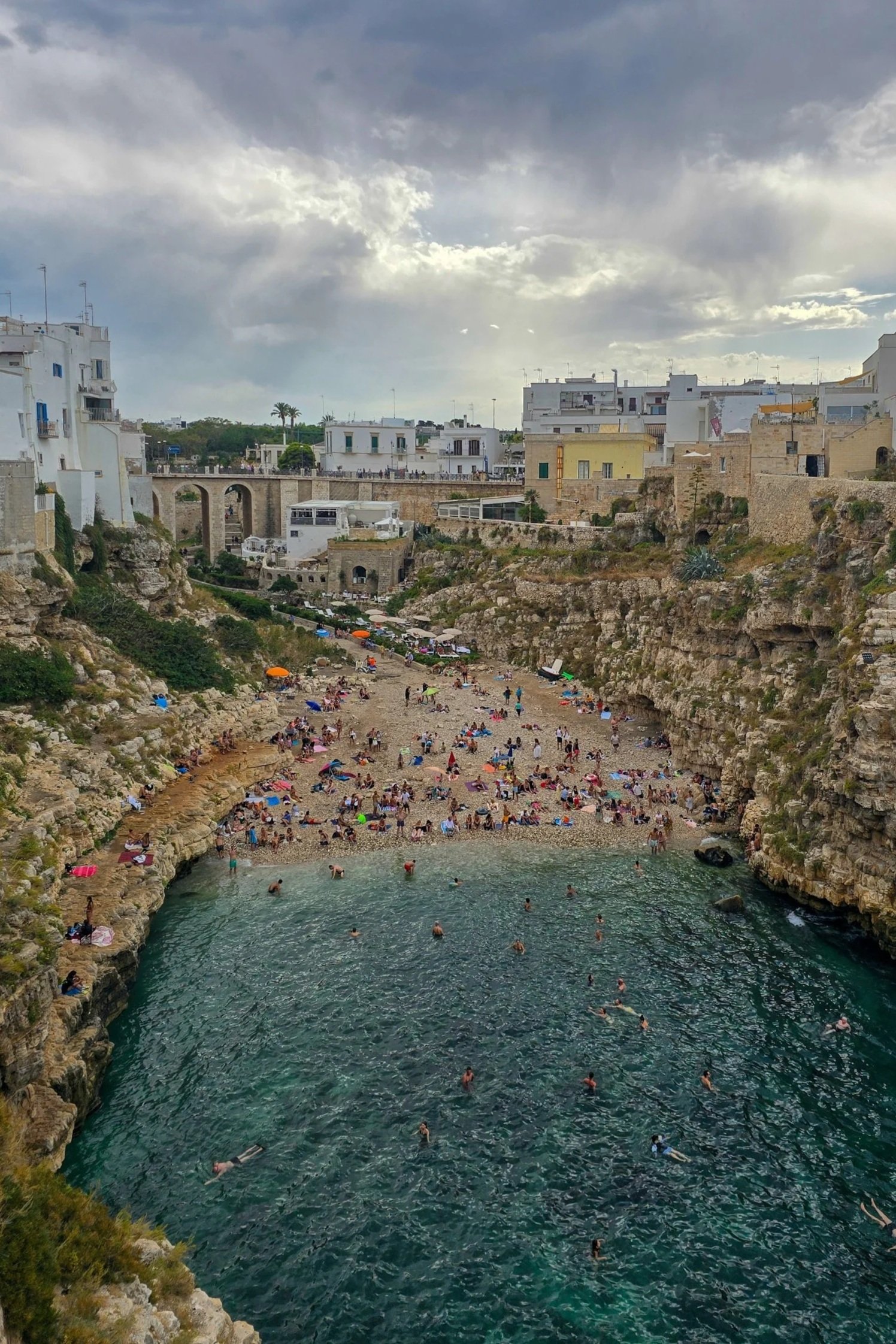
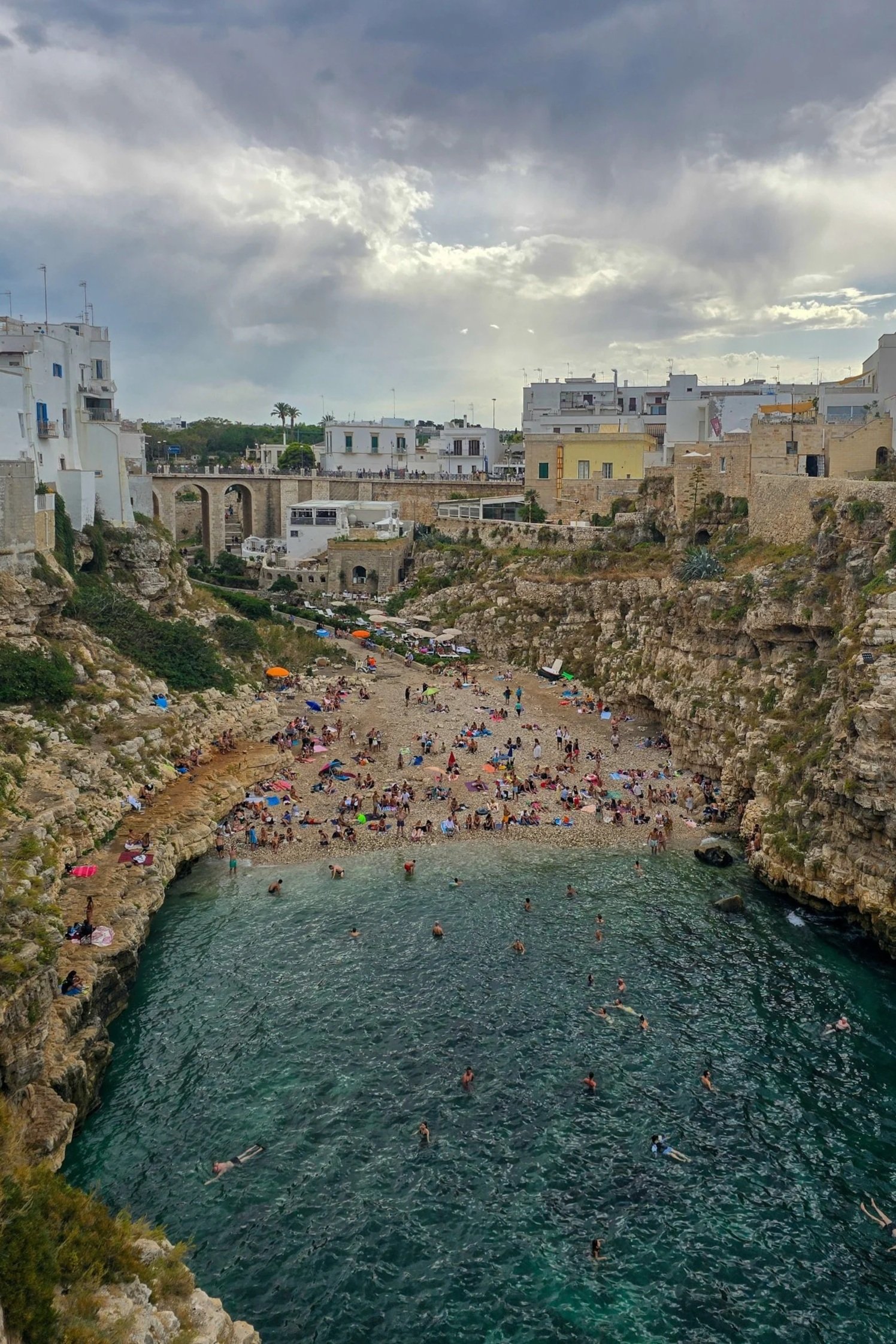
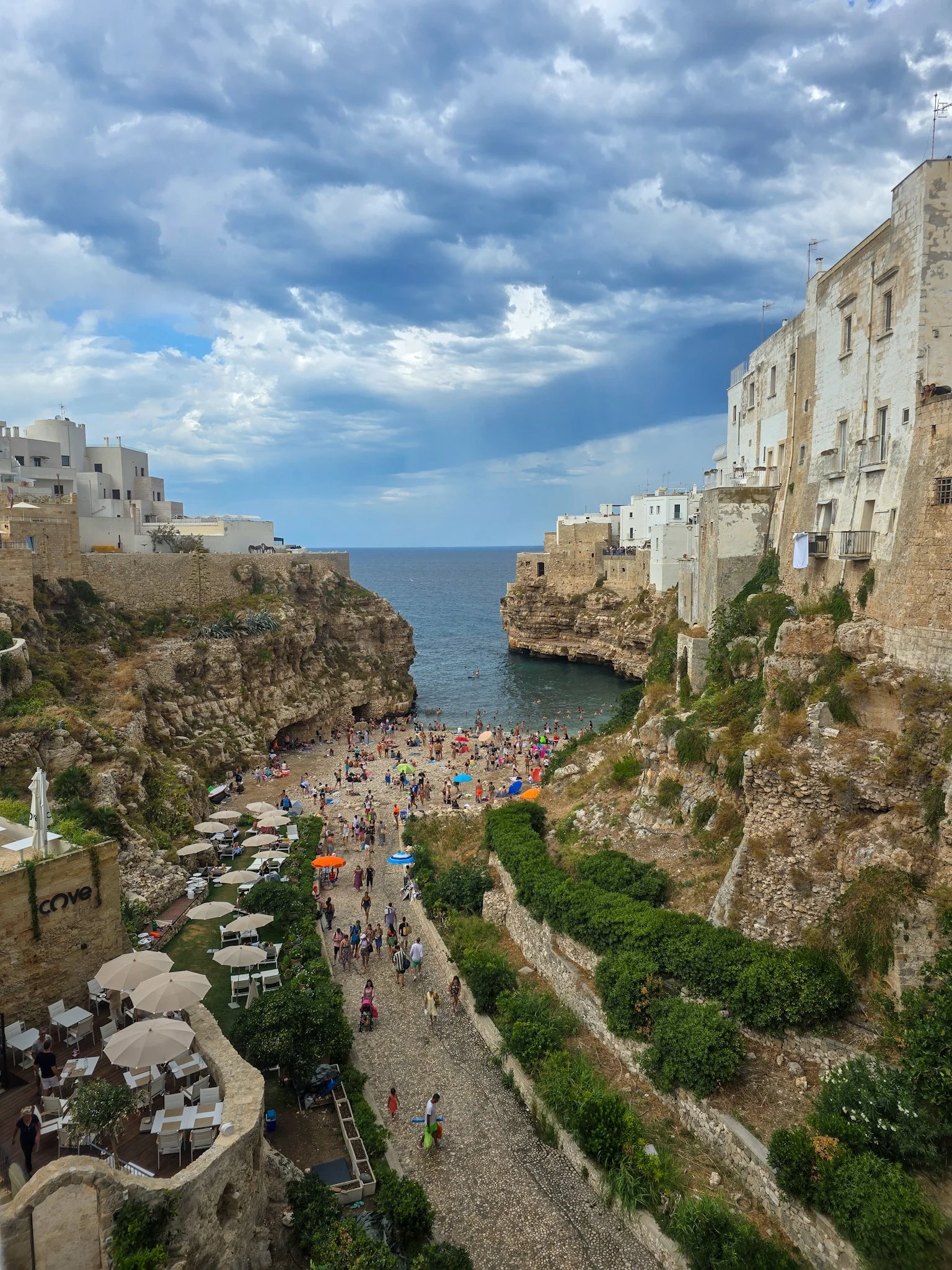
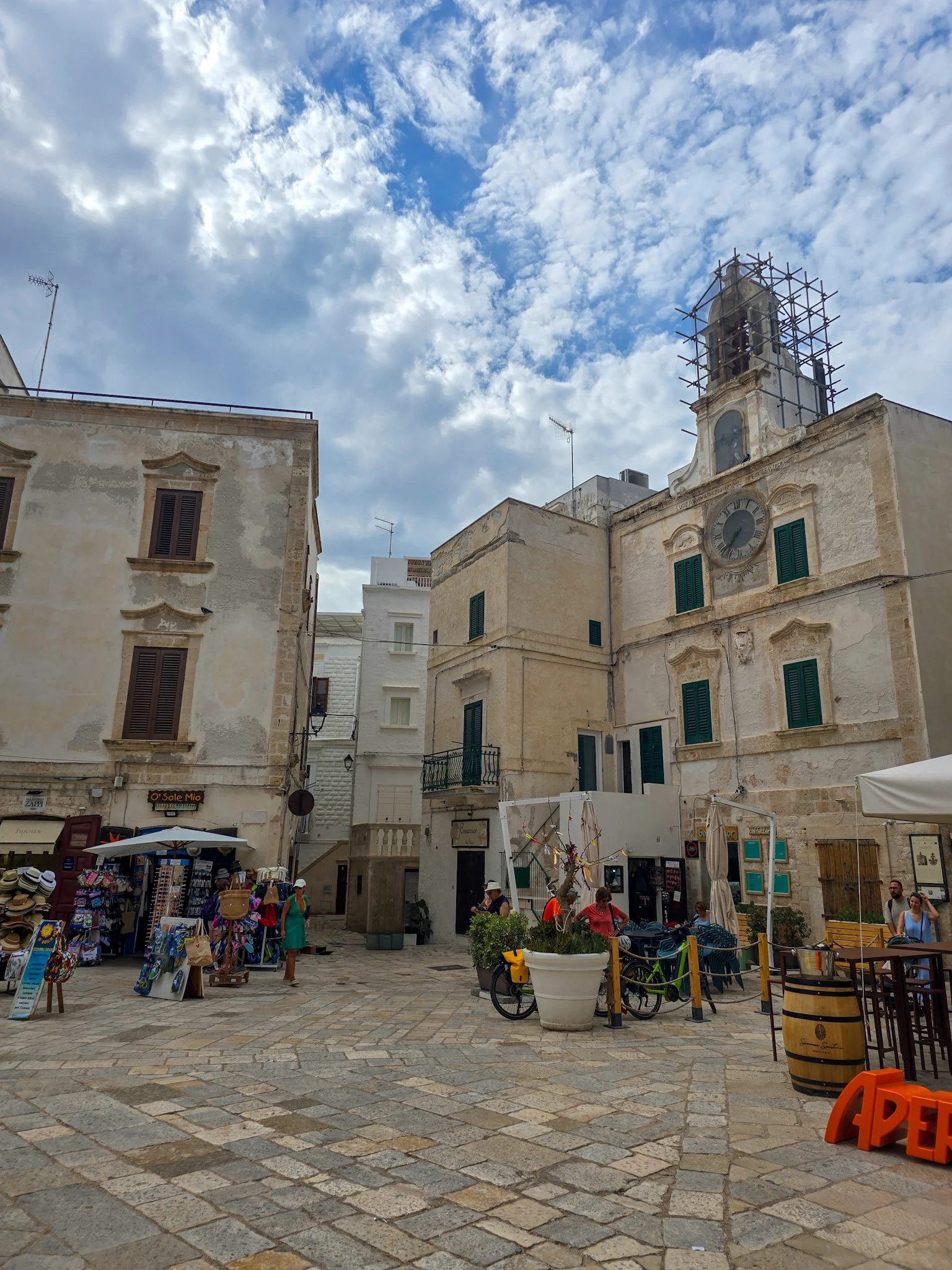
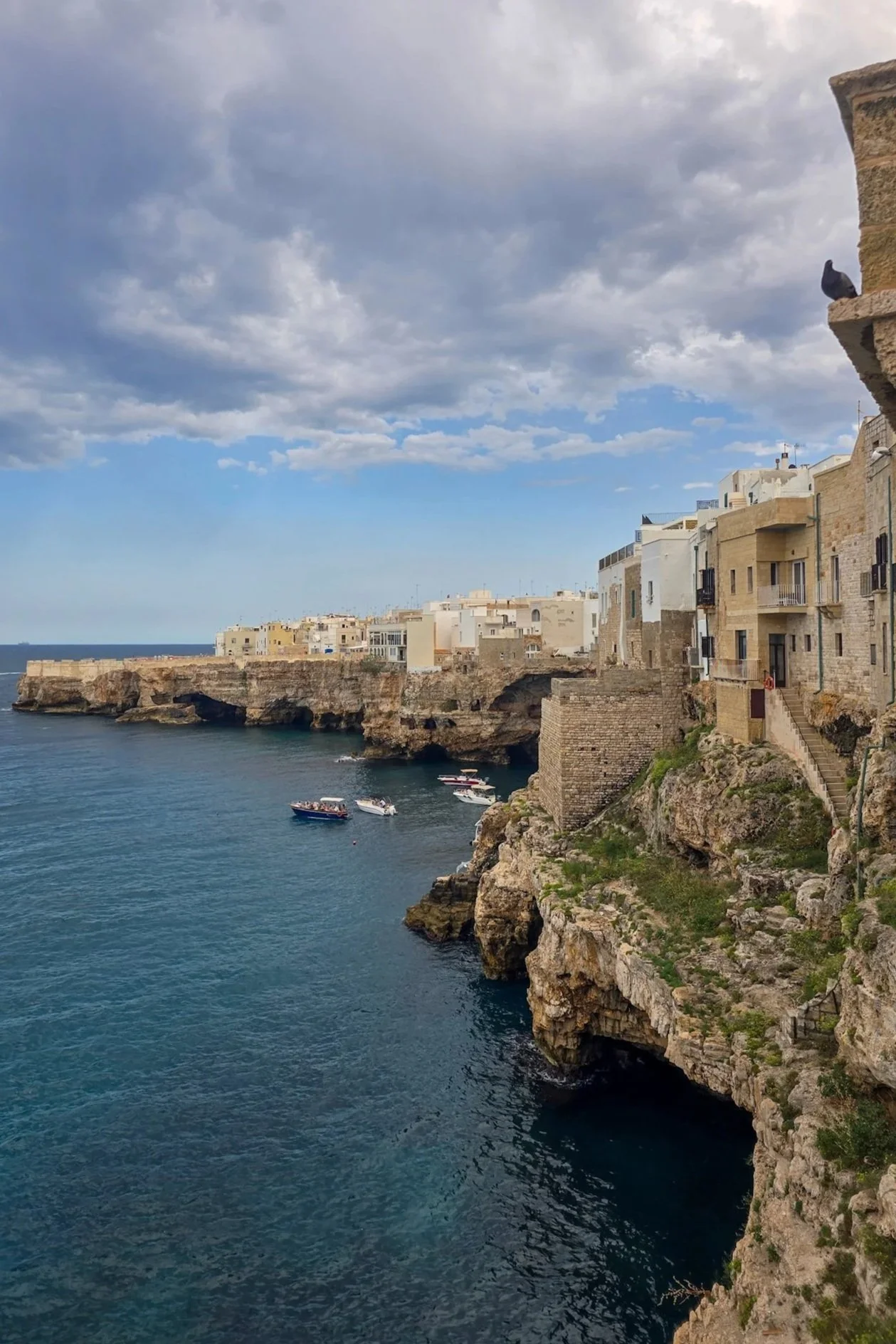
Polignano a Mare is one of Puglia’s most iconic coastal towns. Built on cliffs overlooking the Adriatic, it’s famous for its dramatic views, turquoise waters, and charming historic center full of narrow streets and small squares. The town has a long history dating back to Roman times, and walking through the old streets gives you a sense of its past as a fishing and trading hub.
Unlike some of the other towns, Polignano a Mare is mostly flat, so you won’t have millions of steps to conquer. There are still plenty of small, narrow streets to explore, but it’s much easier to get around on foot. The historic center isn’t very large, so you can comfortably see it all without getting too tired.
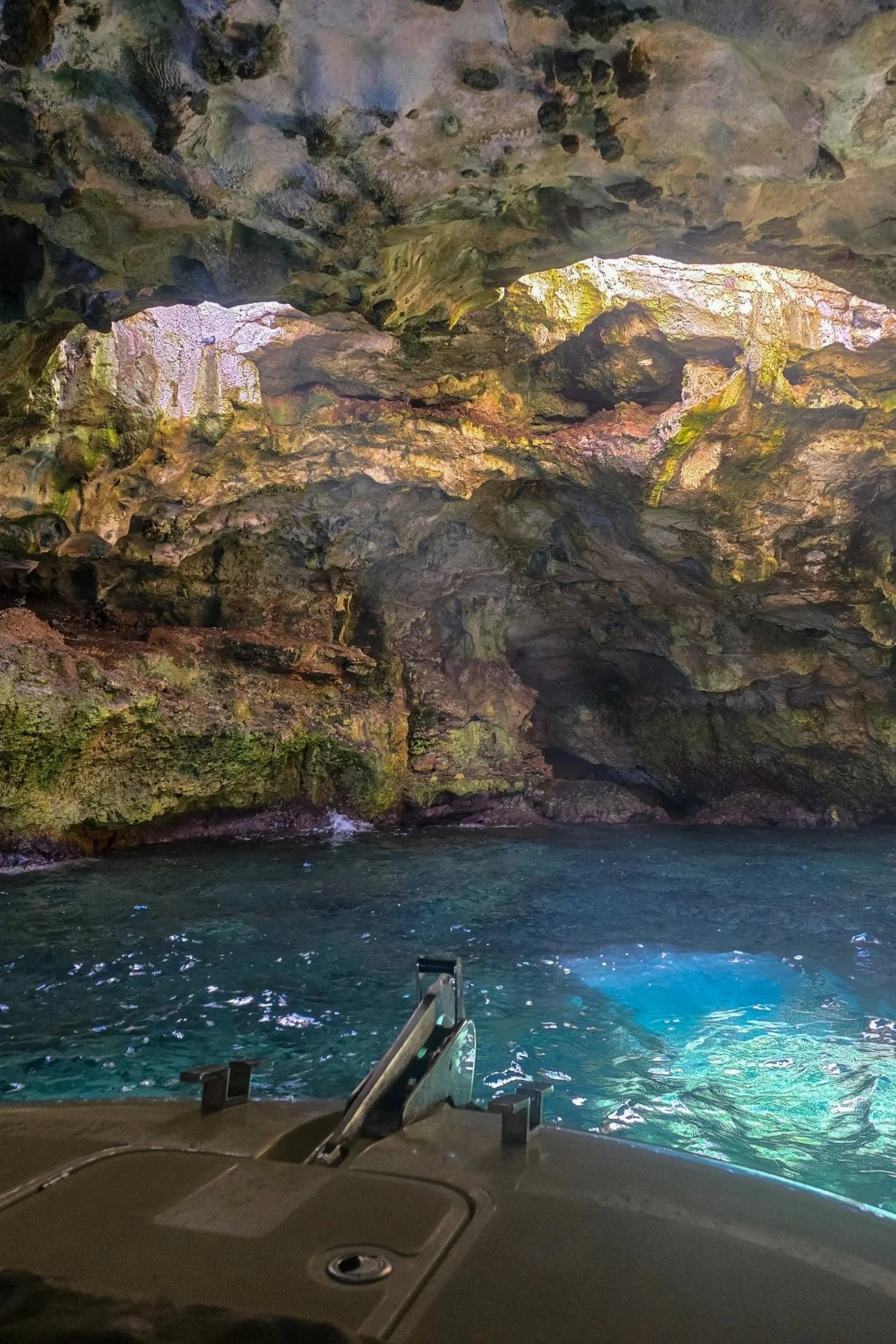
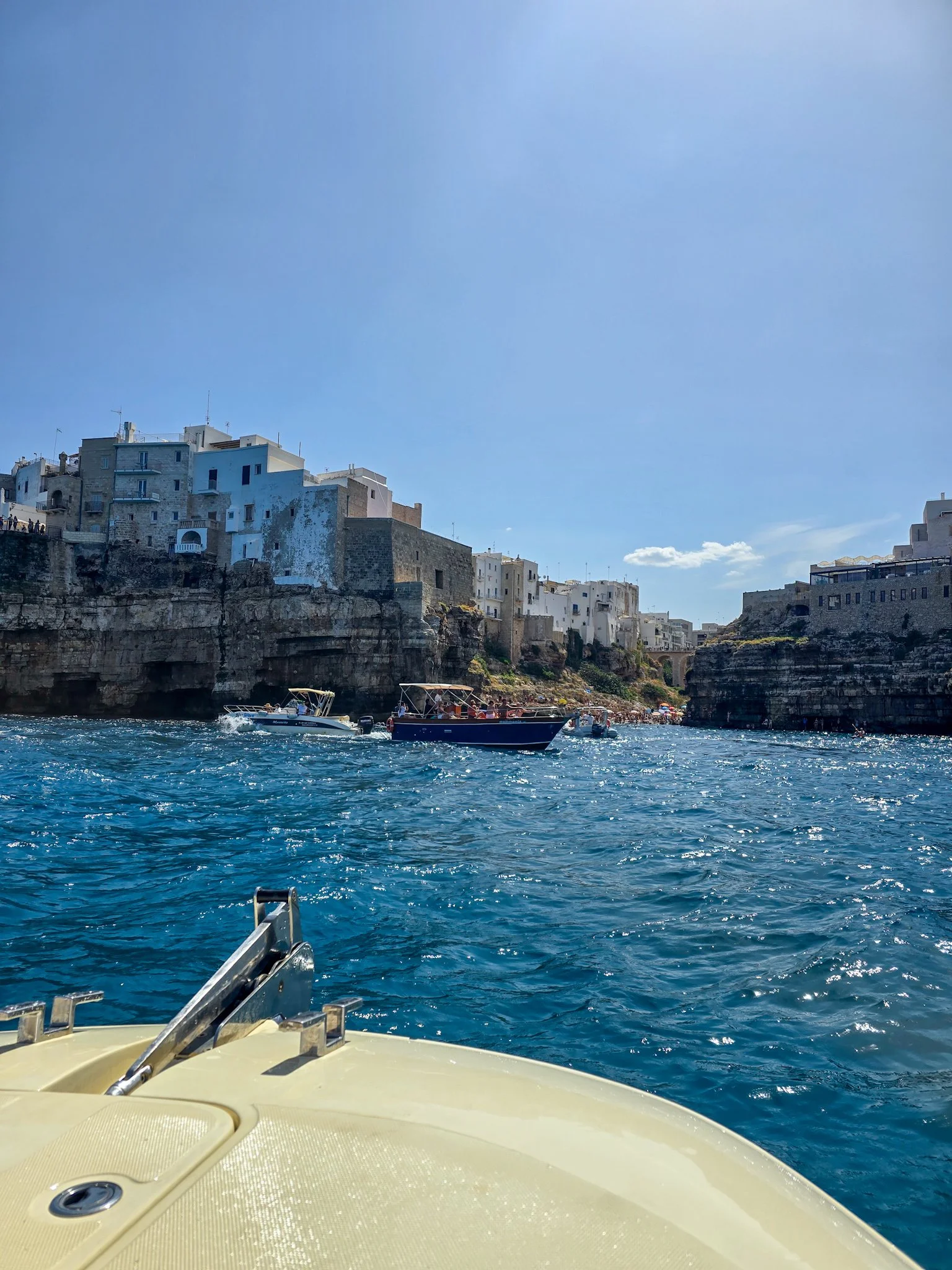
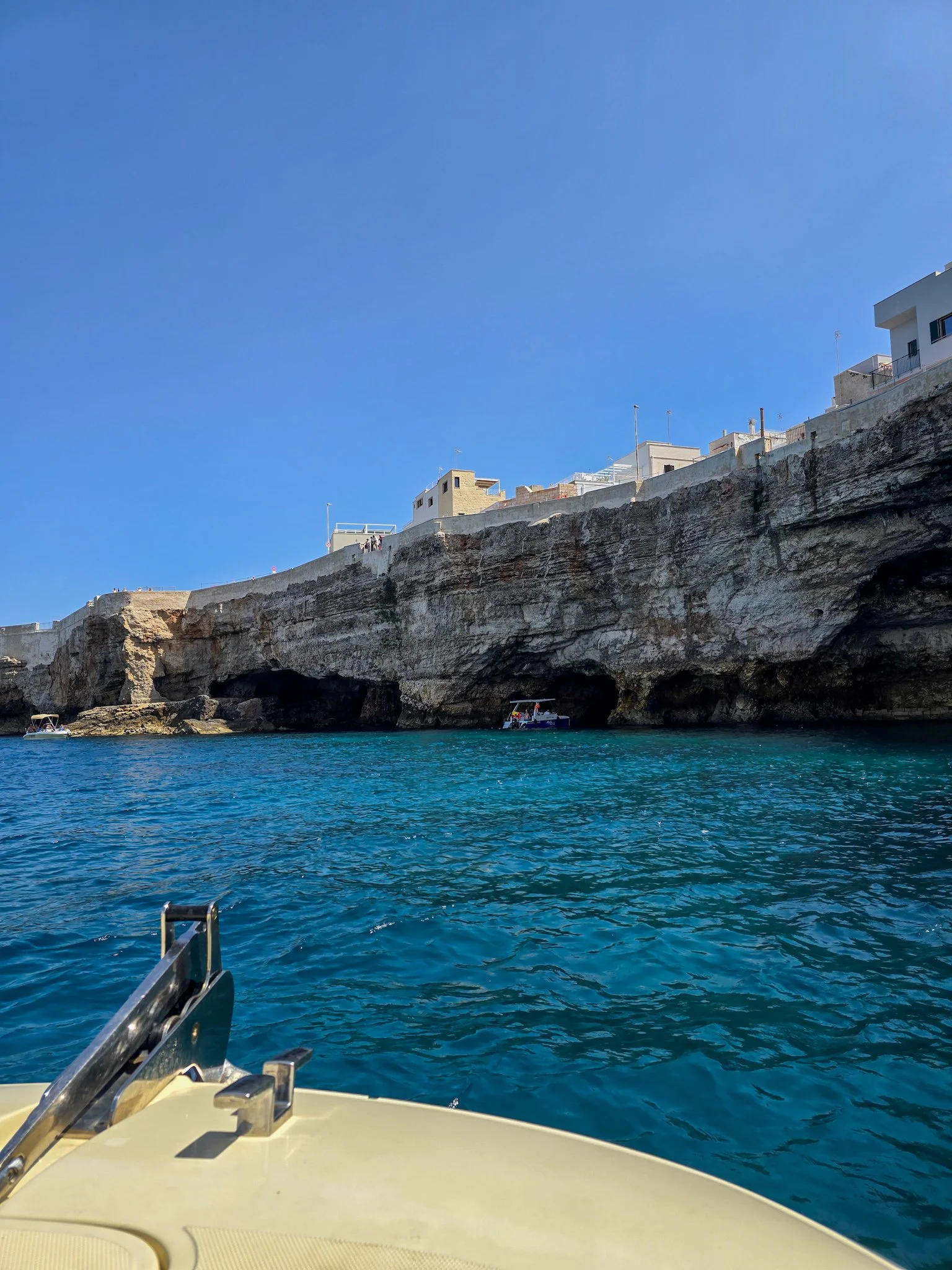
We decided to combine a boat trip with our visit, which is a great way to see both sides of the town. The boat takes you along the cliffs and caves, giving you a completely different perspective of the colorful houses. You can also stop at the famous beach for a swim. It’s a lot smaller than it looks in pictures—get there early because it gets busy fast
Parking in Polignano a Mare is easy and will set you back €5 for the whole day. It’s about a 5-minute walk to the main street. You can park here (Don’t worry, the image is old, but it’s a proper parking lot)
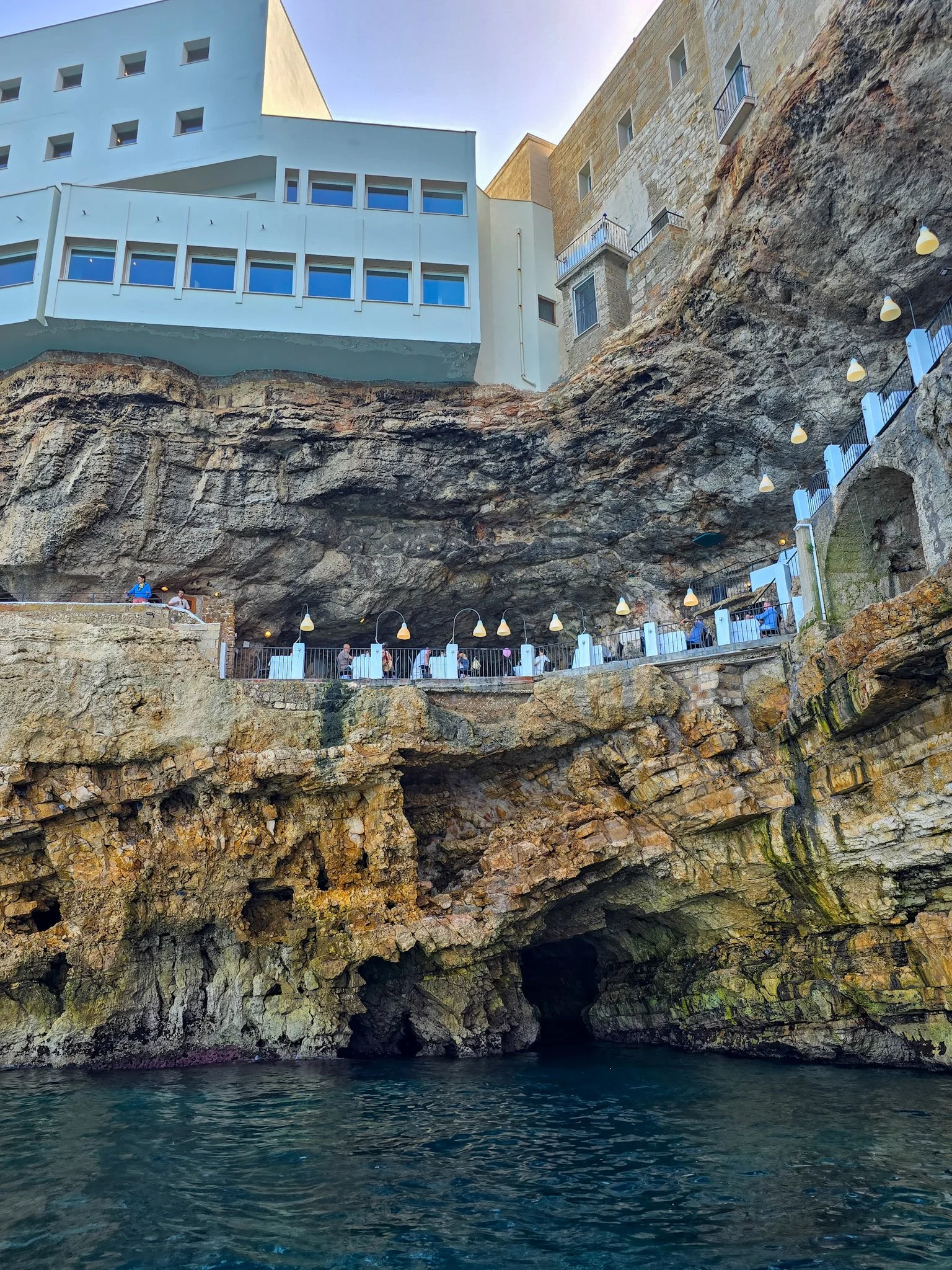
Polignano a Mare is also home to Grotta Palazzese, the famous restaurant built into a cave overlooking the sea. It's a popular spot on social media, but we decided not to dine there. Based on reviews, the food doesn't match the high prices, and the service can be lacking. However, it’s still worth seeing from the boat or a nearby viewpoint for its unique setting.
Monopoli: Explore Seaside Charm and Historic Streets
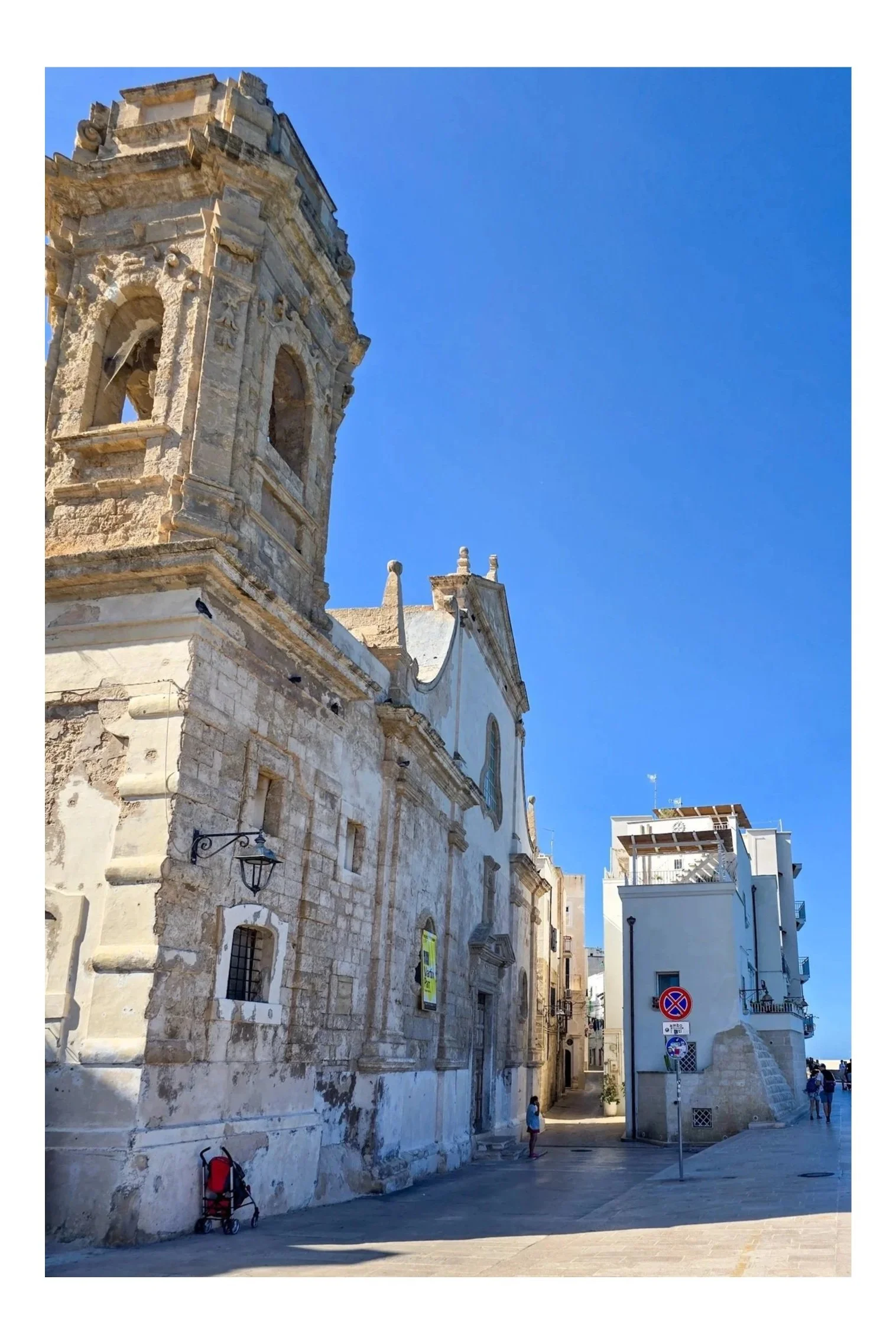
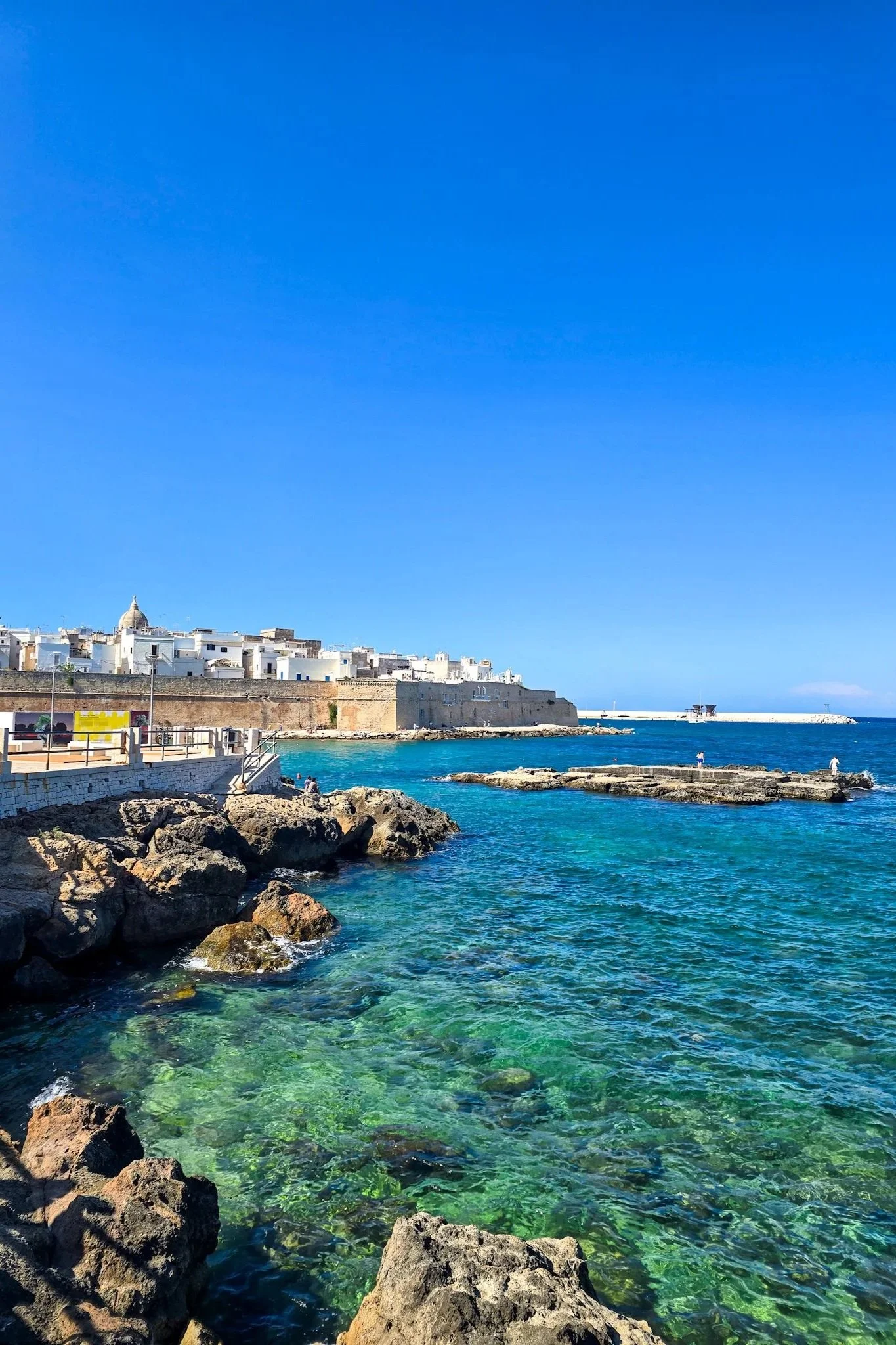
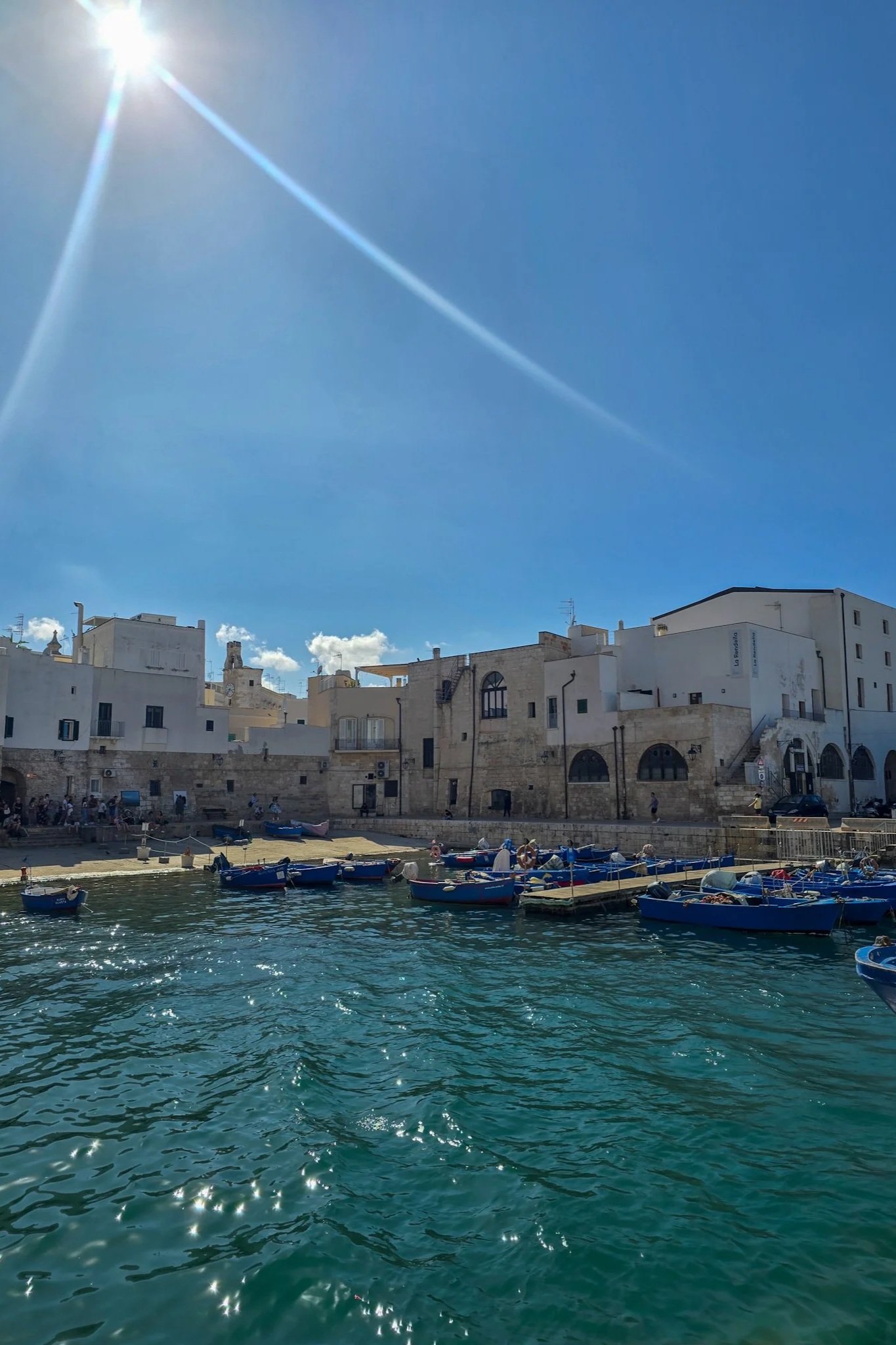
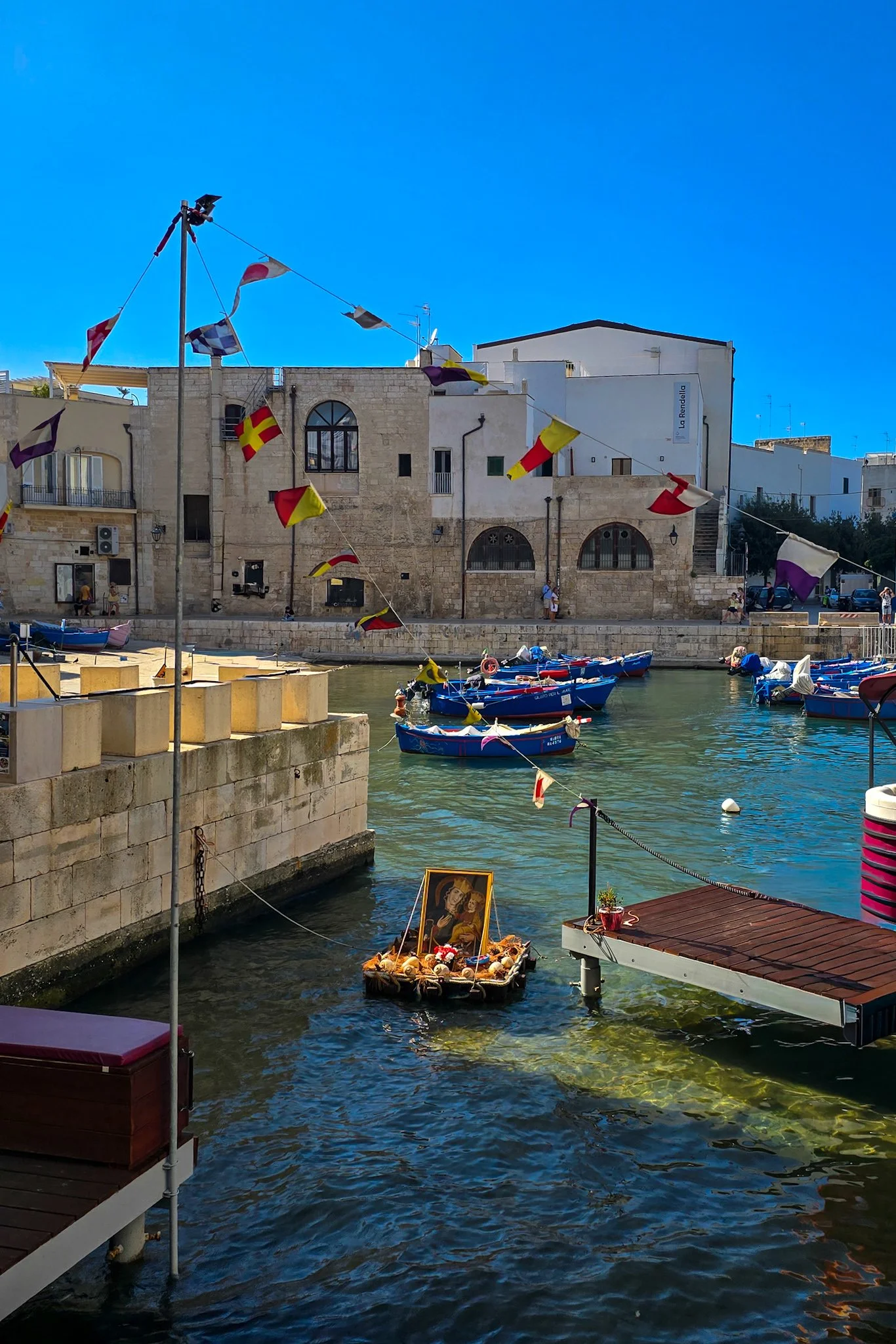
Monopoli is a lively coastal town with a mix of history, beaches, and local life. Its historic center sits right by the sea, with narrow streets, small squares, and a beautiful harbor filled with fishing boats. The town dates back to Roman times, and you’ll notice its history in the old churches, walls, and palaces scattered through the center.
Of all the spots we visited in Puglia, Monopoli felt the least touristy. Don’t get me wrong, there were definitely tourists there, but the vibes just weren’t touristy…Does that make sense? Anyway, you see locals going about their day, and it has a really laid-back, authentic coastal vibe—the kind of place where you can enjoy wandering the streets without feeling like you’re just following a map.
The old town isn’t very large, so it’s easy to explore on foot. There are a few small hills and lots of cobblestone streets, but overall it’s flatter than some of the other hilltop towns. Strolling along the seafront promenade is a highlight, with cafés, gelaterias, and small shops lining the way.
Parking in Monopoli is easy, with several lots just outside the historic center. We parked here and they have a building with public restrooms (costs €1, but if you need to go after all the Aperol Spritz, there’s somewhere to go).
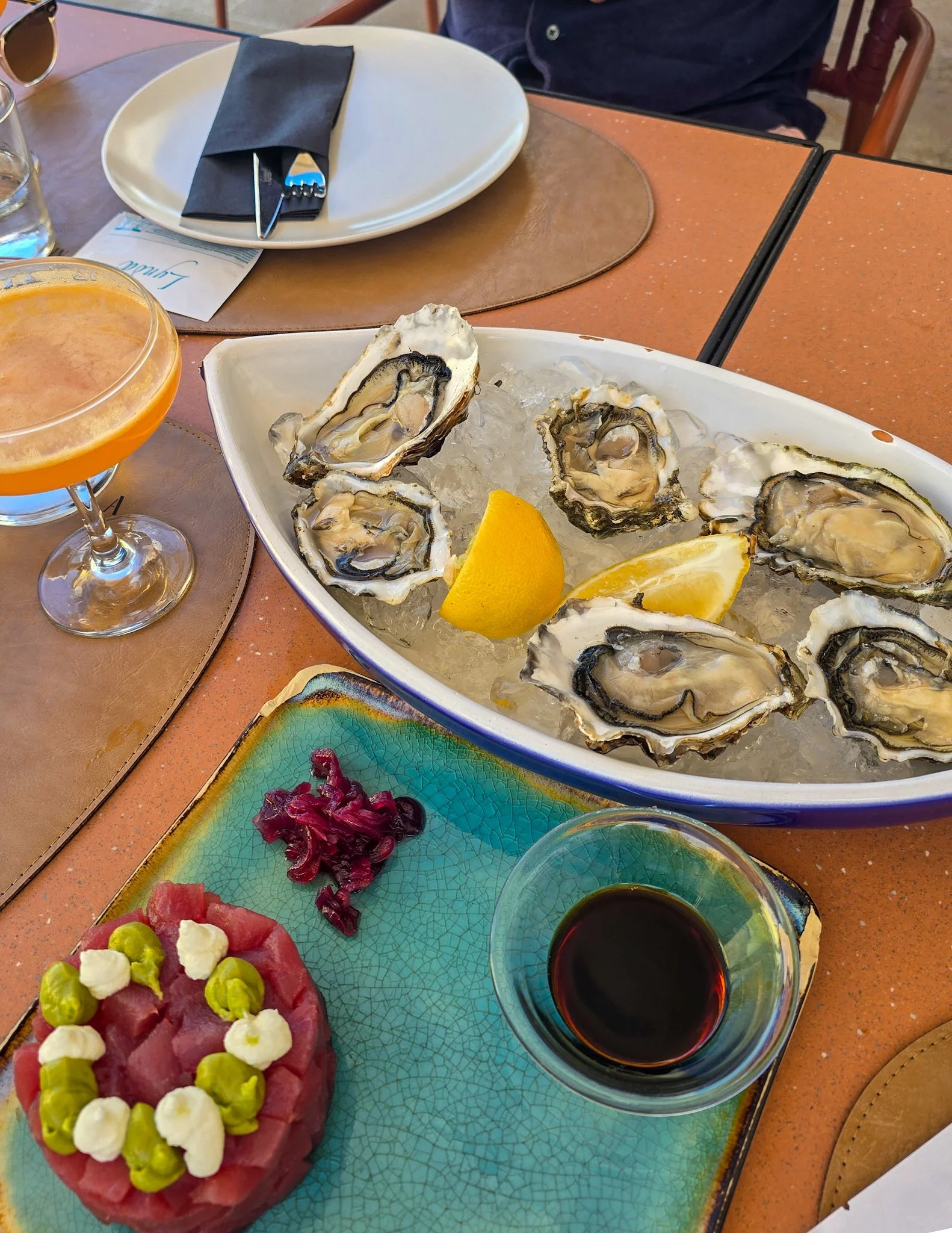

Bari: Experience Puglia’s Vibrant Culture and Cuisine
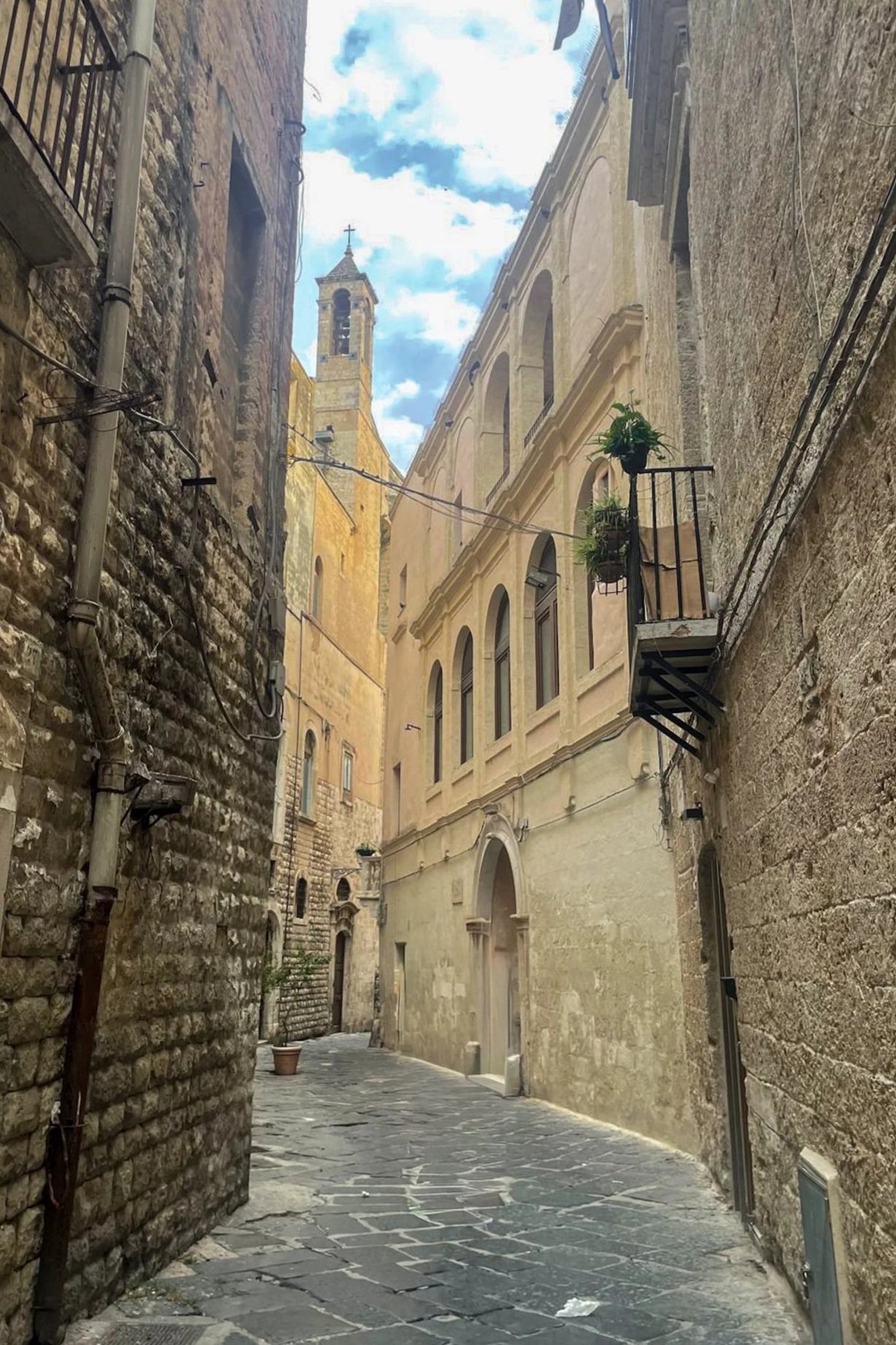
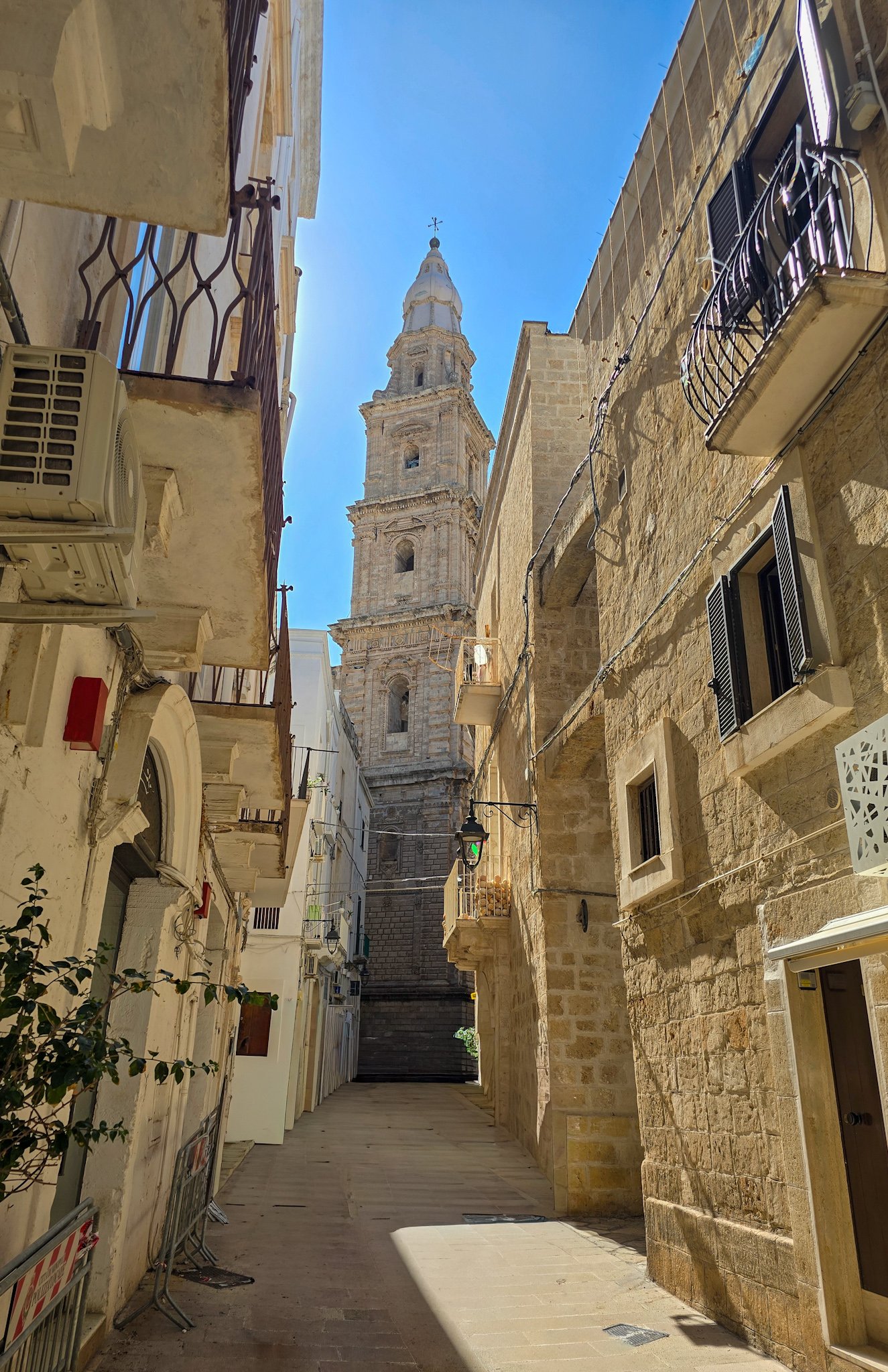
Bari is a bigger city than the other towns, but its old town, Bari Vecchia, is full of charm and history. Narrow streets, little squares, and old buildings make it feel like stepping back in time. You’ll see locals going about their daily life, which gives the city a really lived-in, authentic vibe.
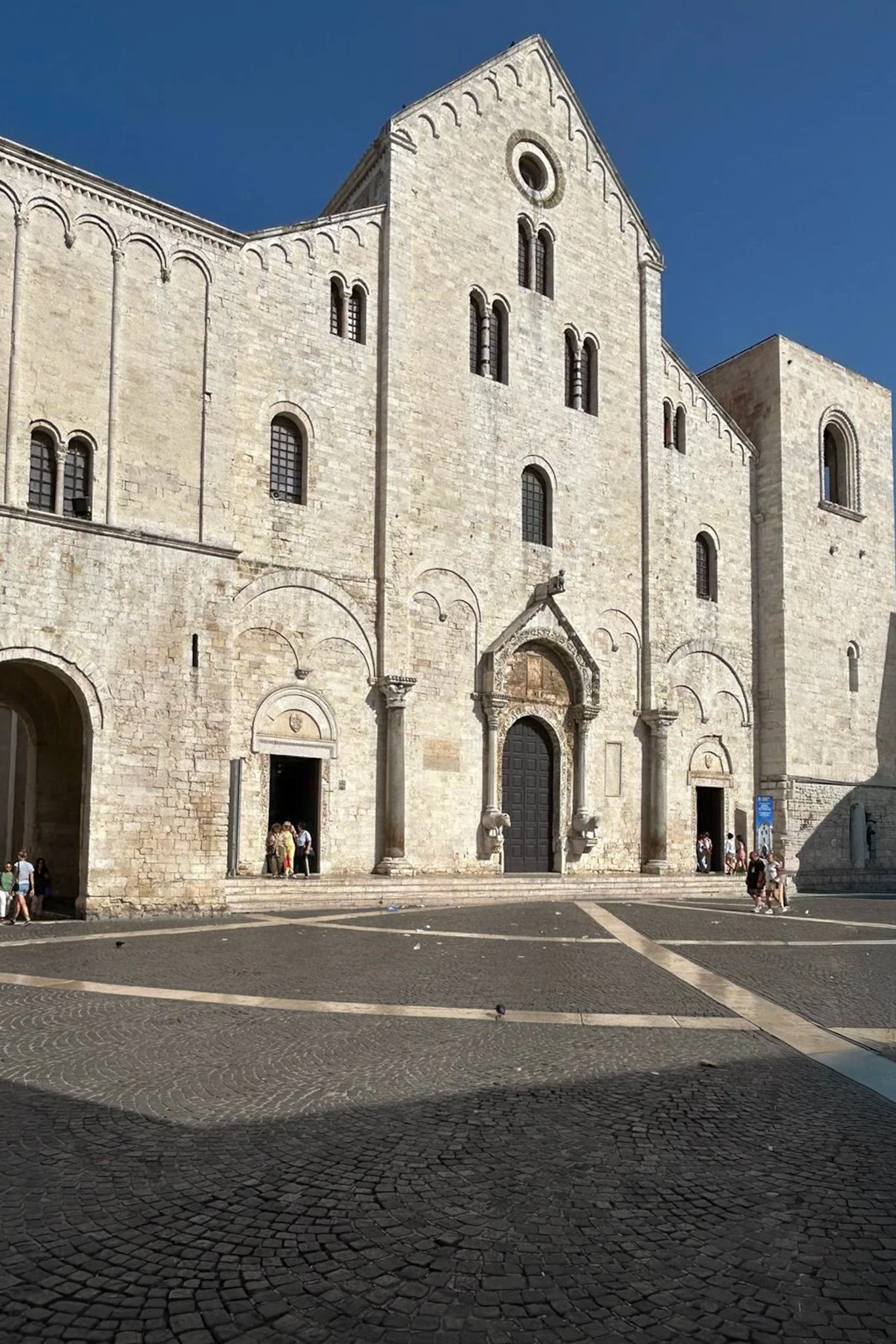
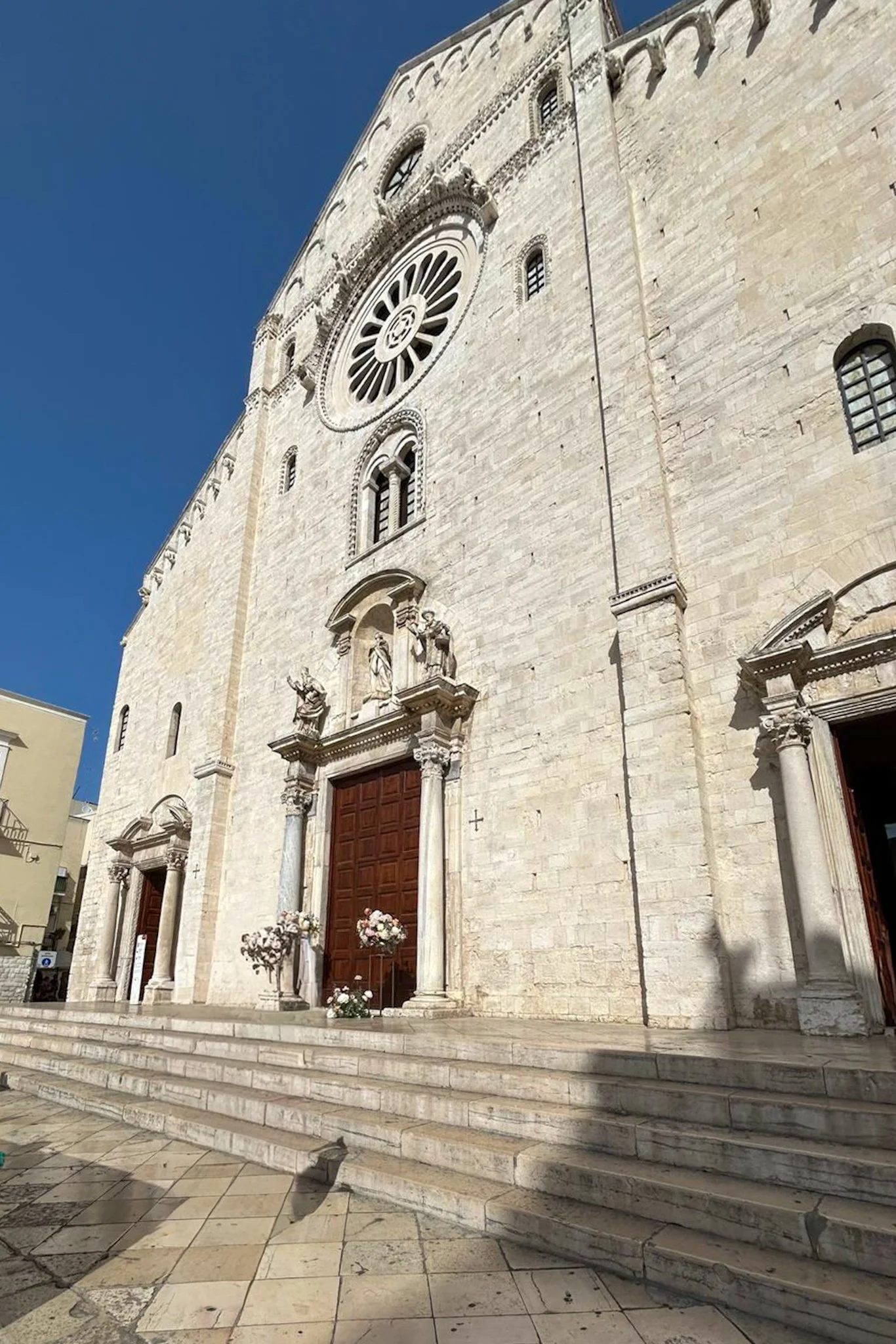
Bari has been around for centuries and has a rich history as a port city. It was an important trading hub in the Middle Ages and has seen everything from Byzantine rule to Norman invasions. The Basilica of San Nicola, built in the 11th century, is one of the city’s most famous landmarks, and the old city walls and towers tell the story of Bari as a coastal defense town. Walking through the streets, you can really feel that history around you.
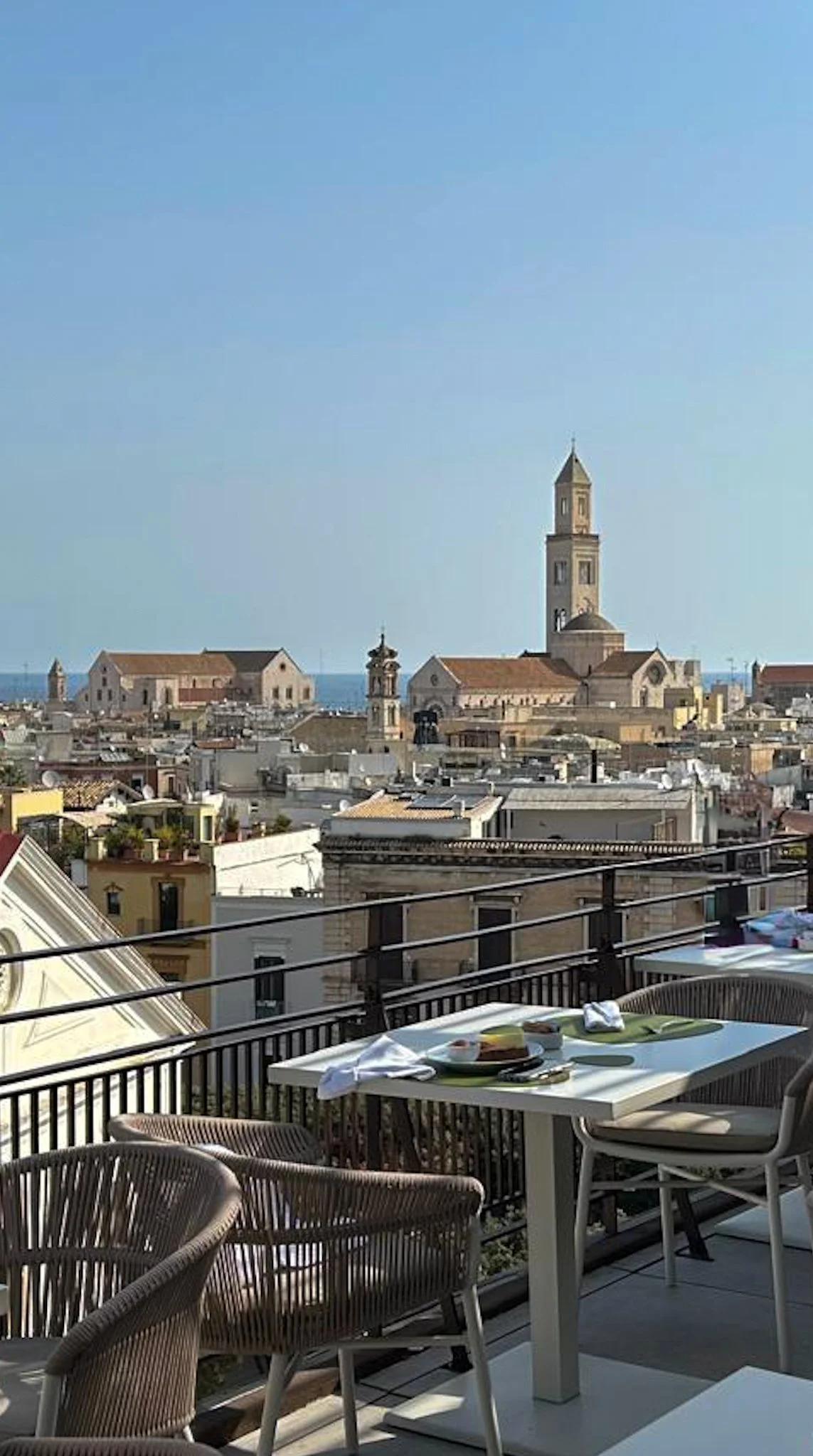
The old town isn’t huge, so it’s easy to walk around and get a sense of the place. The harbor area is lively, with fishermen coming and going, and plenty of cafés and seafood spots to stop for a bite.
Parking can be a bit tricky in the old town itself, but there are lots nearby, and from there it’s just a short walk to the main streets.
Matera: (Bonus) Step Back in Time in the Sassi
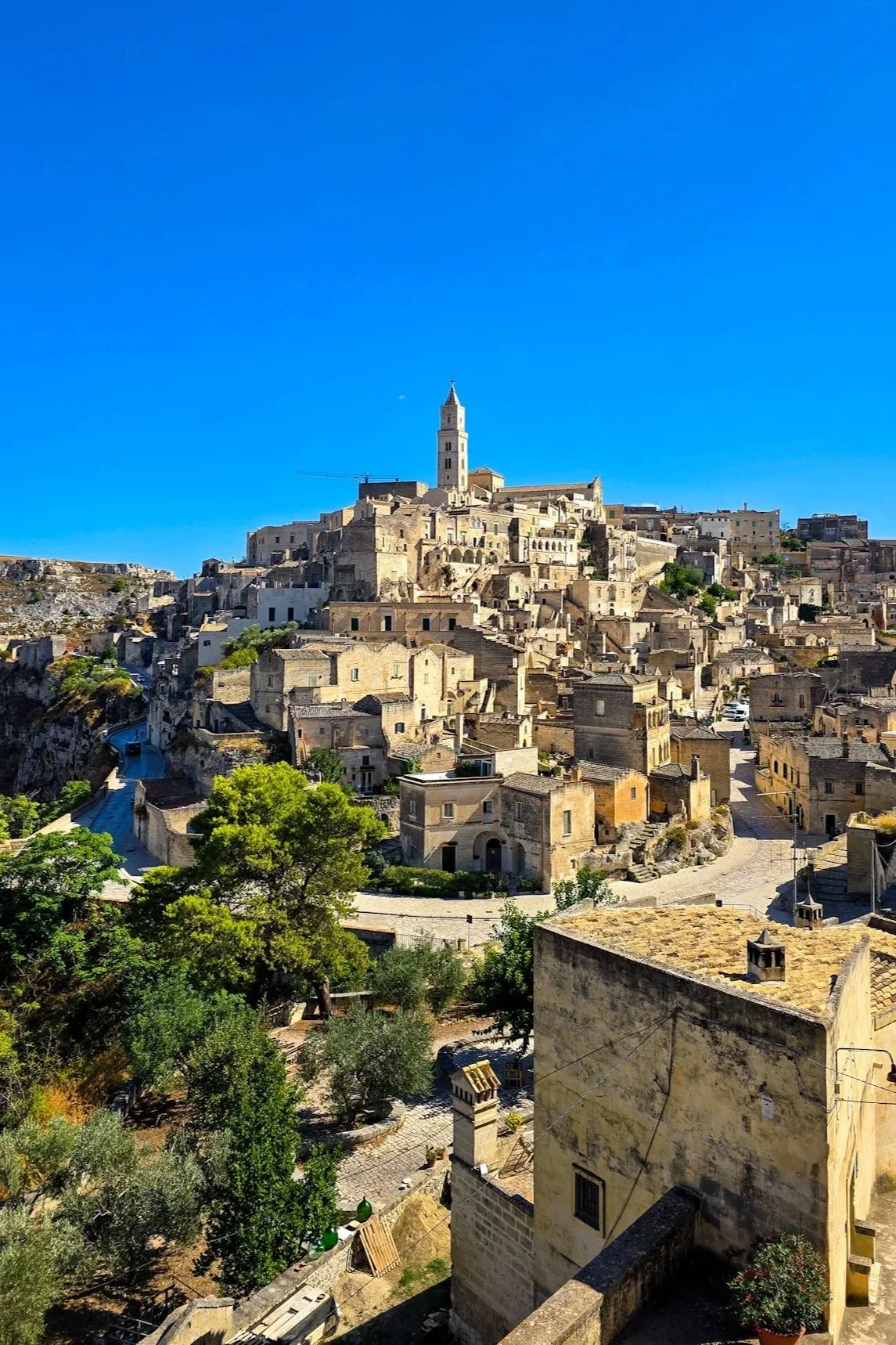
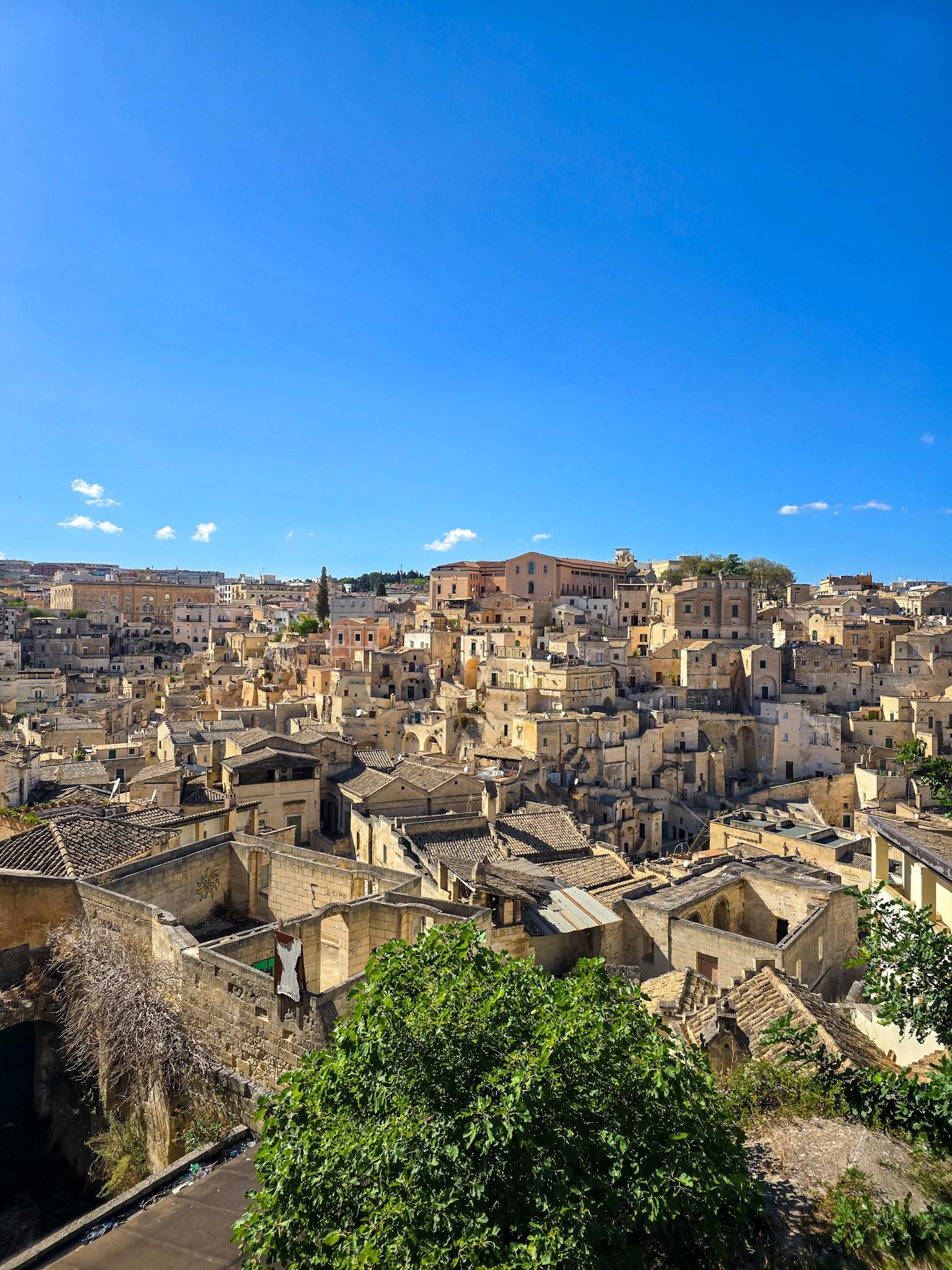
Technically, Matera isn’t in Puglia —it’s in the neighboring region of Basilicata— but it’s definitely worth a visit if you’re in the area. The town is famous for its Sassi, ancient cave dwellings carved into the rock that have been inhabited for thousands of years. Walking through the Sassi feels completely unlike anywhere else in Italy, or even the world.
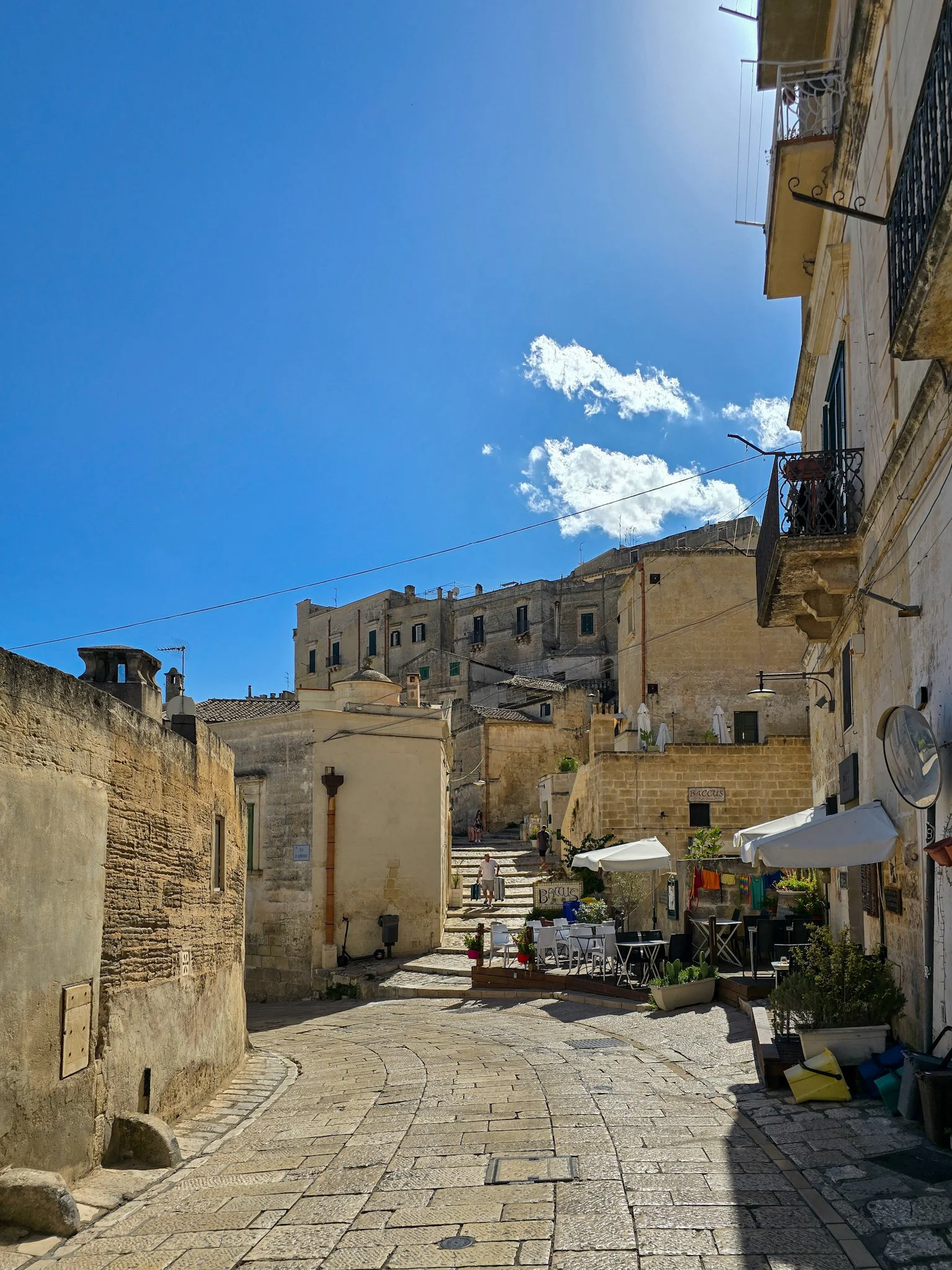
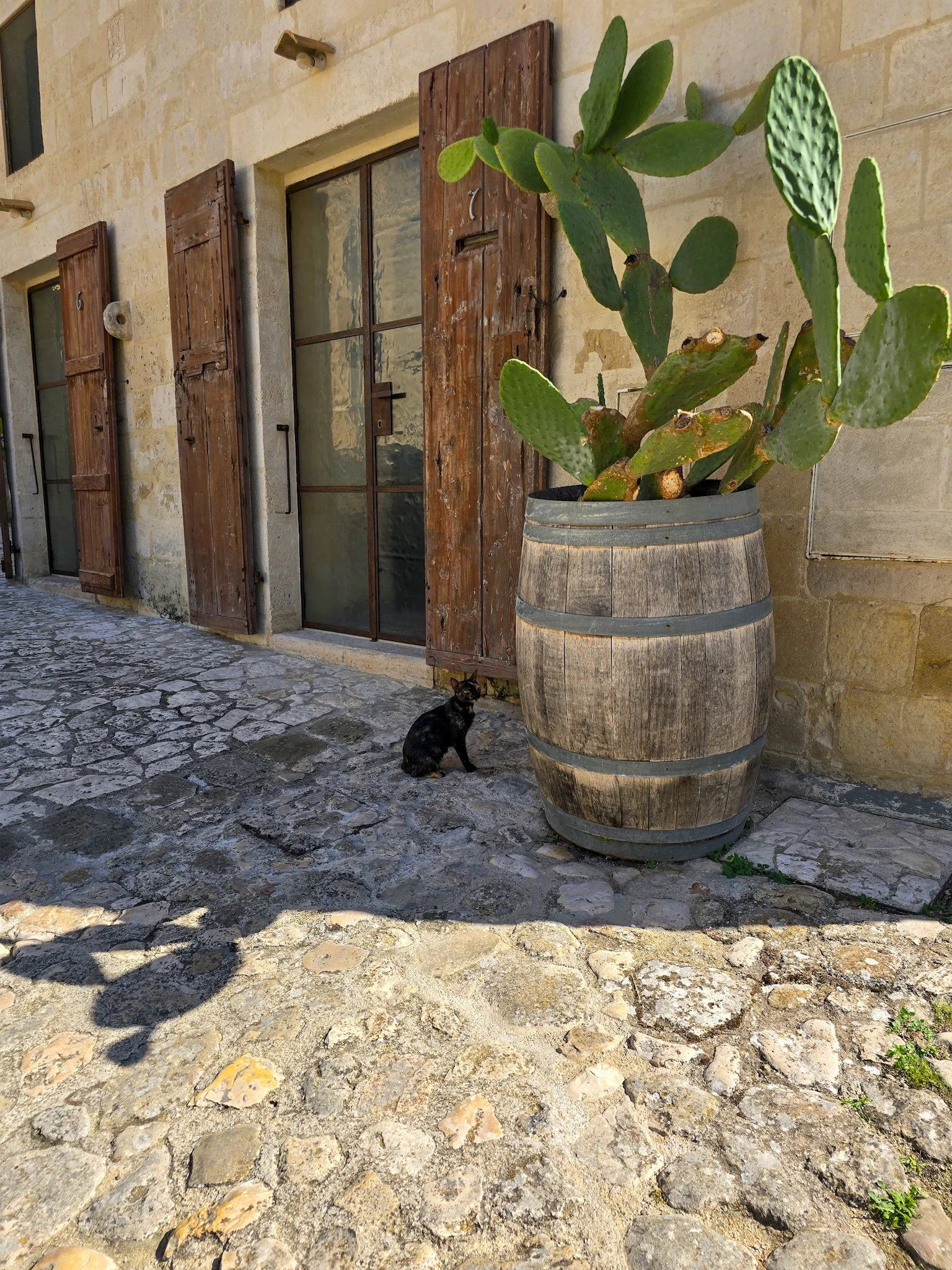
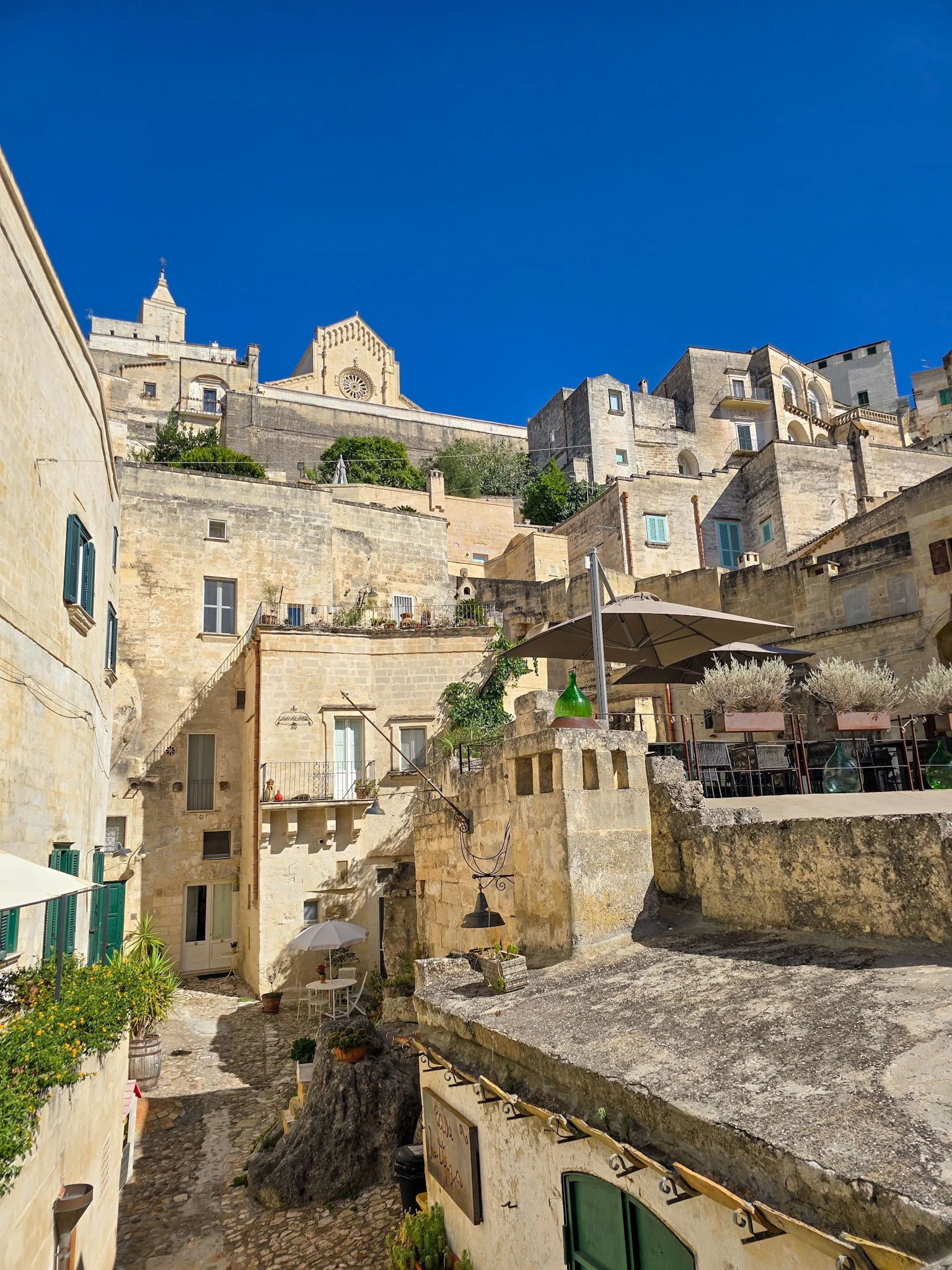
Matera has a ton of stairs, so be prepared to climb a lot, but it’s worth it. From the top, you get incredible views of the town and the surrounding valleys, and wandering through the narrow streets and staircases is part of the experience. The historic center is made up of a maze of alleys, small squares, and caves that have been transformed into homes, shops, cafés, and even hotels.
The town has a fascinating history. People have lived in the Sassi since prehistoric times, and over the centuries, Matera became an important center for trade and religion. The caves were originally simple homes, but later included churches and monasteries, and today the Sassi are recognized as a UNESCO World Heritage Site.
Parking is possible on the street or in underground parking lots. When we arrived, the underground parking lots were all full, but we found a spot on the street about a 10-minute walk from the old town. We paid €1.95 for 2.5 hours, so definitely not complaining.
If you like tours, this is one of the towns where I’d really recommend it; you’ll get a much deeper sense of the history and the layout. There are also golf-cart-style tours here, which are a fun way to see more of the town if you have the time.
Tip: Take your time exploring Matera. There are hidden corners, tiny alleyways, and little caves around every turn, so don’t rush—half the fun is just discovering things as you go. Comfortable shoes are a must, and be ready for lots of stairs, but it’s all part of what makes Matera so unique.
Best Things To Do In Puglia
There’s so much to do in Puglia beyond just sightseeing and wandering through charming towns. From boat trips along the stunning coastline to tasting local wines and exploring hidden corners, the region is full of experiences that everyone can enjoy. I booked a couple of activities through GetYourGuide, and they were a real hit with my family.
Cruise the Caves by Boat in Polignano a Mare
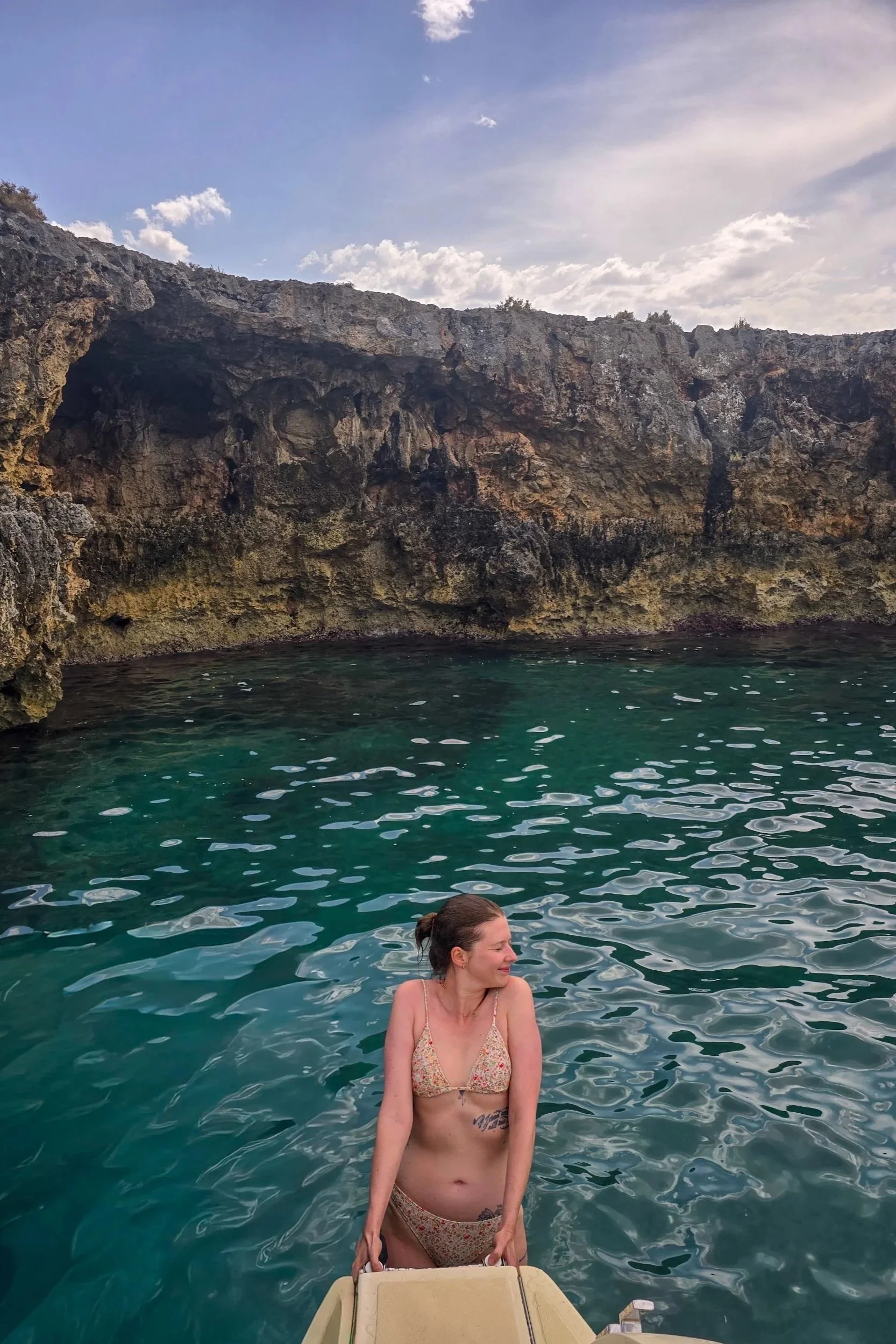
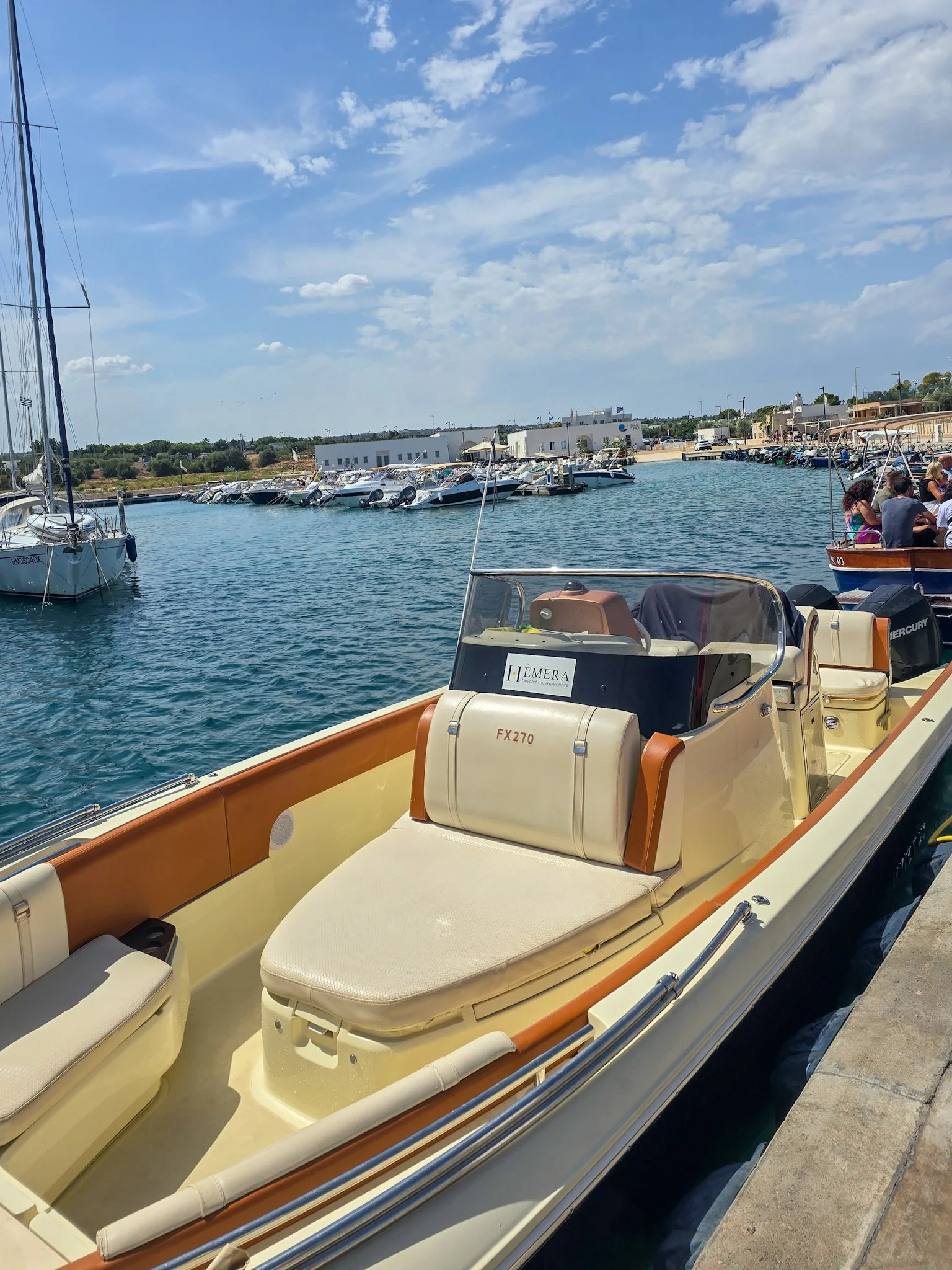
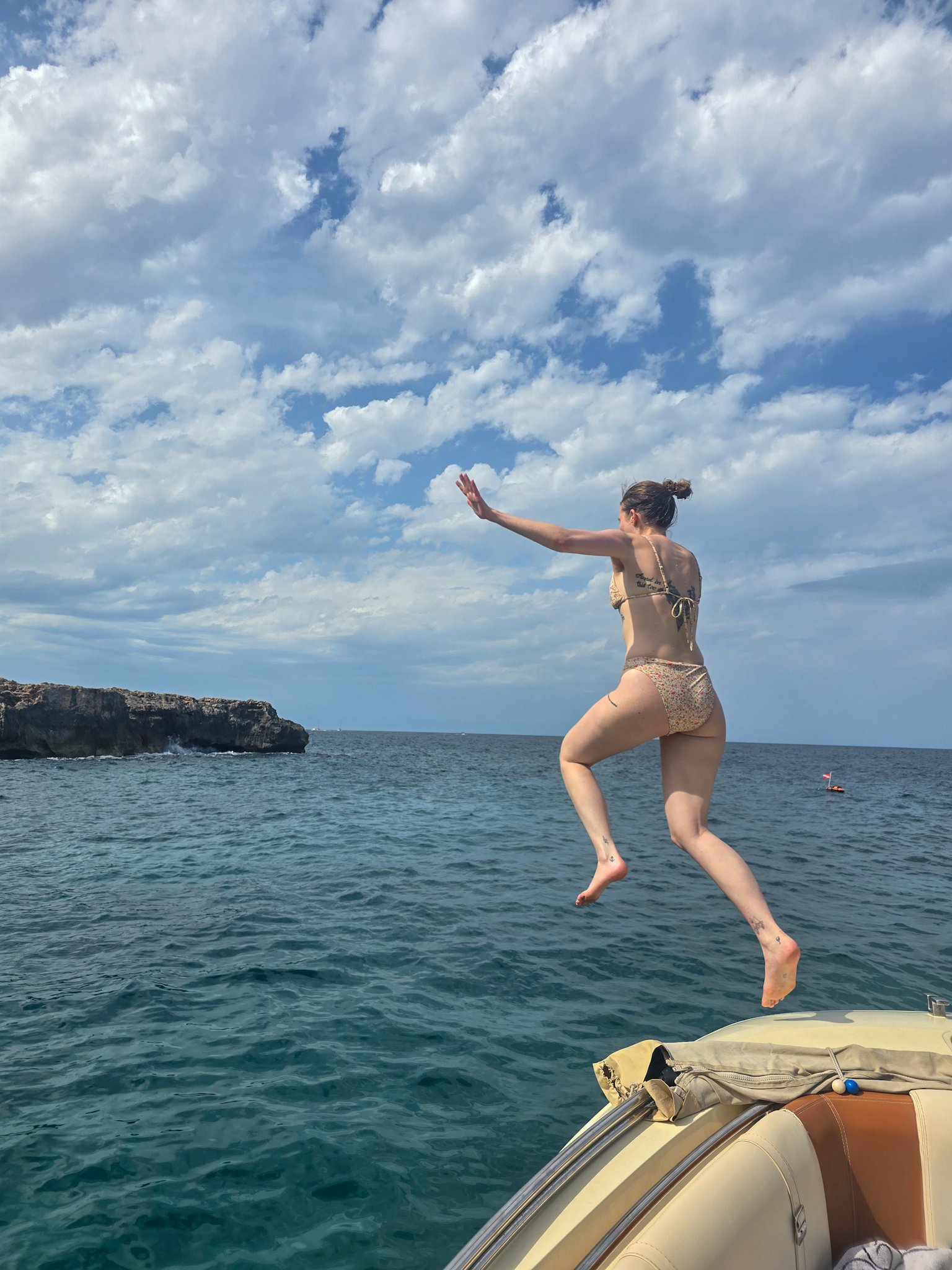
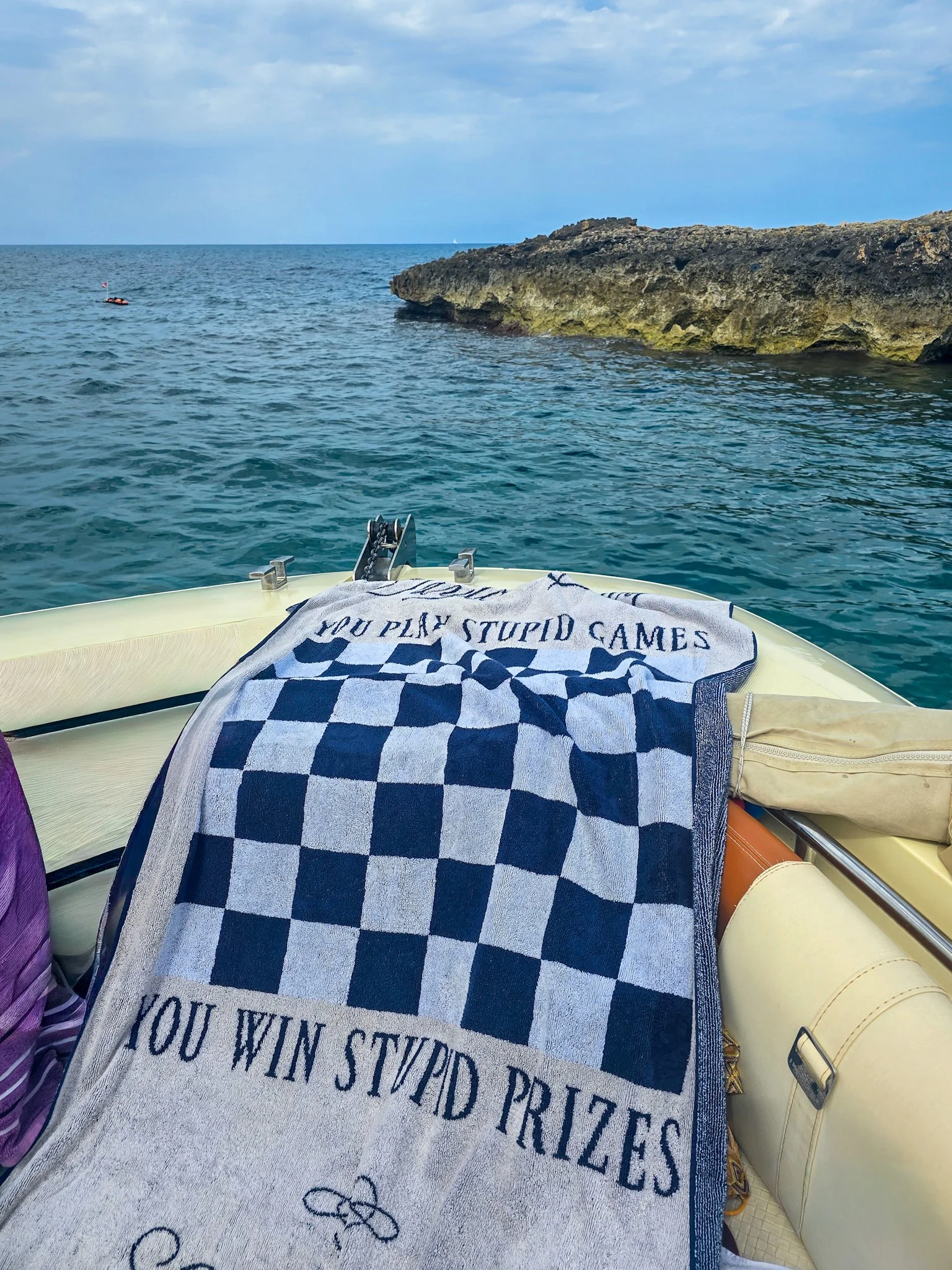
We booked a boat tour in Polignano a Mare without really knowing what to expect. It was a last-minute decision since the weather was perfect that day. There were six of us, and the boat was really nice. We decided to pay a bit more for a private tour, and I’m so glad we did. The boat was comfortable and spacious, and we even got snacks and champagne while cruising along the cliffs.
The highlight? Swimming in the crystal-clear water with music playing in the background, and my little sister even got to steer the boat back for a bit, which was such a fun touch. It felt relaxed, a bit luxurious, and completely stress-free. Honestly, I would definitely recommend this tour if you’re in Polignano — a private boat makes all the difference.
Sip Local Wines in Alberobello
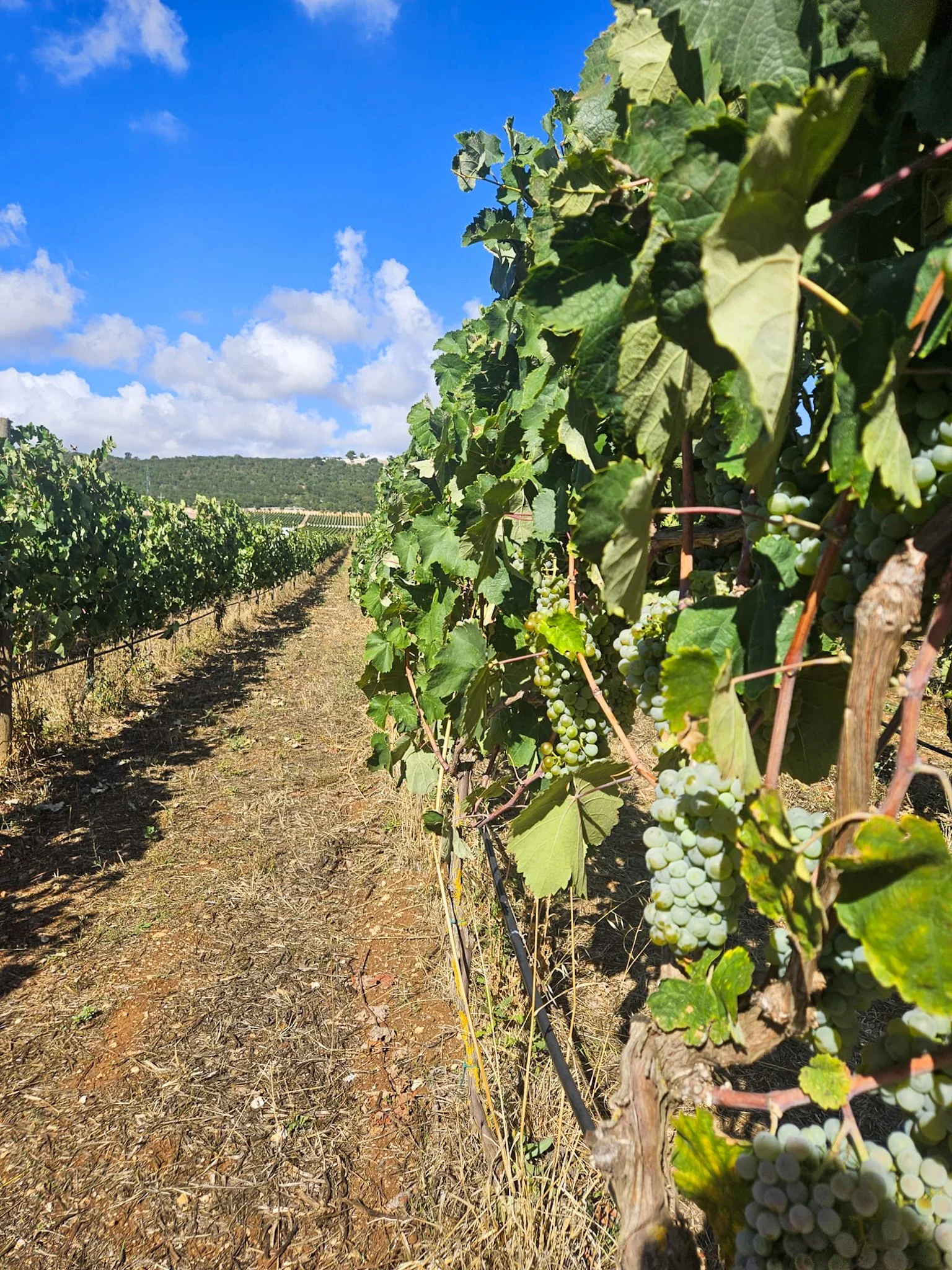
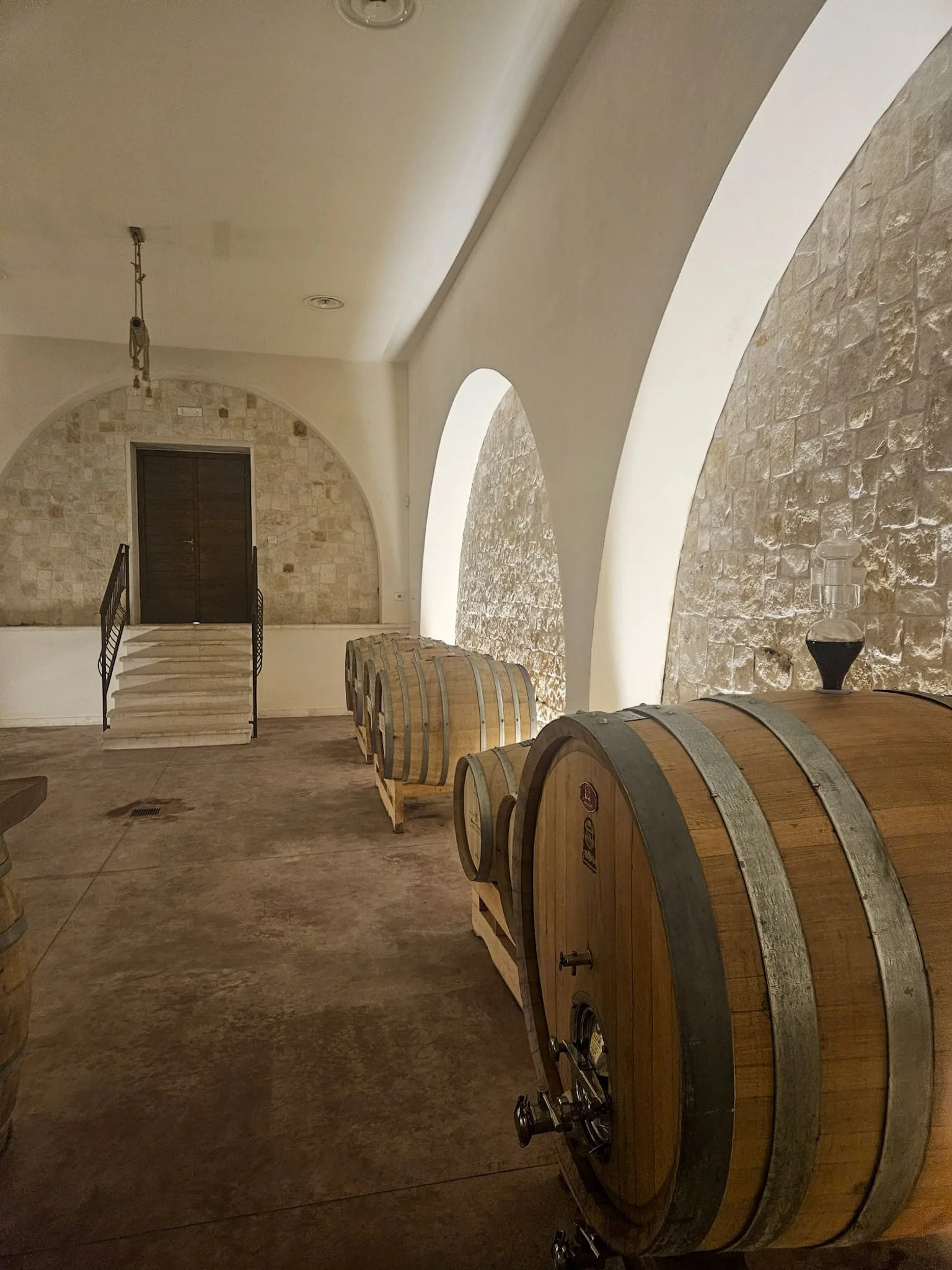
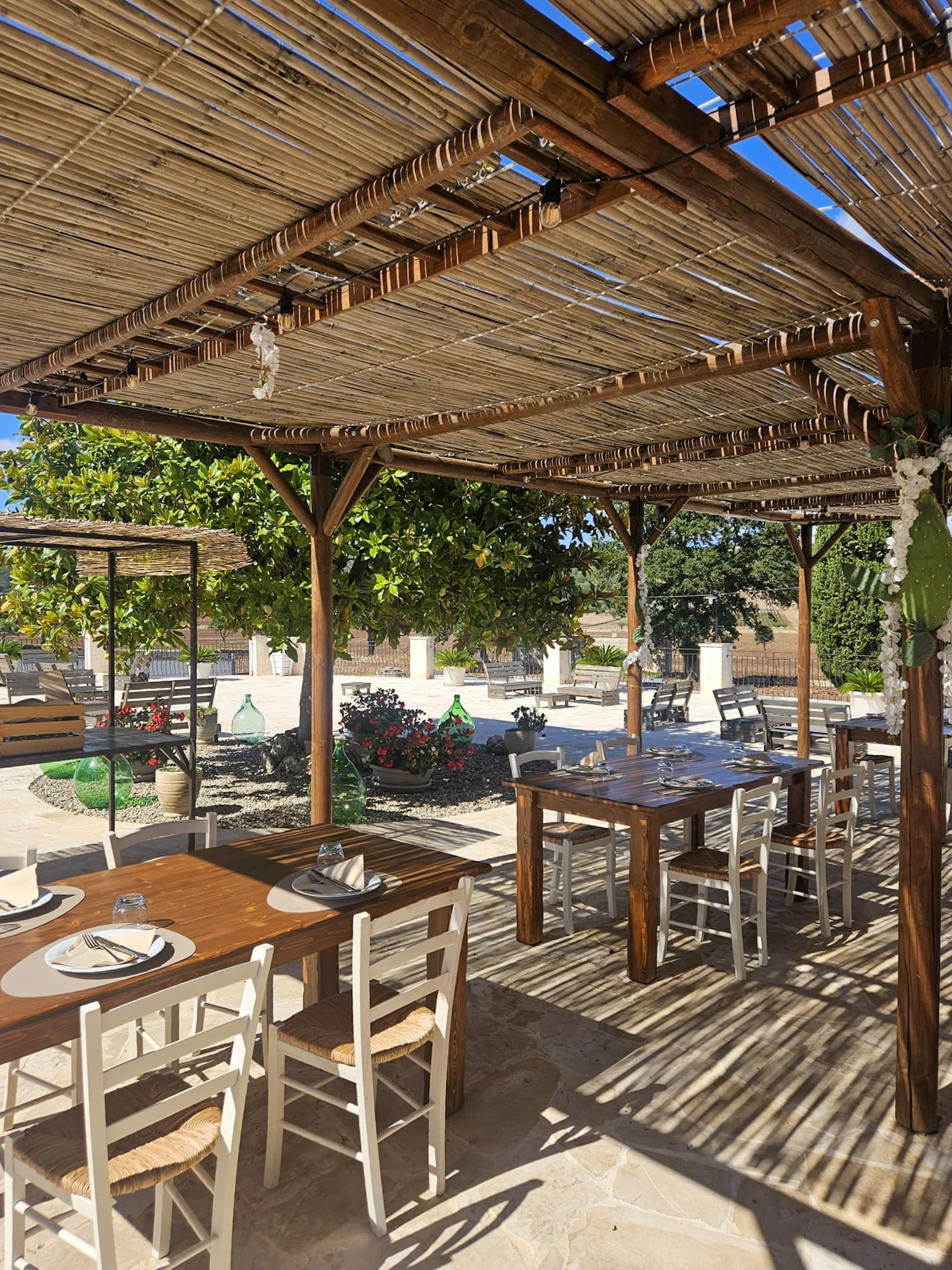
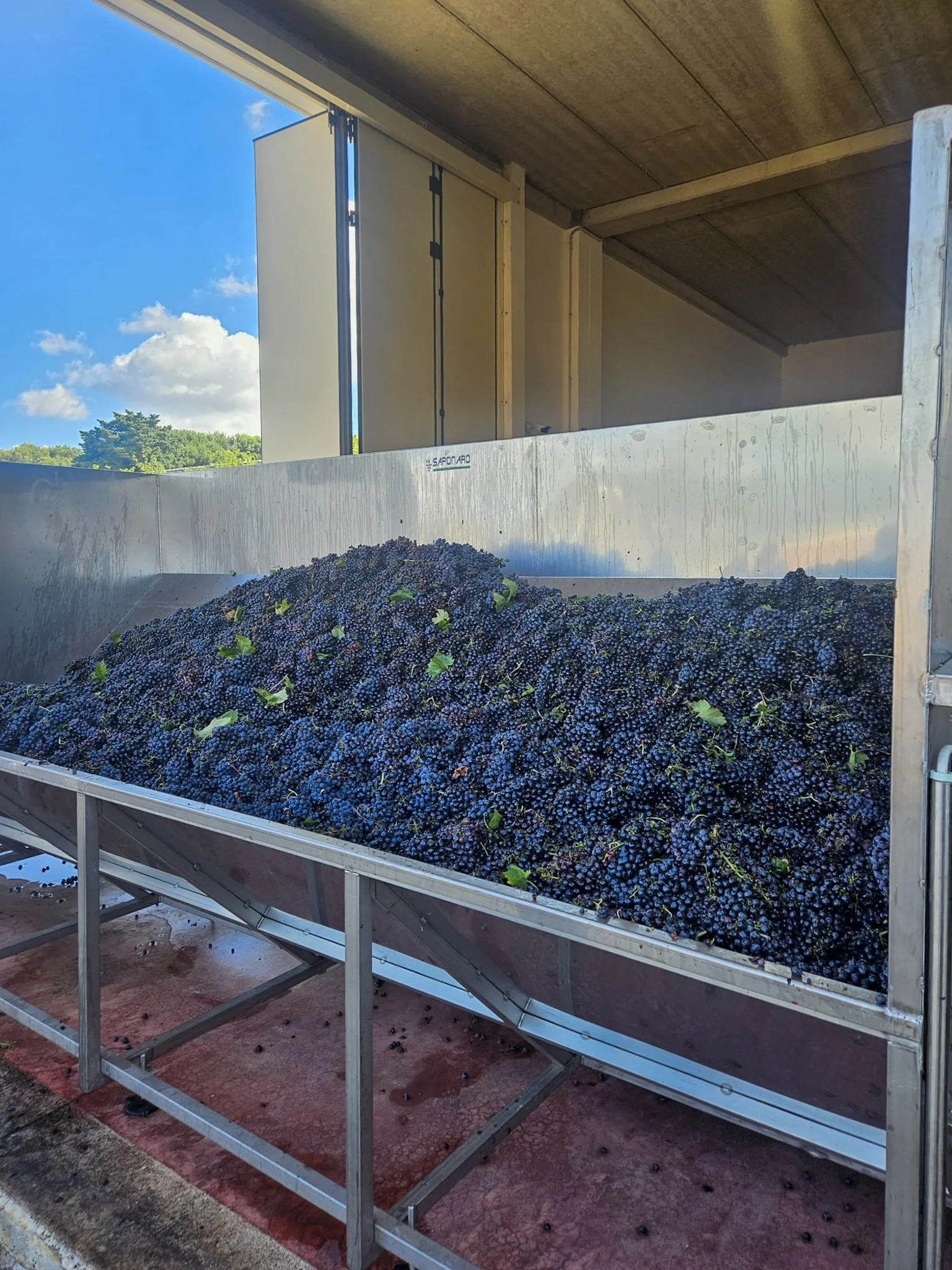
We also decided to do a wine tasting just outside Alberobello as a spontaneous “let’s do something fun” activity. Everyone in my family loves wine, so it was a no-brainer. It turned out to be such a fun experience at a small biological winery. First, we got a tour of the winery and the grape fields, then visited the cellars, which was really interesting.
Afterwards, we got to try a few local dishes — cheeses (they even had lactose-free options that tasted just as good, trust me!) and cold cuts paired perfectly with wines from the winery. You get four wines to taste, each one more delicious than the last, and you can also purchase any bottles you love to take home. It’s a really laid-back, fun experience, perfect for wine lovers or anyone looking for a relaxed way to spend a couple of hours outside the town.
Practical Tips For Your Trip To Puglia
Heading to Puglia? Here is a list of a few practical things you’ll want to know before you go, from currency and water to parking and local customs:
Download the EasyPark app: Makes paying for parking so much easier, especially in the smaller towns where machines can be tricky (trust me!!).
Carry some cash: Keep a bit of euros in your wallet. Most restaurants and shops take cards, but smaller souvenir stores or local markets often prefer cash.
ATMs: You’ll find ATMs in most main towns, but fees can be high if it’s not your bank. It’s a good idea to withdraw a decent amount at once to avoid multiple charges.
Try the local cuisine: Puglia has its own specialties that are different from those of other parts of Italy, like Tuscany. Don’t be afraid to try new dishes, you might discover a new favorite!
Language: Italian is the official language, but English is widely spoken in tourist areas. Although “Grazie” goes a long way.
Stay hydrated: Technically, the water in Puglia is safe to drink, but in some Airbnbs or older buildings, it can taste a bit metallic or strong. We didn’t drink the tap water at our villa (our host told us not to) and stuck to bottled water. If you’re out sightseeing, however, there are plenty of public fountains around where you can refill your bottles for free.
Tipping: Not mandatory, but rounding up the bill or leaving 5–10% for good service is appreciated, especially in restaurants.
Electricity: Standard European plug (Type C and F), 230V. Bring a travel adapter if you’re coming from outside Europe.
Dress code: Casual is fine during the day, but some nicer restaurants in towns like Ostuni or Polignano a Mare might expect slightly smarter attire in the evening.
Crowds & timing: Popular spots like Polignano a Mare beach or Matera’s Sassi can get busy. Arrive early for quieter mornings, especially in summer.
How many days: While it’s possible to hit a few towns in 2–3 days, I’d recommend at least 5–6 days if you can. This gives you time to explore multiple towns, enjoy your surroundings, and still relax without feeling rushed.
What To Pack For Puglia
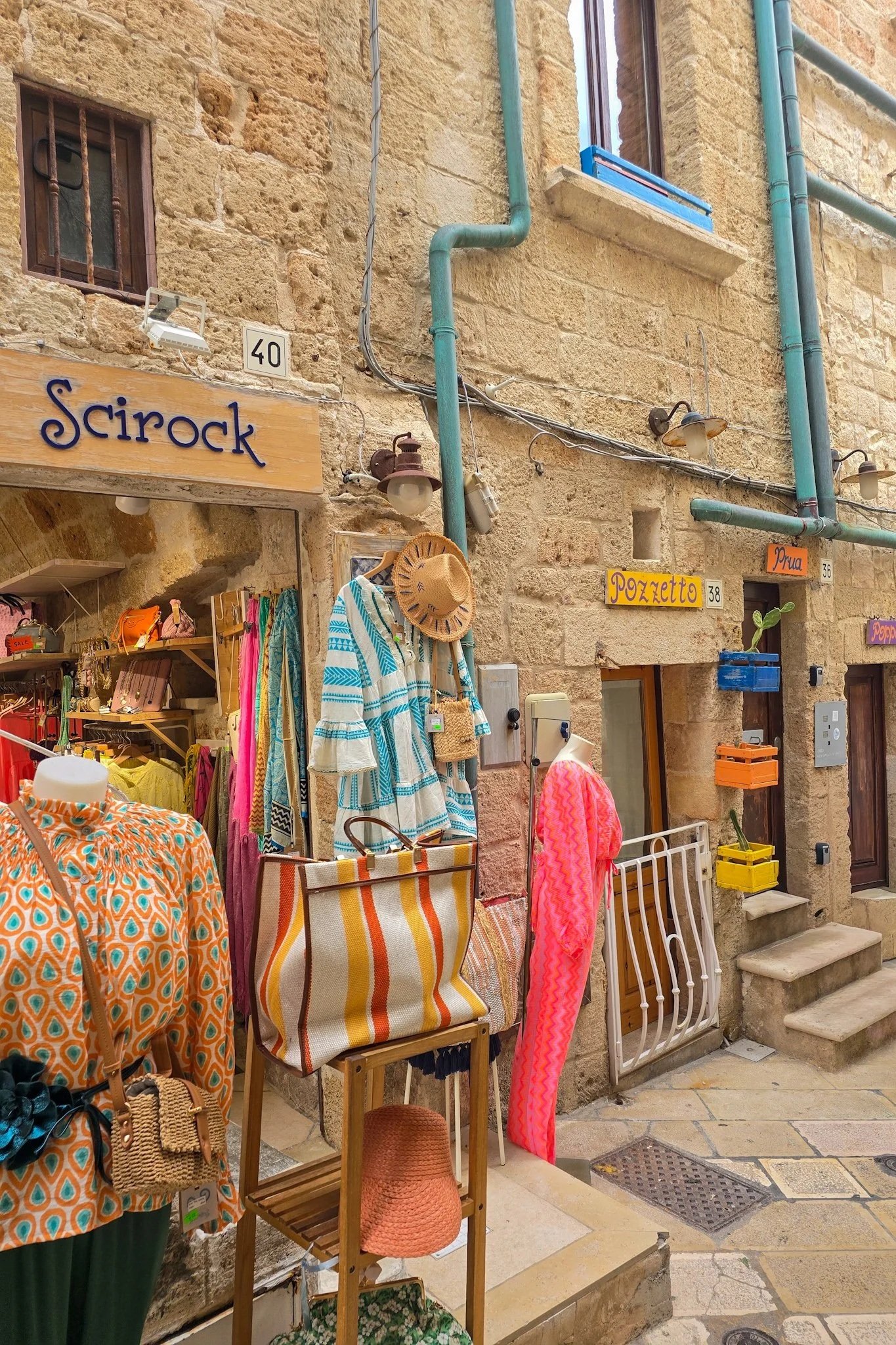
Before you head off to Puglia, it’s good to be prepared so you can enjoy all the towns, beaches, and countryside without any hiccups. Here’s a handy list of what you’ll want to bring:
Sunscreen: The sun can get really bright, so bring some and reapply often.
Comfortable shoes: Essential for walking on cobblestones, alleys, and stairs.
Cardigan or light jacket: Seaside towns can get chilly, especially in the evenings.
Hat & sunglasses: Protect yourself from the sun while exploring.
Refillable water bottle: Stay hydrated while sightseeing.
Small backpack or crossbody bag: Perfect for carrying snacks, water, and any souvenirs.
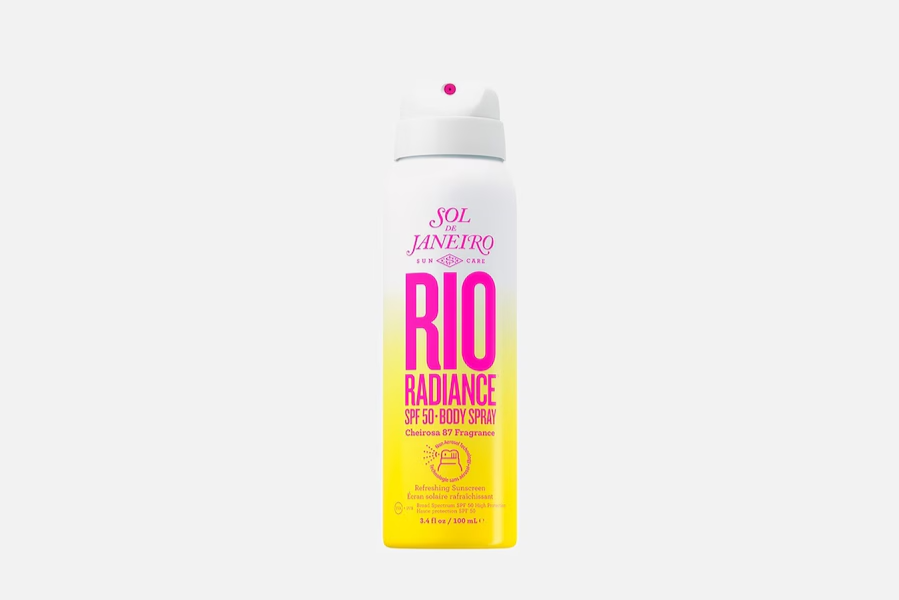
Sol de Janeiro SPF 50 Spray
Protect your body from harmful rays.
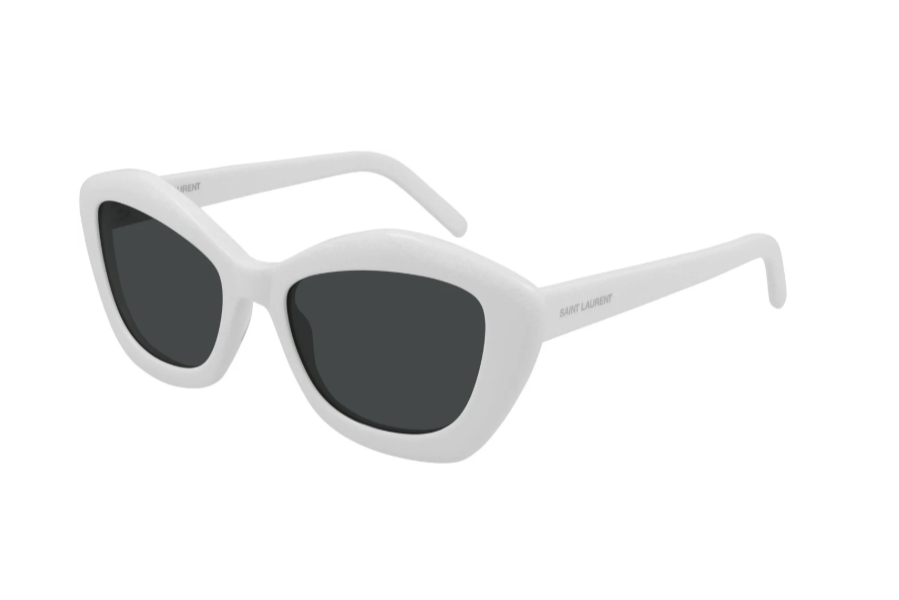
Saint Laurent New Wave SL 68 Sunglasses
Look stylish in the sun.
I hope this post was helpful and will come in handy when you plan your trip to Puglia. If you have any more questions, feel free to reach out here or on Instagram, and I’m more than happy to answer them. Happy travels!
More Italy Travel Guides & Hotel Reviews
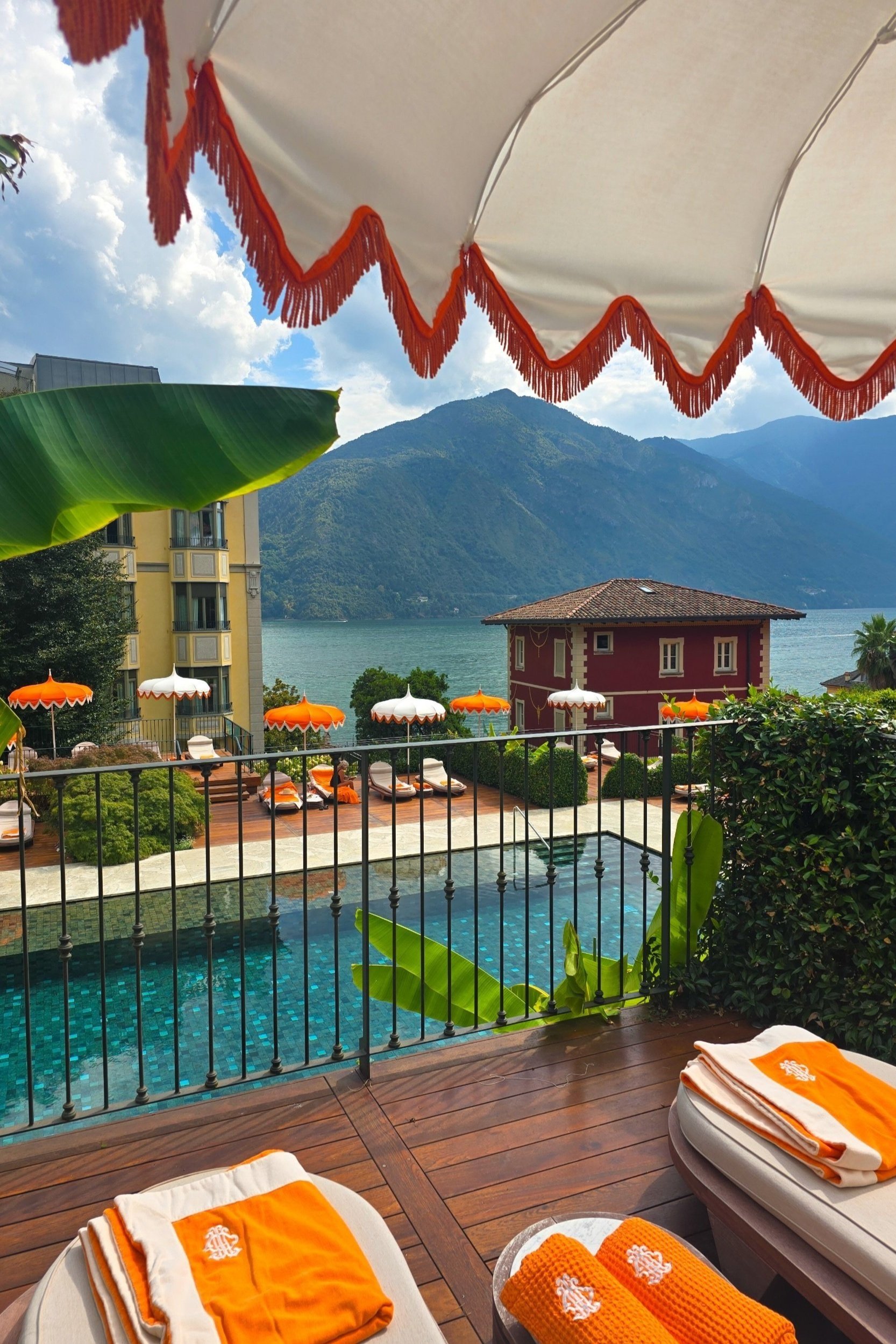
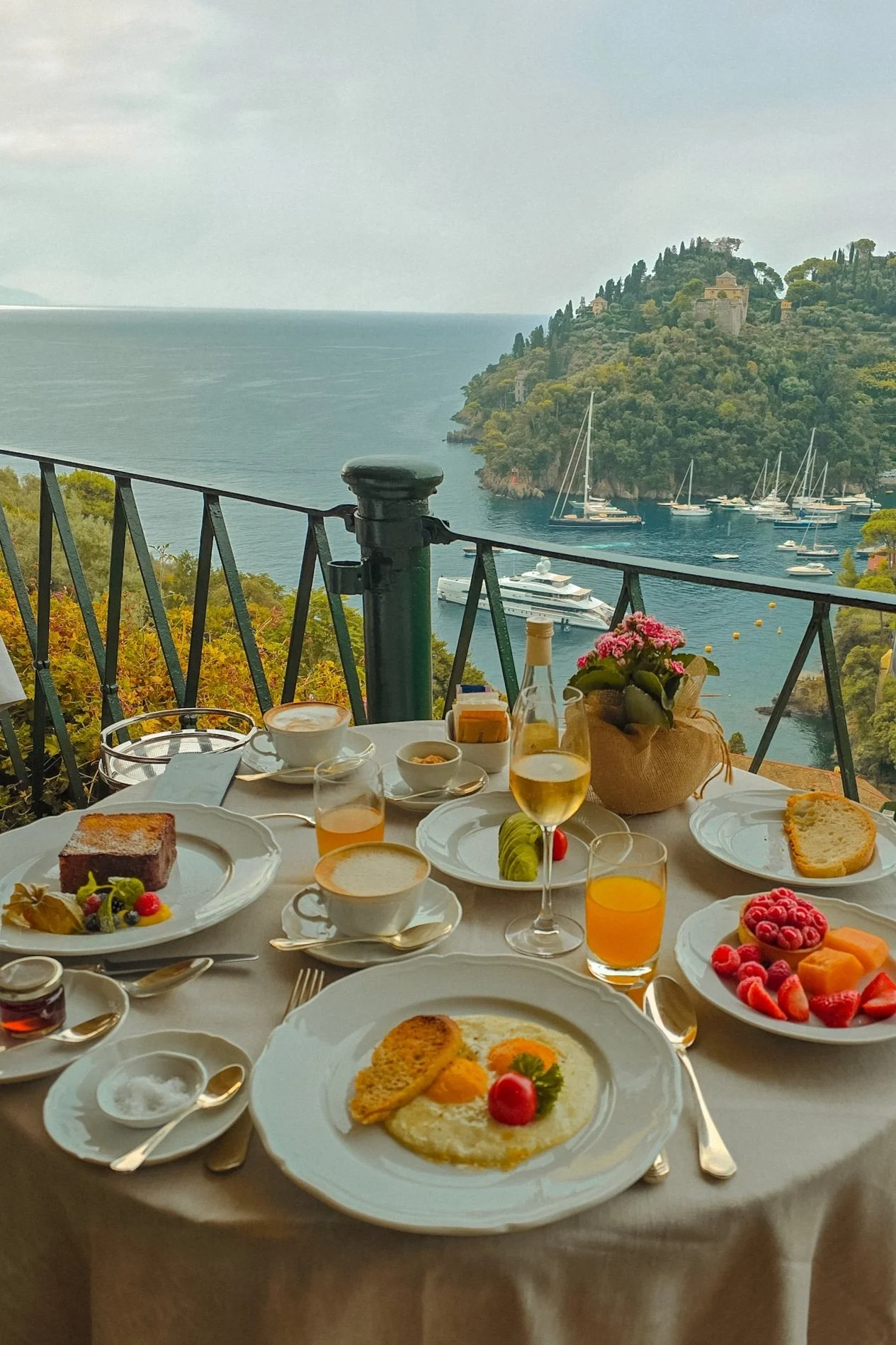

Trying to choose between Lake Como and the Amalfi Coast for your Italy trip? I recently visited both, and in this guide I break down everything from travel and hotels to the overall vibe and things to do, so you can decide where to spend your perfect Italy summer.